


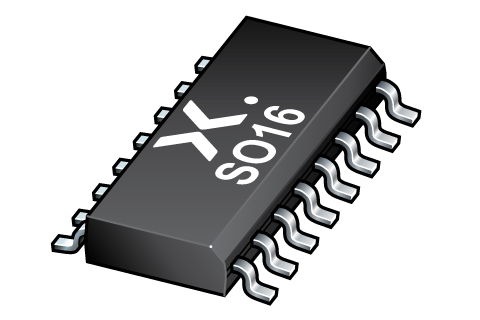
74HCT4852D-Q100,11
ActiveDUAL 4-CHANNEL ANALOG MULTIPLEXER/DEMULTIPLEXER WITH INJECTION-CURRENT EFFECT CONTROL
Deep-Dive with AI
Search across all available documentation for this part.
74HCT4852D-Q100,11
ActiveDUAL 4-CHANNEL ANALOG MULTIPLEXER/DEMULTIPLEXER WITH INJECTION-CURRENT EFFECT CONTROL
Deep-Dive with AI
Technical Specifications
Parameters and characteristics for this part
| Specification | 74HCT4852D-Q100,11 |
|---|---|
| Channel Capacitance (CS(off), CD(off)) | 10 pF |
| Channel-to-Channel Matching (ΔRon) | 2 Ohm |
| Current - Leakage (IS(off)) (Max) | 100 nA |
| Grade | Automotive |
| Mounting Type | Surface Mount |
| Multiplexer/Demultiplexer Circuit | 4:1 |
| Number of Circuits | 2 |
| On-State Resistance (Max) [Max] | 210 Ohm |
| Operating Temperature [Max] | 125 °C |
| Operating Temperature [Min] | -40 °C |
| Package / Case | 16-SOIC |
| Package / Case | 0.154 in, 3.9 mm |
| Qualification | AEC-Q100 |
| Supplier Device Package | 16-SO |
| Switch Circuit | SP4T |
| Switch Time (Ton, Toff) (Max) [custom] | 80 ns |
| Switch Time (Ton, Toff) (Max) [custom] | 25 ns |
| Voltage - Supply, Single (V+) [Max] | 5.5 V |
| Voltage - Supply, Single (V+) [Min] | 4.5 V |
Pricing
Prices provided here are for design reference only. For realtime values and availability, please visit the distributors directly
| Distributor | Package | Quantity | $ | |
|---|---|---|---|---|
| Digikey | N/A | 5000 | $ 1.49 | |
Description
General part information
74HCT4852D-Q100 Series
The 74HC4852-Q100; 74HCT4852-Q100are dual single-pole quad-throw analog switches (SP4T) suitable for use in analog or digital 4:1 multiplexer/demultiplexer applications. Each switch features four independent inputs/outputs (nY0, nY1, nY2 and nY3) and a common input/output (nZ). A digital enable input (E) and two digital select inputs (S0 & S1) are common to both switches. WhenEis HIGH, the switches are turned off. The device features injection-current effect control. This allows signals at disabled analog input channels to exceed the supply voltage without affecting the signal of the enabled analog channel, eliminating the need for external diode/resistor networks typically used to keep the analog channel signals within the supply-voltage range. Inputs include clamp diodes. This enables the use of current limiting resistors to interface inputs to voltages in excess of VCC.
Documents
Technical documentation and resources