Deep-Dive with AI
Search across all available documentation for this part.
Deep-Dive with AI
Technical Specifications
Parameters and characteristics for this part
| Specification | SN75LVDS83DGG |
|---|---|
| Mounting Type | Surface Mount |
| Number of Drivers/Receivers [custom] | 5 |
| Number of Drivers/Receivers [custom] | 0 |
| Operating Temperature [Max] | 70 °C |
| Operating Temperature [Min] | 0 °C |
| Package / Case | 6.1 mm |
| Package / Case | 0.24 in |
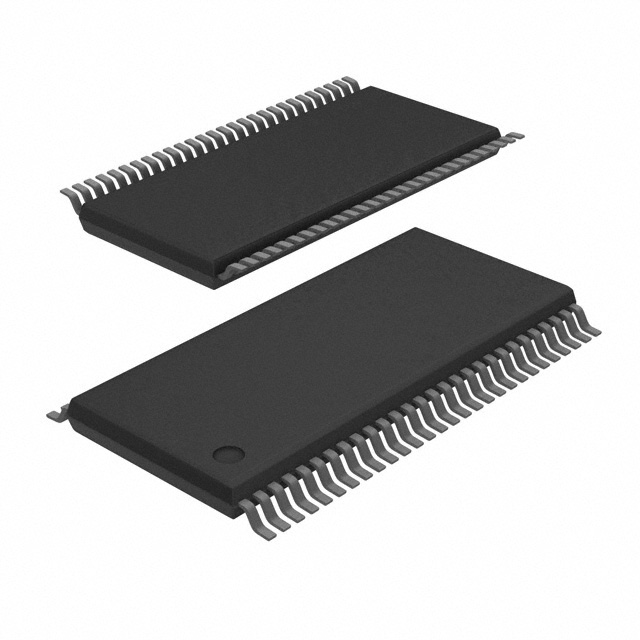
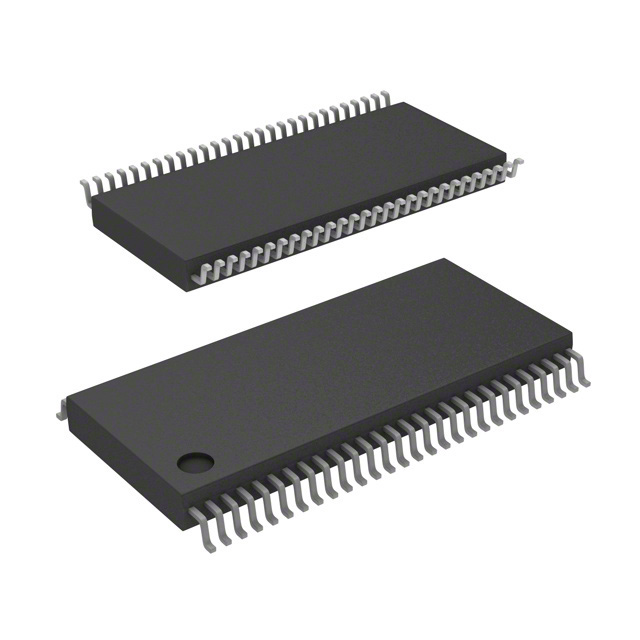
| Package / Case | 56-TFSOP |
| Protocol | LVDS |
| Supplier Device Package | 56-TSSOP |
| Type | Driver |
| Voltage - Supply [Max] | 3.6 V |
| Voltage - Supply [Min] | 3 V |
Pricing
Prices provided here are for design reference only. For realtime values and availability, please visit the distributors directly
| Distributor | Package | Quantity | $ | |
|---|---|---|---|---|
| Digikey | Tube | 1 | $ 4.37 | |
| 10 | $ 3.95 | |||
| 35 | $ 3.76 | |||
| 105 | $ 3.27 | |||
| 280 | $ 3.23 | |||
Description
General part information
SN75LVDS83B Series
The SN75LVDS83A Flatlink™ transmitter device contains four 7-bit parallel-load serial-out shift registers, a 7× clock synthesizer, and five Low-Voltage Differential Signaling (LVDS) line drivers in a single integrated circuit. These functions allow 28 bits of single-ended LVTTL data to be synchronously transmitted over five balanced-pair conductors for receipt by a compatible receiver, such as the SN75LVDS82 and LCD panels with integrated LVDS receiver.
When transmitting, data bits D0 through D27 are each loaded into registers upon the edge of the input clock signal (CLKIN). The rising or falling edge of the clock can be selected via the clock select (CLKSEL) pin. The frequency of CLKIN is multiplied seven times, and then used to unload the data registers in 7-bit slices and serially. The four serial streams and a phase-locked clock (CLKOUT) are then output to LVDS output drivers. The frequency of CLKOUT is the same as the input clock, CLKIN.
The SN75LVDS83A requires no external components and little or no control. The data bus appears the same at the input to the transmitter and output of the receiver with the data transmission transparent to the user(s). The only user intervention is selecting a clock rising edge by inputting a high level to CLKSEL or a falling edge with a low-level input, and the possible use of the Shutdown/Clear (SHTDN).SHTDNis an active-low input to inhibit the clock, and shut off the LVDS output drivers for lower power consumption. A low-level on this signal clears all internal registers to a low-level.
Documents
Technical documentation and resources
No documents available