


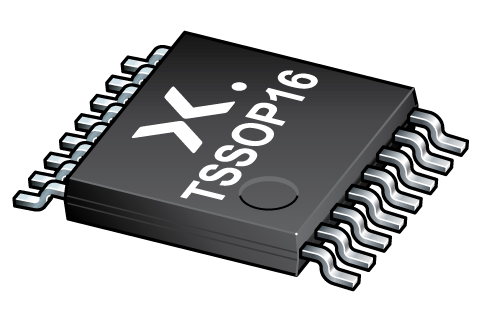
74HC109PWJ
ActiveDUAL JK FLIP-FLOP WITH SET AND RESET; POSITIVE-EDGE-TRIGGER
Deep-Dive with AI
Search across all available documentation for this part.
74HC109PWJ
ActiveDUAL JK FLIP-FLOP WITH SET AND RESET; POSITIVE-EDGE-TRIGGER
Technical Specifications
Parameters and characteristics for this part
| Specification | 74HC109PWJ |
|---|---|
| Clock Frequency | 81 MHz |
| Current - Output High, Low [custom] | 5.2 mA |
| Current - Output High, Low [custom] | 5.2 mA |
| Current - Quiescent (Iq) | 4 çA |
| Function | Set(Preset) and Reset |
| Input Capacitance | 3.5 pF |
| Max Propagation Delay @ V, Max CL | 31 ns |
| Mounting Type | Surface Mount |
| Number of Bits per Element | 1 |
| Number of Elements | 2 |
| Operating Temperature [Max] | 125 °C |
| Operating Temperature [Min] | -40 °C |
| Output Type | Complementary |
| Package / Case | 16-TSSOP |
| Package / Case [y] | 4.4 mm |
| Package / Case [y] | 0.173 in |
| Supplier Device Package | 16-TSSOP |
| Trigger Type | Positive Edge |
| Type | JK Type |
| Voltage - Supply [Max] | 6 V |
| Voltage - Supply [Min] | 2 V |
Pricing
Prices provided here are for design reference only. For realtime values and availability, please visit the distributors directly
| Distributor | Package | Quantity | $ | |
|---|---|---|---|---|
| Digikey | N/A | 0 | $ 0.18 | |
Description
General part information
74HC109PW Series
The 74HC109; 74HCT109 is a dual positive edge triggered JKflip-flop featuring individual J andKinputs, clock (CP) inputs, set (SD) and reset (RD) inputs and complementary Q andQoutputs. The set and reset are asynchronous active LOW inputs and operate independently of the clock input. The J andKinputs control the state changes of the flip-flops as described in the mode select function table. The J andKinputs must be stable one set-up time prior to the LOW-to-HIGH clock transition for predictable operation. The JKdesign allows operation as a D-type flip-flop by connecting the J andKinputs together. This device features reduced input threshold levels to allow interfacing to TTL logic levels. Inputs also include clamp diodes, this enables the use of current limiting resistors to interface inputs to voltages in excess of VCC.
Documents
Technical documentation and resources