


Deep-Dive with AI
Search across all available documentation for this part.
Deep-Dive with AI
Technical Specifications
Parameters and characteristics for this part
| Specification | XIO2213BZAJ |
|---|---|
| Applications | PDA's, PC's |
| Interface | IEEE 1394 |
| Mounting Type | Surface Mount |
| Package / Case | 168-TFBGA |
| Supplier Device Package | 168-NFBGA |
| Supplier Device Package [x] | 7 |
| Supplier Device Package [y] | 7 |
| Voltage - Supply | 3.3 V, 1.5 V |
Pricing
Prices provided here are for design reference only. For realtime values and availability, please visit the distributors directly
| Distributor | Package | Quantity | $ | |
|---|---|---|---|---|
| Digikey | N/A | 0 | $ 9.15 | |
| 5762 | $ 9.15 | |||
| Texas Instruments | JEDEC TRAY (10+1) | 1 | $ 9.70 | |
| 100 | $ 8.47 | |||
| 250 | $ 6.53 | |||
| 1000 | $ 5.84 | |||
Description
General part information
XIO2213B Series
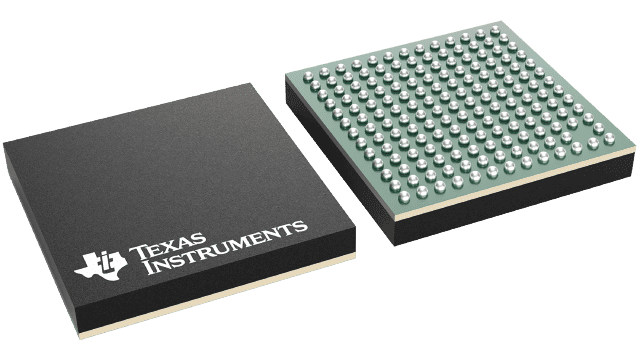
The TI XIO2213B is a PCIe to PCI translation bridge, where the PCI bus interface is internally connected to a 1394b open host controller/link-layer controller with a 3-port 1394b PHY. The PCIe to PCI translation bridge is fully compatible with the PCI Express to PCI/PCI-X Bridge Specification, Revision 1.0. Also, the bridge supports the standard PCI-to-PCI bridge programming model. The 1394b OHCI controller function is fully compatible with IEEE Std 1394b and the latest 1394 Open Host Controller Interface (OHCI) Specification.
The XIO2213B simultaneously supports up to four posted write transactions, four nonposted transactions, and four completion transactions pending in each direction at any time. Each posted write data queue and completion data queue can store up to 8K bytes of data. The nonposted data queues can store up to 128 bytes of data.
The PCIe interface supports a ×1 link operating at full 250 Mbit/s packet throughput in each direction simultaneously. Also, the bridge supports the advanced error reporting capability including ECRC as defined in the PCI Express Base Specification, Revision 1.1. Supplemental firmware or software is required to fully utilize both of these features.
Documents
Technical documentation and resources