DS1807E+
ActiveVOLATILE DIGITAL POTENTIOMETER, ADDRESSABLE, 45 KOHM, DUAL, SERIAL, LOG (AUDIO), ± 20%, 2.7 V
Deep-Dive with AI
Search across all available documentation for this part.
DS1807E+
ActiveVOLATILE DIGITAL POTENTIOMETER, ADDRESSABLE, 45 KOHM, DUAL, SERIAL, LOG (AUDIO), ± 20%, 2.7 V
Technical Specifications
Parameters and characteristics for this part
| Specification | DS1807E+ |
|---|---|
| Configuration | Potentiometer |
| Features | Selectable Address, Zero-Cross Sense, Mute |
| Interface | I2C |
| Memory Type | Volatile |
| Mounting Type | Surface Mount |
| Number of Circuits | 2 |
| Number of Taps | 65 |
| Operating Temperature [Max] | 85 °C |
| Operating Temperature [Min] | -40 C |
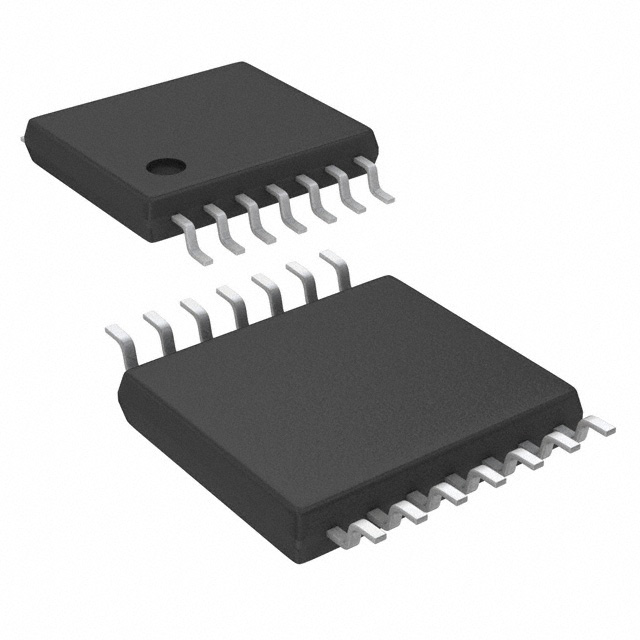
| Package / Case | 14-TSSOP |
| Package / Case [x] | 0.173 ", 4.4 mm |
| Resistance - Wiper (Ohms) (Typ) | 400 Ohms |
| Resistance (Ohms) | 45k |
| Supplier Device Package | 14-TSSOP |
| Taper | Logarithmic |
| Temperature Coefficient (Typ) | 750 ppm/°C |
| Tolerance | 20 % |
| Voltage - Supply [Max] | 5.5 V |
| Voltage - Supply [Min] | 2.7 V |
Pricing
Prices provided here are for design reference only. For realtime values and availability, please visit the distributors directly
Description
General part information
DS1807 Series
The DS1807E+ is an addressable dual audio taper potentiometer in 14 pin TSSOP package. The device includes dual audio taper potentiometer having a logarithmic resistive characteristic (1dB per step). Each potentiometer has a total of 65 wiper positions including the mute position. Adjacent wiper positions are separated by 1 dB giving a total attenuation range of 64 dB. When the wipers are in the mute position, attenuation in excess of 90 dB is achieved. The DS1807 is controlled via a two-input serial synchronous interface that provides the capability of addressing up to eight different DS1807s. Addressability is obtained via communication protocol and three address select inputs A0, A1 and A2. Communication protocol allows for independent or simultaneous setting of the two potentiometer wipers. It replaces mechanical potentiometers with digital accuracy and reliability while its low-power circuits consume very little current.
Documents
Technical documentation and resources