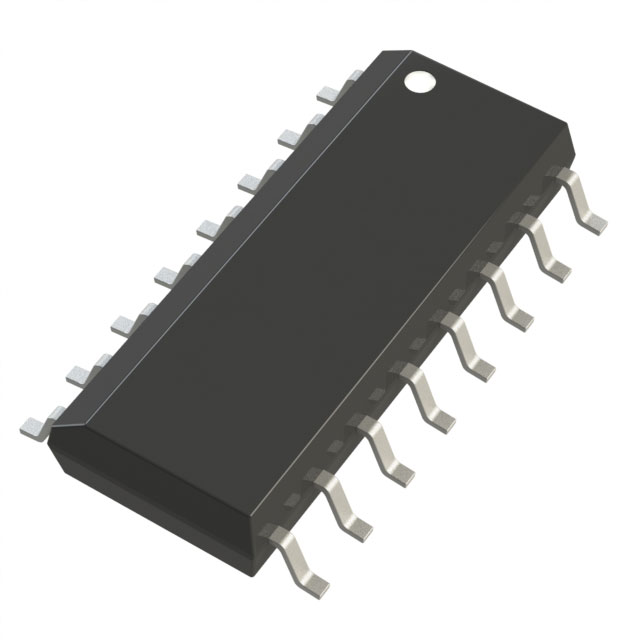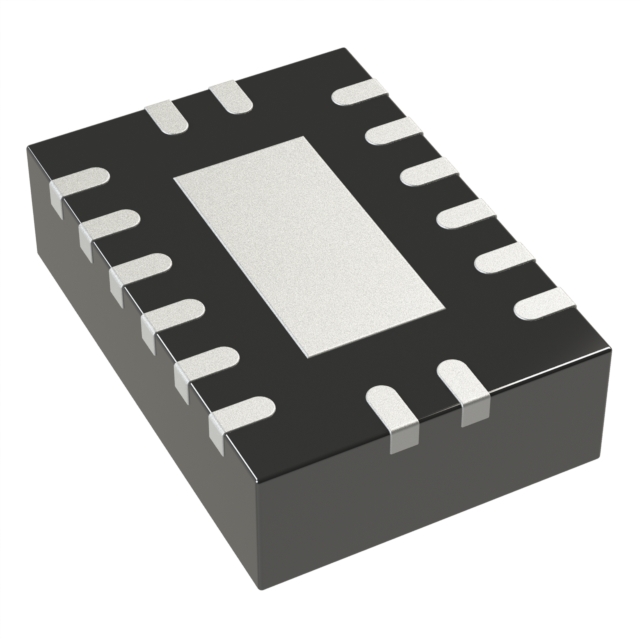
74HCT4017BQ-Q100X
ActiveIC DECADE COUNTER 10BIT 16DHVQFN
Deep-Dive with AI
Search across all available documentation for this part.
74HCT4017BQ-Q100X
ActiveIC DECADE COUNTER 10BIT 16DHVQFN
Deep-Dive with AI
Technical Specifications
Parameters and characteristics for this part
| Specification | 74HCT4017BQ-Q100X |
|---|---|
| Count Rate | 67 MHz |
| Direction | Up |
| Grade | Automotive |
| Logic Type | Counter, Decade |
| Mounting Type | Surface Mount |
| Number of Bits per Element | 10 |
| Number of Elements | 1 |
| Operating Temperature [Max] | 125 °C |
| Operating Temperature [Min] | -40 °C |
| Package / Case | 16-VFQFN Exposed Pad |
| Qualification | AEC-Q100 |
| Reset | Asynchronous |
| Supplier Device Package | 16-DHVQFN (2.5x3.5) |
| Timing | Synchronous |
| Trigger Type | Negative, Positive |
| Voltage - Supply [Max] | 5.5 V |
| Voltage - Supply [Min] | 4.5 V |
Pricing
Prices provided here are for design reference only. For realtime values and availability, please visit the distributors directly
| Distributor | Package | Quantity | $ | |
|---|---|---|---|---|
| Digikey | Tape & Reel (TR) | 3000 | $ 0.35 | |
| 6000 | $ 0.33 | |||
| 15000 | $ 0.32 | |||
| 30000 | $ 0.31 | |||
Description
General part information
74HCT4017BQ Series
The 74HC4017; 74HCT4017 is a 5-stage Johnson decade counter with 10 decoded outputs (Q0 to Q9), an output from the most significant flip-flop (Q5-9), two clock inputs (CP0 andCP1) and an overriding asynchronous master reset input (MR). The counter is advanced by either a LOW-to-HIGH transition at CP0 whileCP1 is LOW or a HIGH-to-LOW transition atCP1 while CP0 is HIGH. When cascading counters, theQ5-9 output, which is LOW while the counter is in states 5, 6, 7, 8 and 9, can be used to drive the CP0 input of the next counter. A HIGH on MR resets the counter to zero (Q0 =Q5-9 = HIGH; Q1 to Q9 = LOW) independent of the clock inputs (CP0 andCP1). Automatic code correction of the counter is provided by an internal circuit: following any illegal code the counter returns to a proper counting mode within 11 clock pulses. Inputs include clamp diodes. This enables the use of current limiting resistors to interface inputs to voltages in excess of VCC.
Documents
Technical documentation and resources