S
STMicroelectronics
| Series | Category | # Parts | Status | Description |
|---|---|---|---|---|
| Part | Spec A | Spec B | Spec C | Spec D | Description |
|---|---|---|---|---|---|



| Series | Category | # Parts | Status | Description |
|---|---|---|---|---|
| Part | Spec A | Spec B | Spec C | Spec D | Description |
|---|---|---|---|---|---|
| Part | Category | Description |
|---|---|---|
 STMicroelectronics STEVAL-ISA068V1Obsolete | Development Boards Kits Programmers | EVAL BOARD FOR ST1S32 |
 STMicroelectronics 74VCXHQ163245TTRObsolete | Integrated Circuits (ICs) | IC TRANSLATION TXRX 2.7V 48TSSOP |
 STMicroelectronics | Development Boards Kits Programmers | VNQ9050LAJ EVALUATION BOARD |
 STMicroelectronics LSM303DLHCTRObsolete | Sensors Transducers | IMU ACCEL/MAG 3-AXIS I2C 14LGA |
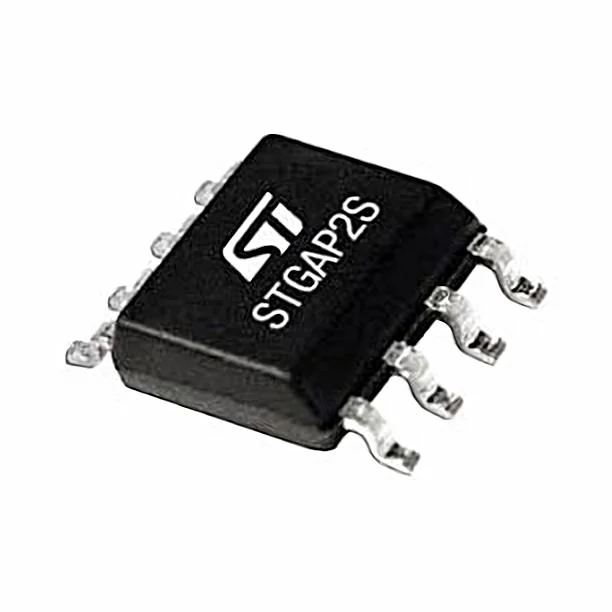 STMicroelectronics M93C56-WMN6TObsolete | Integrated Circuits (ICs) | EEPROM SERIAL-MICROWIRE 2K-BIT 256 X 8/128 X 16 3.3V/5V 8-PIN SO N T/R |
STMicroelectronics | Integrated Circuits (ICs) | STM32U |
 STMicroelectronics TS831-3IZObsolete | Integrated Circuits (ICs) | IC SUPERVISOR 1 CHANNEL TO92-3 |
 STMicroelectronics STMPE1208SQTRObsolete | Integrated Circuits (ICs) | IC I/O EXPANDER I2C 12B 40QFN |
 STMicroelectronics STM32L1-MAGNETObsolete | Development Boards Kits Programmers | IAR EXPERIMENT STM32 L1 EVAL BRD |
 STMicroelectronics VNB35N07Obsolete | Integrated Circuits (ICs) | IC PWR DRIVER N-CHAN 1:1 D2PAK |
| Series | Category | # Parts | Status | Description |
|---|---|---|---|---|
BlueNRG-LPSProgrammable Bluetooth Low Energy 5.3 Wireless SoC | RF and Wireless | 2 | Active | The BlueNRG-LPS is an ultra-low power programmable Bluetooth® Low Energy wireless SoC solution. It embeds STMicroelectronics’s state-of-the-art 2.4 GHz radio IPs, optimized for ultra-low-power consumption and excellent radio performance, for unparalleled battery lifetime. It is compliant with Bluetooth Low Energy SIG core specification version 5.3 addressing point-to-point connectivity and Bluetooth Mesh networking and allows large-scale device networks to be established in a reliable way. The BlueNRG-LPS is also suitable for 2.4 GHz proprietary radio wireless communication to address ultra-low latency applications.
The BlueNRG-LPS embeds a Arm® Cortex®-M0+ microcontroller that can operate up to 64 MHz and also the BlueNRG core co-processor (DMA based) for Bluetooth Low Energy timing critical operations.
The main Bluetooth Low Energy 5.3 specification supported features are:
2 Mbps data rate, long range (Coded PHY), advertising extensions, channel selection algorithm #2, GATT caching, Direction Finding (AoA/AoD), hardware support for simultaneous connection, master/slave and multiple roles simultaneously, extended packet length support, LE Ping procedure, periodic advertising and periodic advertising sync transfer, LE power control and path loss monitoring.
In addition, the BlueNRG-LPS provides enhanced security hardware support by dedicated hardware functions:
True random number generator (RNG), encryption AES maximum 128-bit security co-processor, public key accelerator (PKA), CRC calculation unit, 64-bit unique ID, flash memory read and write protection.
The public key acceleration (PKA) supports the modular arithmetic including exponentiation with maximum modulo size of 3136 bits and the elliptic curves over prime field scalar multiplication, ECDSA signature, ECDSA verification with maximum modulo size of 521 bits CRC calculation unit.
The BlueNRG-LPS can be configured to support standalone or network processor applications. In the first configuration, the BlueNRG-LPS operates as a single device in the application for managing both the application code and the Bluetooth Low Energy stack.
The BlueNRG-LPS embeds high-speed and flexible memory types:
Flash memory of 192 Kbytes, RAM memory of 24 Kbytes, one-time-programmable (OTP) memory area of 1 Kbyte, ROM memory of 7 Kbytes (ST reserved area).
Direct data transfer between memory and peripherals and from memory-to-memory is supported by eight DMA channels with a full flexible channel mapping by the DMAMUX peripheral.
The BlueNRG-LPS embeds a 12-bit ADC, allowing measurements of up to eight external sources and up to three internal sources, including battery monitoring and a temperature sensor.
The BlueNRG-LPS has a low-power RTC and three general purpose 16-bit timers.
The BlueNRG-LPS features standard and advanced communication interfaces:
1x SPI/I2S, 1x LPUART, 1x USART supporting ISO 7816 (smartcard mode), IrDA and Modbus mode, 1x I2C supporting SMBus/PMBus.
The BlueNRG-LPS operates in the -40 to +105 °C temperature range from a 1.7 V to 3.6 V power supply. A comprehensive set of power-saving modes enables the design of low-power applications.
The BlueNRG-LPS integrates a high efficiency SMPS step-down converter and an integrated PDR circuitry with a fixed threshold that generates a device reset when the VDD drops under 1.65 V.
The BlueNRG-LPS comes in different package versions supporting up to:
20 I/Os for the QFN32 package. 20 I/Os for the WLCSP36 package. |
CAM-55G0CAM-55G0 promodules: evaluation camera modules for VD55G0 image sensor | Development Boards, Kits, Programmers | 2 | Active | The CAM-55G0 promodules are a full range of sample camera modules made for a seamless evaluation and integration of the VD55G0 0.38-megapixel monochrome image sensor. These ready-to-use vision extensions integrate VD55G0 image sensor, lens holder, lens, and plug-and-play flex connection in a tiny format down to 5.0 mm square.
The CAM-55G0 line leverages the complete toolbox of on-chip features of the VD55G0 image sensor embedded, such as binning, autoexposure, or context management. Multiple GPIOs enable users to synchronize the modules with triggers and illumination. Featuring a single lane MIPI CSI-2 output, the promodules are perfectly suited for embedded low-power setups.
Multiple promodule references are available, featuring various lenses to best match the needs of every application in terms of optical setup and mechanical constraints. All camera modules are equipped with the same FPC-to-board connector and pinout. This plug-and-play architecture allows users to change promodule instantly, and reuse the same setup with different lenses, color options and even different image sensors in the ST BrightSense portfolio.
CAM-55G0 promodules can be tested and integrated on computers or embedded processing boards using hardware and software tools from STMicroelectronics. The compatible EVK Main and P-Board hardware kits enable straight connection to PC and embedded processing platforms respectively. Evaluation GUI software and Linux drivers are available for download from the Imaging Software section of the website. |
CAM-55G1CAM-55G1 promodules: evaluation camera modules for VD55G1 image sensor | Development Boards, Kits, Programmers | 1 | Active | The CAM-55G1 promodules are a full range of sample camera modules made for a seamless evaluation and integration of the VD55G1 0.56-megapixel monochrome image sensor. These ready-to-use vision extensions integrate VD55G1 image sensor, lens holder, lens, and plug-and-play flex connection in a tiny format down to 6.5 mm square.
The CAM-55G1 line leverages the complete toolbox of on-chip features of the VD55G1 image sensor embedded, such as autoexposure, auto-wake up, background removal, or event-like mode. Multiple GPIOs enable users to synchronize the modules with triggers and illumination. Featuring a single lane MIPI CSI-2 output and very low operating power, the promodules are perfectly suited for embedded low-power setups.
Multiple promodule references are available, featuring various lenses to best match the needs of every application in terms of optical setup and mechanical constraints. All camera modules are equipped with the same FPC-to-board connector and pinout. This plug-and-play architecture allows users to change promodule instantly, and reuse the same setup with different lenses, color options and even different image sensors in the ST BrightSense portfolio.
CAM-55G1 promodules can be tested and integrated on computers or embedded processing boards using hardware and software tools from STMicroelectronics. The compatible EVK Main and P-Board hardware kits enable straight connection to PC and embedded processing platforms respectively. Evaluation GUI software and Linux drivers are available for download from the Imaging Software section of the website. |
CAM-56G3CAM-56G3 promodules: evaluation camera modules for VD56G3 image sensor | Expansion Boards, Daughter Cards | 3 | Active | The CAM-56G3 promodules are a full range of sample camera modules made for a seamless evaluation and integration of the VD56G3 1.5-megapixel monochrome image sensor. These ready-to-use vision extensions integrate VD56G3 image sensor, lens holder, lens, and plug-and-play flex connection in a tiny format down to 6.5 mm square.
The CAM-56G3 line leverages the complete toolbox of on-chip features of the VD56G3 image sensor embedded, such as binning, autoexposure, or context management. Multiple GPIOs enable users to synchronize the modules with triggers and illumination. Featuring MIPI CSI-2 output, the promodules are perfectly suited for embedded low-power setups.
Multiple promodule references are available, featuring various lenses to best match the needs of every application in terms of optical setup and mechanical constraints. All camera modules are equipped with the same FPC-to-board connector and pinout. This plug-and-play architecture allows users to change promodule instantly, and reuse the same setup with different lenses, color options and even different image sensors in the ST BrightSense portfolio.
CAM-56G3 promodules can be tested and integrated on computers or embedded processing boards using hardware and software tools from STMicroelectronics. The compatible EVK Main and P-Board hardware kits enable straight connection to PC and embedded processing platforms respectively. Evaluation GUI software and Linux drivers are available for download from the Imaging Software section of the website. |
CAM-66GYCAM-66GY promodules: evaluation camera modules for VD66GY image sensor | Expansion Boards, Daughter Cards | 3 | Active | The CAM-66GY promodules are a full range of sample camera modules made for a seamless evaluation and integration of the VD66GY 1.5-megapixel color image sensor. These ready-to-use vision extensions integrate VD66GY image sensor, lens holder, lens, and plug-and-play flex connection in a tiny format down to 6.5 mm square.
The CAM-66GY line leverages the complete toolbox of on-chip features of the VD66GY image sensor embedded, such as binning, autoexposure, or context management. Multiple GPIOs enable users to synchronize the modules with triggers and illumination. Featuring MIPI CSI-2 output, the promodules are perfectly suited for embedded low-power setups.
Multiple promodule references are available, featuring various lenses to best match the needs of every application in terms of optical setup and mechanical constraints. All camera modules are equipped with the same FPC-to-board connector and pinout. This plug-and-play architecture allows users to change promodule instantly, and reuse the same setup with different lenses, color options and even different image sensors in the STMicroelectronics portfolio.
CAM-66GY promodules can be tested and integrated on computers or embedded processing boards using hardware and software tools from ST BrightSense. The compatible EVK Main and P-Board hardware kits enable straight connection to PC and embedded processing platforms respectively. Evaluation GUI software and Linux drivers are available for download from the Imaging Software section of the website. |
| TVS Diodes | 1 | Active | ||
CBTVS2A12-1F3Circuit breaker with transient voltage suppressor | Transient Voltage Suppressors (TVS) | 1 | Obsolete | The CBTVS2A12-1F3 is a single line diode TVS integrating a fuse designed specifically for the protection of integrated circuits in portable equipment and miniaturized electronics devices subject to ESD, OVP and OCP. |
CLOUDEvaluation board for ST25TA series | Development Boards, Kits, Programmers | 1 | Active | The CLOUD-ST25TA02KB is a ready-to-use demonstration board intended to evaluate the ST25TA02KB-P device.
The ST25TA02KB-P is a dynamic NFC/RFID tag IC with a digital General Purpose Output (GPO), embedding a 2 Kbit EEPROM that supports NDEF tag applications for NFC Forum Type 4.
The device communicates using the ISO/IEC 14443 Type A protocol, and is fully powered by the RF field. When the GPO output is used, an external reference voltage is required to set the high level voltage of the GPO signal to be directly compatible with the I/O voltage of the MCU or Host, without the need for any level shifter.
The GPO signal is active High when asserted, and can be used as a rising edge interrupt. It may be configured through the RF interface for various uses, like indicating Field Detection (by default) to wake-up an MCU, or Host like a Bluetooth® or a Wi-Fi® chipset. |
| Transient Voltage Suppressors (TVS) | 1 | Obsolete | ||
CLT01High speed protected digital termination array | Mixed Technology | 3 | Active | The CLT01 series is an octal industrial digital input IC, which drastically reduces the power dissipation of the digital input modules. Its current-sinking inputs can be configured for type 1, type 2, or type 3 inputs as per IEC 61131-2 with few external components.
The CLT01 series includes a serial interface, which translates, conditions, and serializes the data to CMOS-compatible signals through SPI. Combining its daisy-chaining capability with its accurate current limitation, the CLT01 series enhances the I/O module’s density by cutting the power dissipation and reducing the number of optocouplers.
The CLT01 series can be evaluated thanks to the STEVAL-IFP031V1 evaluation board. For detailed application guidelines, refer to the AN4625. |