R
Renesas Electronics Corporation
| Series | Category | # Parts | Status | Description |
|---|---|---|---|---|
| Part | Spec A | Spec B | Spec C | Spec D | Description |
|---|---|---|---|---|---|



| Series | Category | # Parts | Status | Description |
|---|---|---|---|---|
| Part | Spec A | Spec B | Spec C | Spec D | Description |
|---|---|---|---|---|---|
| Series | Category | # Parts | Status | Description |
|---|---|---|---|---|
| Integrated Circuits (ICs) | 4 | Active | ||
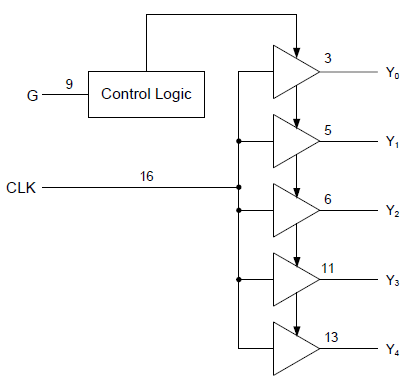
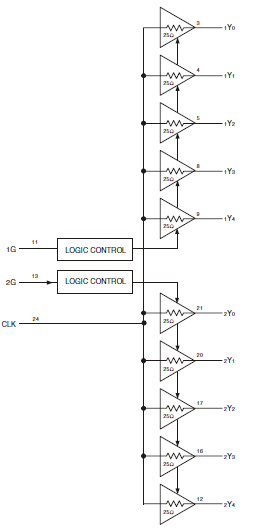
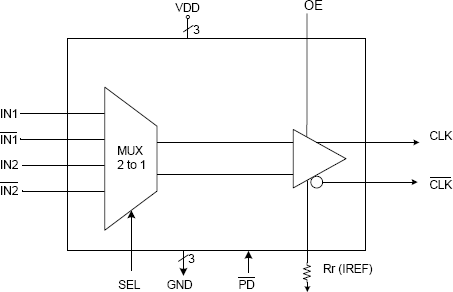
5V23102.5V to 3.3V High Performance Clock Buffer | Clock Buffers, Drivers | 4 | Active | 2.5V to 3.3V High Performance Clock Buffer |
| Integrated Circuits (ICs) | 1 | Obsolete | ||
| Application Specific | 4 | Active | ||
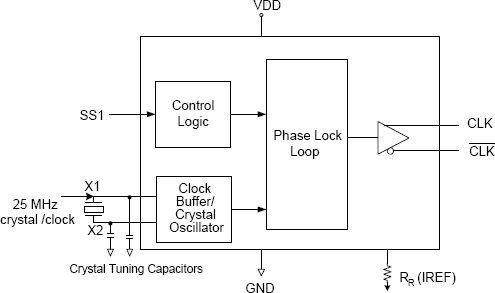
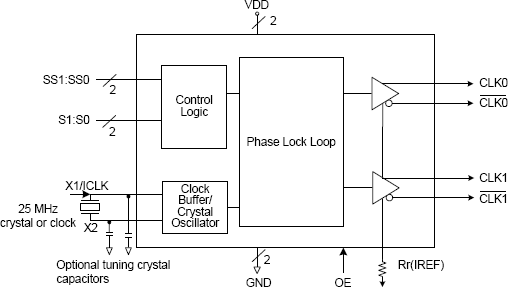
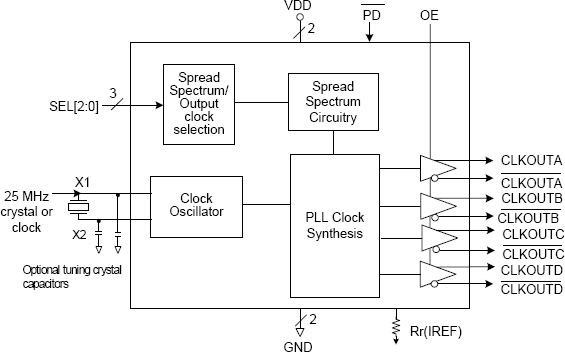
5V410652 Output PCIe GEN1/2 Synthesizer | Integrated Circuits (ICs) | 6 | Active | The 5V41065 is a PCIe Gen2 compliant spread spectrum capable clock generator. The device has 2 differential HCSL outputs and can be used in communication or embedded systems to substantially reduce electro-magnetic interference (EMI). The spread amount and output frequency are selectable via select pins. The 5V41065 can also supply 25 MHz, 125 MHz and 200 MHz outputs for applications such as Ethernet. |
| Application Specific | 4 | Active | ||
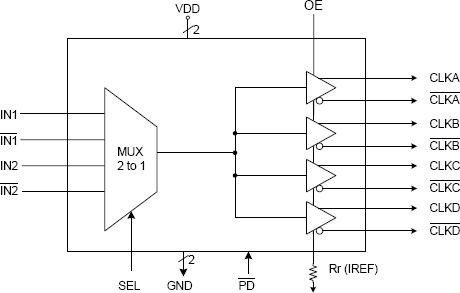
5V41067A2:4 PCIe GEN1/2/3 Clock Multiplexer | Clock/Timing | 4 | Obsolete | The 5V41067A is a 2:4 differential clock mux for PCI Express applications. It has very low additive jitter making it suitable for use in PCIe Gen2 and Gen3 systems. The 5V41067A selects between 1 of 2 differential HCSL inputs to fanout to 4 differential HCSL output pairs. The outputs can also be terminated to LVDS. |
| Clock/Timing | 4 | Obsolete | ||
| Application Specific | 2 | Active | ||
| Clock Generators, PLLs, Frequency Synthesizers | 2 | NRND | ||
| Part | Category | Description |
|---|---|---|
 Renesas Electronics Corporation | Integrated Circuits (ICs) | RV1S9356ACCSP-120V#KC0 |
 Renesas Electronics Corporation | Crystals Oscillators Resonators | XTAL OSC VCXO 44.7360MHZ HCMOS |
Renesas Electronics Corporation R7F7015693AFD#KA2Obsolete | Integrated Circuits (ICs) | IC MCU |
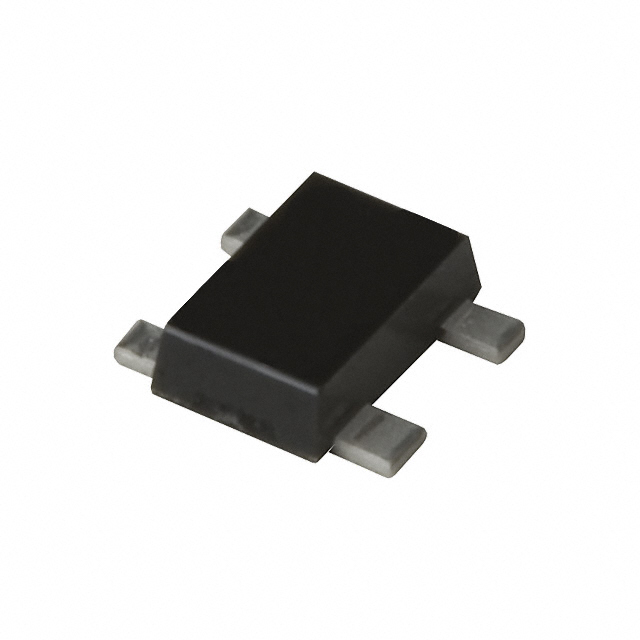 Renesas Electronics Corporation NE677M04-AObsolete | Discrete Semiconductor Products | RF TRANS NPN 6V 15GHZ SOT343F |
 Renesas Electronics Corporation IDT71V416L10YIObsolete | Integrated Circuits (ICs) | IC SRAM 4MBIT PARALLEL 44SOJ |
 Renesas Electronics Corporation IDT71V424YS10PHObsolete | Integrated Circuits (ICs) | IC SRAM 4MBIT PARALLEL 44TSOP II |
 Renesas Electronics Corporation | Integrated Circuits (ICs) | IC MCU 32BIT 1.5MB FLASH 64TFBGA |
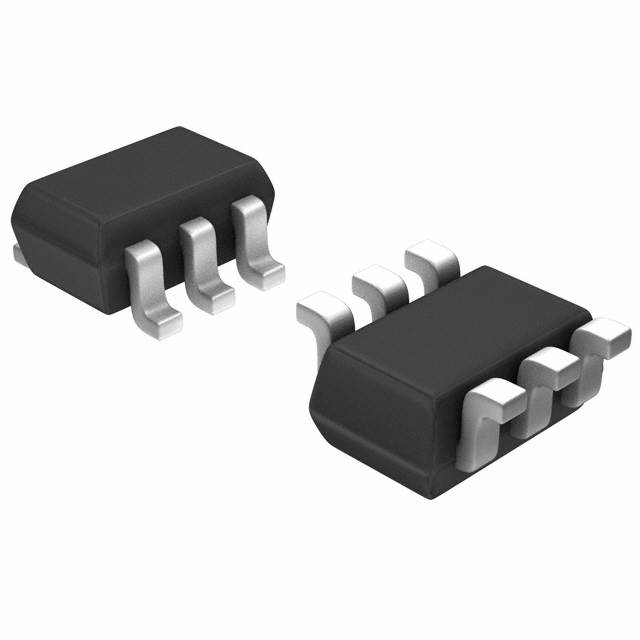 Renesas Electronics Corporation UPG2214TB-AObsolete | RF and Wireless | IC RF SWITCH SPDT 3GHZ 6-SMINI |
 Renesas Electronics Corporation R5F212J1SNSP#U0Obsolete | Integrated Circuits (ICs) | IC MCU 16BIT 4KB FLASH 20LSSOP |
 Renesas Electronics Corporation | Integrated Circuits (ICs) | MCU RA6 ARM CM33 200MHZ 512K/256 |