M
Microchip Technology
| Series | Category | # Parts | Status | Description |
|---|---|---|---|---|
| Part | Spec A | Spec B | Spec C | Spec D | Description |
|---|---|---|---|---|---|



| Series | Category | # Parts | Status | Description |
|---|---|---|---|---|
| Part | Spec A | Spec B | Spec C | Spec D | Description |
|---|---|---|---|---|---|
| Part | Category | Description |
|---|---|---|
Microchip Technology | Crystals Oscillators Resonators | CMOS OUTPUT CLOCK OSCILLATOR, 24MHZ NOM |
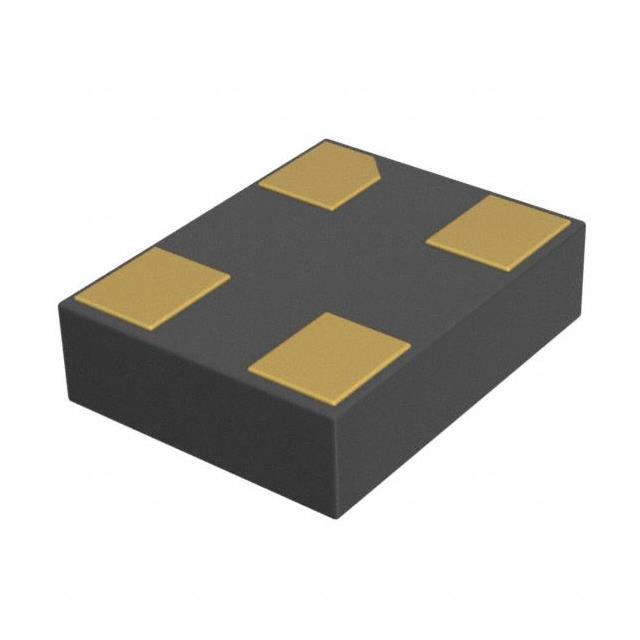 Microchip Technology | Crystals Oscillators Resonators | MEMS OSC |
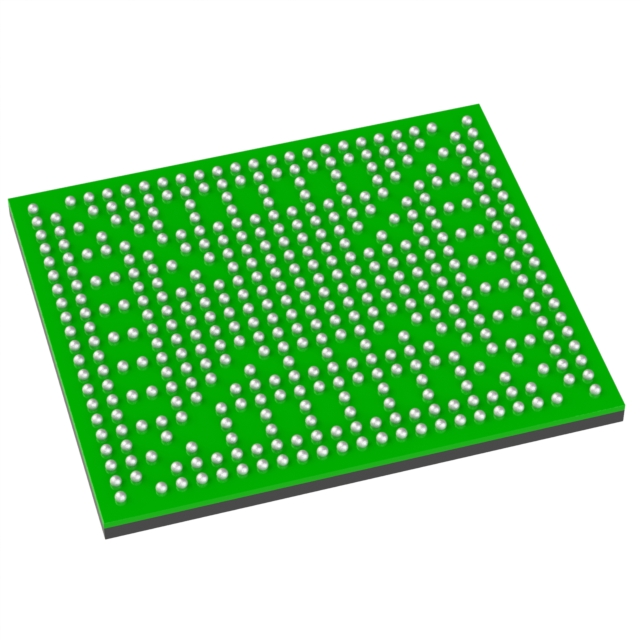 Microchip Technology | Integrated Circuits (ICs) | 1GHZ ARM CORTEX A7 W/ MIPI CAMERA AND 2GB INTEGRATED DDR3L |
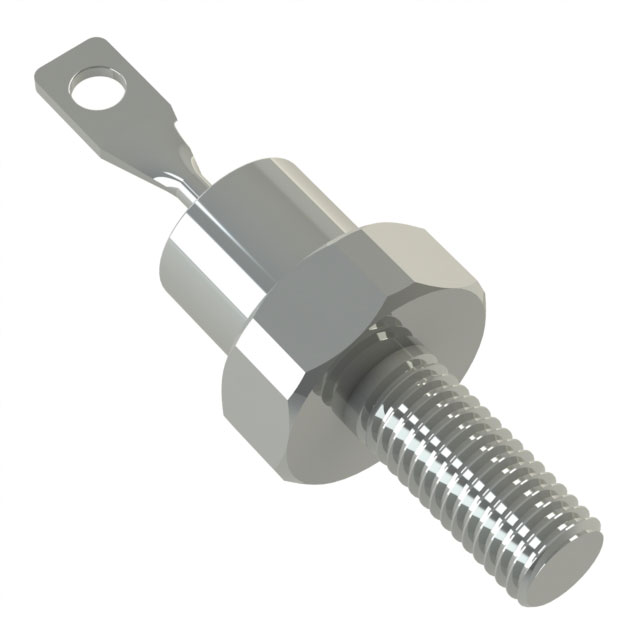 Microchip Technology | Discrete Semiconductor Products | DIODE GEN PURP 100V 12A DO203AA |
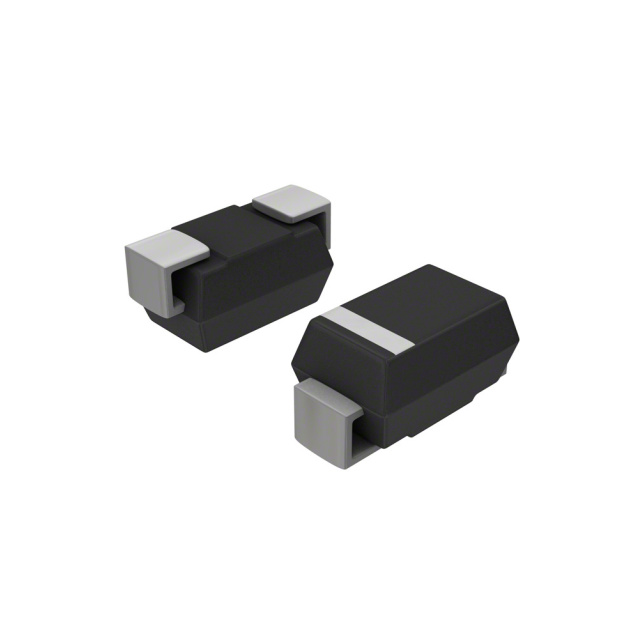 Microchip Technology MSMBJ5372BLTB | Circuit Protection | VOLTAGE REGULATOR |
 Microchip Technology | Integrated Circuits (ICs) | OPERATIONAL AMPLIFIER, 1 CHANNELS, 10 MHZ, 15 V/ΜS, 2.2V TO 5.5V, SOT-23, 5 PINS |
Microchip Technology LE9531CMQCTObsolete | Integrated Circuits (ICs) | IC TELECOM INTERFACE 28QFN |
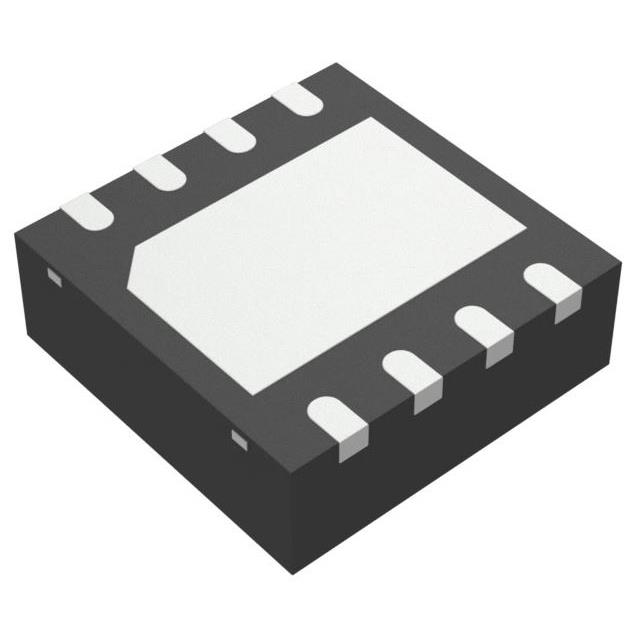 Microchip Technology MCP2021-330E/MD-AE2VAOObsolete | Integrated Circuits (ICs) | IC TRANSCEIVER |
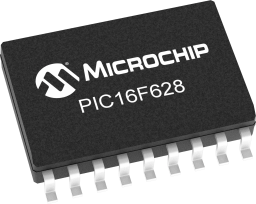 Microchip Technology | Integrated Circuits (ICs) | MCU 8-BIT PIC16 PIC RISC 3.5KB FLASH 3.3V/5V 18-PIN SOIC W TUBE |
Microchip Technology VCC6-LCF-212M500000Obsolete | Crystals Oscillators Resonators | DIFFERENTIAL XO +3.3 VDC +/-5% L |
| Series | Category | # Parts | Status | Description |
|---|---|---|---|---|
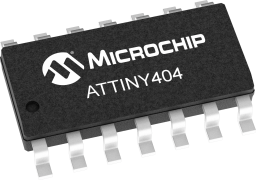
| Integrated Circuits (ICs) | 3 | Active | The ATtiny404 is a microcontroller using the 8-bit AVR® processor with a hardware multiplier, running at up to 20 MHz and 4 KB Flash, 256B SRAM, and 128B of EEPROM in a 14-pin package. The series uses the latest technologies from Microchip with a flexible and low-power architecture, including an Event System and SleepWalking, accurate analog features, and advanced peripherals. | |
| Embedded | 5 | Active | The ATtiny406 is a microcontroller using the 8-bit AVR® processor with a hardware multiplier, running at up to 20 MHz and 4 KB Flash, 256B SRAM, and 128B of EEPROM in a 24-pin package. The series uses the latest technologies from Microchip with a flexible and low-power architecture, including an Event System and SleepWalking, accurate analog features, and advanced peripherals. | |
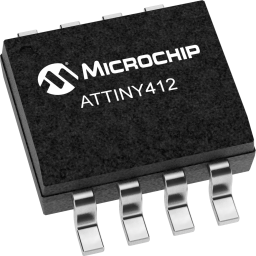
| Embedded | 3 | Active | The ATtiny412 is a microcontroller using the 8-bit AVR® processor with a hardware multiplier, running at up to 20 MHz and 4 KB Flash, 256B SRAM and 128B of EEPROM in an 8-pin package. The series uses the latest technologies from Microchip with a flexible and low-power architecture, including an Event System and SleepWalking, accurate analog features, and advanced peripherals. | |
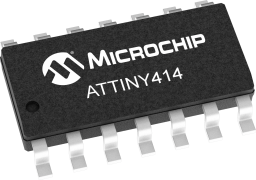
| Microcontrollers | 4 | Active | The ATtiny414 is a microcontroller using the 8-bit AVR® processor with a hardware multiplier, running at up to 20 MHz and 4 KB Flash, 256B SRAM, and 128B of EEPROM in a 14-pin package. The series uses the latest technologies from Microchip with a flexible and low-power architecture, including an Event System and SleepWalking, accurate analog features, and advanced peripherals. | |
| Embedded MCU, DSP Evaluation Boards | 7 | Active | The ATtiny416 is a microcontroller using the 8-bit AVR® processor with a hardware multiplier, running at up to 20 MHz and 4 KB Flash, 256B SRAM, and 128B of EEPROM in a 24-pin package. The series uses the latest technologies from Microchip with a flexible and low-power architecture, including an Event System and SleepWalking, accurate analog features, and advanced peripherals. | |
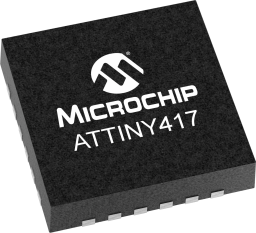
| Integrated Circuits (ICs) | 6 | Active | The ATtiny417 microcontroller featuring the 8-bit AVR® processor with a hardware multiplier, running at up to 20 MHz and with 4 KB Flash, 256B SRAM, and 128B of EEPROM in a 24-pin package. The series uses the latest Core Independent Peripherals with low-power features, including an Event System, intelligent analog, and advanced peripherals.
[**Additional Documents**](https://www.microchip.com/en-us/product/ATTINY817) | |
ATTINY42412-bit diff ADC with PGA | Integrated Circuits (ICs) | 5 | Active | The ATtiny424 is a microcontroller featuring the AVR® CPU with hardware multiplier, running at up to 20 MHz and with 4 KB Flash, 512B SRAM and 128B of EEPROM in 14-pin TSSOP and SOIC packages. The family uses the latest Core Independent Peripherals with low-power features, including an Event System, intelligent analog, and advanced peripherals.
The new 12-bit ADC offers true differential measuring capabilities with optional hardware accumulation of up to 1024 samples, which effectively gives up to 17-bits resolution. With sampling rates up to 375 ksps the analog data are available very rapidly. The Programmable Gain Amplifier (PGA) for the ADC can amplify single-ended and differential analog inputs to make it possible to measure even small amplitude signals efficiently.
[ATtiny1627 Product Family Overview (tinyAVR 2 Family)](https://www.microchip.com/en-us/products/microcontrollers-and-microprocessors/8-bit-mcus/avr-mcus/attiny1627)
**Functional Safety**
This product is suitable for [safety-critical applications](https://www.microchip.com/en-us/products/microcontrollers-and-microprocessors/8-bit-mcus/functional-safety) that target home appliances (IEC 60730), automotive (ISO 26262) and industrial (IEC 61508) products. We have important documentation and tools available to aid developers of safety applications—refer to the product feature list for links to the specific safety collateral. TÜV SÜD-certified MPLAB® X Integrated Development Environment (IDE) tools, such as the [MPLAB XC8 Functional Safety Compiler](https://www.microchip.com/en-us/development-tool/SW006021-FS), are also available for this product. |
ATTINY42612-bit diff ADC with PGA | Integrated Circuits (ICs) | 9 | Active | The ATtiny426 is a microcontroller featuring the AVR® CPU with hardware multiplier, running at up to 20 MHz and with 4 KB Flash, 512B SRAM and 128B of EEPROM in 20-pin VQFN 3 x 3 mm, SSOP and SOIC packages. The family uses the latest Core Independent Peripherals with low-power features, including an Event System, intelligent analog, and advanced peripherals.
The new 12-bit ADC offers true differential measuring capabilities with optional hardware accumulation of up to 1024 samples, which effectively gives up to 17-bits resolution. With sampling rates up to 375 ksps the analog data are available very rapidly. The Programmable Gain Amplifier (PGA) for the ADC can amplify single-ended and differential analog inputs to make it possible to measure even small amplitude signals efficiently.
[ATtiny1627 Product Family Overview (tinyAVR 2 Family)](https://www.microchip.com/en-us/products/microcontrollers-and-microprocessors/8-bit-mcus/avr-mcus/attiny1627)
**Functional Safety**
This product is suitable for [safety-critical applications](https://www.microchip.com/en-us/products/microcontrollers-and-microprocessors/8-bit-mcus/functional-safety) that target home appliances (IEC 60730), automotive (ISO 26262) and industrial (IEC 61508) products. We have important documentation and tools available to aid developers of safety applications—refer to the product feature list for links to the specific safety collateral. TÜV SÜD-certified MPLAB® X Integrated Development Environment (IDE) tools, such as the [MPLAB XC8 Functional Safety Compiler](https://www.microchip.com/en-us/development-tool/SW006021-FS), are also available for this product. |
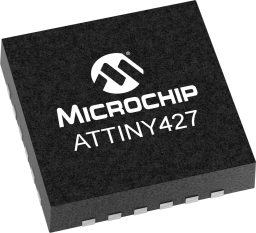
ATTINY42712-bit diff ADC with PGA | Embedded | 3 | Active | The ATtiny427 is a microcontroller featuring the AVR® CPU with hardware multiplier, running at up to 20 MHz and with 4 KB Flash, 512B SRAM and 128B of EEPROM in a 24-pin VQFN 4 x 4 mm package. The family uses the latest Core Independent Peripherals with low-power features, including an Event System, intelligent analog, and advanced peripherals.
The new 12-bit ADC offers true differential measuring capabilities with optional hardware accumulation of up to 1024 samples, which effectively gives up to 17-bits resolution. With sampling rates up to 375 ksps the analog data are available very rapidly. The Programmable Gain Amplifier (PGA) for the ADC can amplify single-ended and differential analog inputs to make it possible to measure even small amplitude signals efficiently.
[ATtiny1627 Product Family Overview (tinyAVR 2 Family)](https://www.microchip.com/en-us/products/microcontrollers-and-microprocessors/8-bit-mcus/avr-mcus/attiny1627)
**Functional Safety**
This product is suitable for [safety-critical applications](https://www.microchip.com/en-us/products/microcontrollers-and-microprocessors/8-bit-mcus/functional-safety) that target home appliances (IEC 60730), automotive (ISO 26262) and industrial (IEC 61508) products. We have important documentation and tools available to aid developers of safety applications—refer to the product feature list for links to the specific safety collateral. TÜV SÜD-certified MPLAB® X Integrated Development Environment (IDE) tools, such as the [MPLAB XC8 Functional Safety Compiler](https://www.microchip.com/en-us/development-tool/SW006021-FS), are also available for this product. |
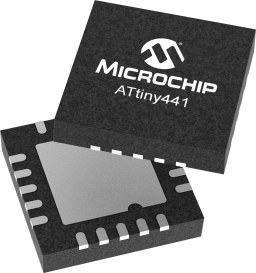
| Microcontrollers | 5 | Active | **Support for the ATtiny441 within Microchip Studio 6.1 requires a device support package: DOWNLOAD**
The high-performance Microchip picoPower® 8-bit AVR® RISC-based microcontroller combines 4 KB ISP Flash memory, 256B EEPROM, 256B SRAM, 12 general purpose I/O lines, 32 general purpose working registers, an 8-bit timer/counter with two PWM channels, two 16-bit timer/counters with two PWM channels, internal and external interrupts, a 12-channel 10-bit A/D converter, two on-chip analog comparators, two full-duplex USARTs with Start Frame wake-up from power-down, host/client SPI serial interface, client I2C serial interface, programmable gain stage (1x, 20x, and 100x) for 12 differential ADC channel pairs, programmable watchdog timer with internal oscillator, internally calibrated oscillator, and four software selectable power saving modes. The device operates between 1.7-5.5 volts.
By executing powerful instructions in a single clock cycle, the device achieves throughputs approaching one MIPS per MHz, balancing power consumption and processing speed. | |