


Beta
Melexis is a Belgian semiconductor leader specializing in automotive sensors and integrated circuits, with an average of 18 Melexis chips in every new car worldwide.
Parts that are not part of a series
Company background and product focus
Melexis Technologies NV, founded in 1988 in Belgium, is a world leader in automotive sensors and microelectronic semiconductor solutions. With approximately 90% of revenue from the automotive segment, Melexis chips are found in virtually every new vehicle produced globally, averaging 18 chips per car.
The company's product portfolio includes Hall effect sensors using conventional Hall and proprietary IMC-Hall technology, magnetic position sensors, current sensor ICs, pressure sensors, and temperature sensors. These components are essential for electric power steering, transmission systems, pedal and shifter sensing, and wheel speed detection.
© 2026 Zenode. All rights reserved.


Product families from Melexis Technologies NV
| Series | Category | Parts | Status | Description |
|---|---|---|---|---|
| Series | Category | Parts | Status | Description |
|---|---|---|---|---|
| RF, RFID, Wireless Evaluation Boards | 1 | Active | ||
| RF, RFID, Wireless Evaluation Boards | 1 | Active | ||
| Development Boards, Kits, Programmers | 1 | Active | ||
| Development Boards, Kits, Programmers | 1 | Active | ||
| Development Boards, Kits, Programmers | 1 | Active | ||
| Evaluation Boards | 1 | Active | ||
| Evaluation Boards | 1 | Active | ||
| Evaluation and Demonstration Boards and Kits | 1 | Active | ||
| Development Boards, Kits, Programmers | 1 | Active | ||
| Evaluation Boards | 1 | Active |
Parts from Melexis Technologies NV that are not part of a series
| Part Information | Pricing (lowest) | Utilized IC / Part | Total Output Count | Non-Isolated Output Count | Output Type | Voltage - Input (Maximum) | Voltage - Input (Minimum) | Contents | Accessory Type | Supplied Contents | Type |
|---|---|---|---|---|---|---|---|---|---|---|---|
 Melexis Technologies NV EVAL BOARD FOR MLX81116 | Sign in to see pricing | MLX81116 | 12 count | 12 count | Non-Isolated | 18 V | 5.5 V | Board | — | — | — |
 Melexis Technologies NV PTC-04 INTERCONNECTING CABLE | Sign in to see pricing | PTC Programmer | — | — | — | — | — | — | Cable Assembly | — | — |
 Melexis Technologies NV DEMO KIT FIR TEMPERATURE (WITH M | Sign in to see pricing | — | — | — | — | — | — | — | — | — | — |
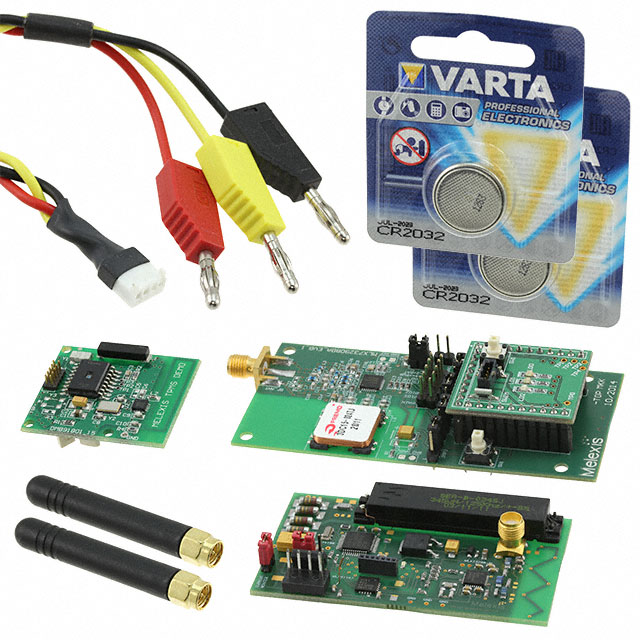 Melexis Technologies NV SMART ANTENNA MODULE | Sign in to see pricing | — | — | — | — | — | — | Board | — | Board(s) | Antenna |
 Melexis Technologies NV BRD INTRFC MAGKIT RTRY/LNR/JYSTK | Sign in to see pricing | — | — | — | — | — | — | — | Magnet Holder | — | — |
 Melexis Technologies NV KIT DEV IMC HALL CORE SOIC8 | Sign in to see pricing | — | — | — | — | — | — | Board | — | — | — |
 Melexis Technologies NV KIT DEV IMC SHIELD SOIC8 400KHZ | Sign in to see pricing | — | — | — | — | — | — | Board | — | — | — |
Melexis Technologies NV DVK MLX90384 INCLUDING MAGNET NO | Sign in to see pricing | — | — | — | — | — | — | — | — | — | — |
Melexis Technologies NV DVK MLX90384 INCLUDING MAGNET NO | Sign in to see pricing | — | — | — | — | — | — | — | — | — | — |
Melexis Technologies NV PEOPLE DETECTION DEVELOPMENT KIT | Sign in to see pricing | — | — | — | — | — | — | — | — | — | — |