L
LITTELFUSE
| Series | Category | # Parts | Status | Description |
|---|---|---|---|---|
| Part | Spec A | Spec B | Spec C | Spec D | Description |
|---|---|---|---|---|---|



| Series | Category | # Parts | Status | Description |
|---|---|---|---|---|
| Part | Spec A | Spec B | Spec C | Spec D | Description |
|---|---|---|---|---|---|
| Part | Category | Description |
|---|---|---|
 LITTELFUSE DRR-DTH-Q2167-2Obsolete | Switches | SWITCH REED CUSTOM |
LITTELFUSE DRR-DTH-70-85Obsolete | Switches | SWITCH REED SPDT 350MA 350V |
LITTELFUSE | Switches | ROCKER SWITCHES |
 LITTELFUSE | Switches | SWITCH PUSHBUTTON DPDT 6A 250V |
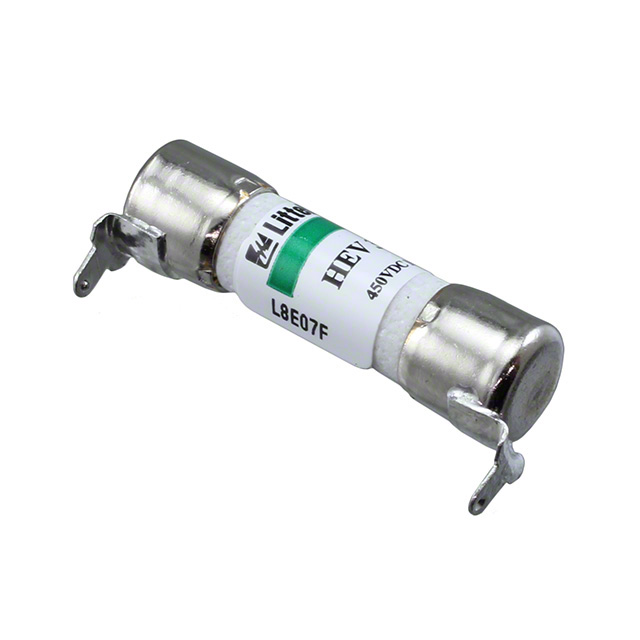 LITTELFUSE 0HEV040.ZXPCBLObsolete | Circuit Protection | FUSE - HEV LC 425VDC 40A, PCB 3.9MM TERM/ BULK |
LITTELFUSE 0324015.HObsolete | Circuit Protection | FUSE CERM 15A 250VAC 125VDC 3AB |
 LITTELFUSE NANOSMD200LR-2Obsolete | Circuit Protection | PTC RESET FUSE 6V 2A 1206 |
LITTELFUSE | Connectors Interconnects | LINEAR IC'S |
 LITTELFUSE | Circuit Protection | TVS 1.5KW 36V 5%BI DO-214AB TR13 |
LITTELFUSE | Connectors Interconnects | LINEAR IC'S |
| Series | Category | # Parts | Status | Description |
|---|---|---|---|---|
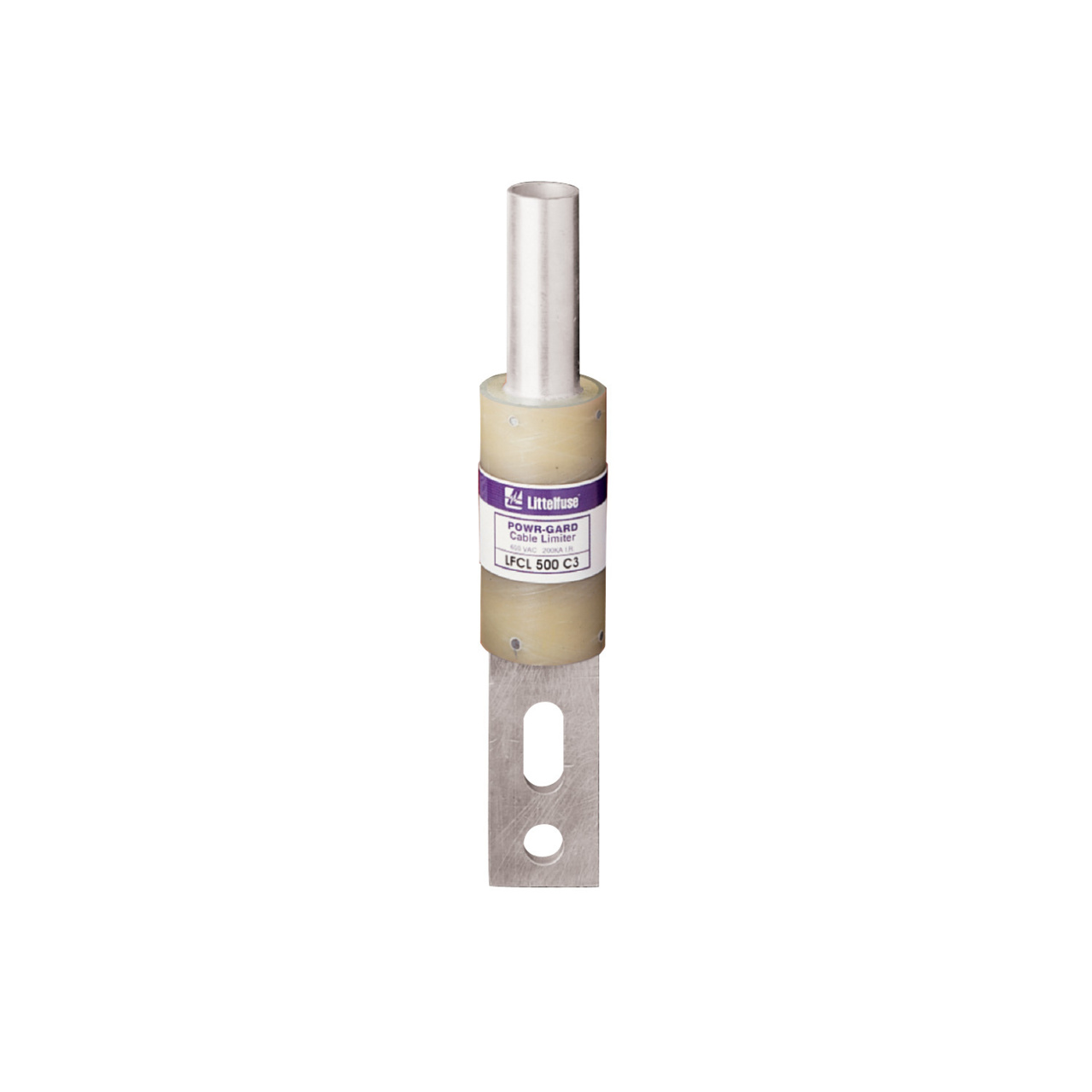
LFCL350C3ACS 600V CABLE LIMITER 350MCM COPPER | Electrical, Specialty Fuses | 1 | Active | Cable limiters are fusible devices that provide very fast short-circuit protection, primarily to faulted cables, but also to other conductors such as busway. Cable limiters do not have an ampere rating, and cannot be used to provide overload protection. Cable limiters are selected by cable size; for example, a 500 kcmil cable requires a 500 kcmil cable limiter. Their main use is to isolate faulted cables in circuits containing three or more parallel conductors per phase. They may be installed on the line side of the main service to provide short-circuit protection to the service conductors. This is especially important when service conductors are tapped from large low-voltage networks or from large low impedance transformers. Cable limiters have terminals which permit them to be installed in a variety of equipment. The most common configuration is the offset blade on one end and the crimp terminal on the other end. This permits the limiter to replace a cable terminal (lug). |
LFCL4/0C1ACS 600V CABLE LIMITER 4/0 COPPER | Circuit Protection | 1 | Active | Cable limiters are fusible devices that provide very fast short-circuit protection, primarily to faulted cables, but also to other conductors such as busway. Cable limiters do not have an ampere rating, and cannot be used to provide overload protection. Cable limiters are selected by cable size; for example, a 500 kcmil cable requires a 500 kcmil cable limiter. Their main use is to isolate faulted cables in circuits containing three or more parallel conductors per phase. They may be installed on the line side of the main service to provide short-circuit protection to the service conductors. This is especially important when service conductors are tapped from large low-voltage networks or from large low impedance transformers. Cable limiters have terminals which permit them to be installed in a variety of equipment. The most common configuration is the offset blade on one end and the crimp terminal on the other end. This permits the limiter to replace a cable terminal (lug). |
LFCL4/0C6ACS 600V CABLE LIMITER 4/0 COPPER | Circuit Protection | 1 | Active | Cable limiters are fusible devices that provide very fast short-circuit protection, primarily to faulted cables, but also to other conductors such as busway. Cable limiters do not have an ampere rating, and cannot be used to provide overload protection. Cable limiters are selected by cable size; for example, a 500 kcmil cable requires a 500 kcmil cable limiter. Their main use is to isolate faulted cables in circuits containing three or more parallel conductors per phase. They may be installed on the line side of the main service to provide short-circuit protection to the service conductors. This is especially important when service conductors are tapped from large low-voltage networks or from large low impedance transformers. Cable limiters have terminals which permit them to be installed in a variety of equipment. The most common configuration is the offset blade on one end and the crimp terminal on the other end. This permits the limiter to replace a cable terminal (lug). |
LFCL500C1ACS 600V CABLE LIMITER 500MCM COPPER | Circuit Protection | 1 | Active | Cable limiters are fusible devices that provide very fast short-circuit protection, primarily to faulted cables, but also to other conductors such as busway. Cable limiters do not have an ampere rating, and cannot be used to provide overload protection. Cable limiters are selected by cable size; for example, a 500 kcmil cable requires a 500 kcmil cable limiter. Their main use is to isolate faulted cables in circuits containing three or more parallel conductors per phase. They may be installed on the line side of the main service to provide short-circuit protection to the service conductors. This is especially important when service conductors are tapped from large low-voltage networks or from large low impedance transformers. Cable limiters have terminals which permit them to be installed in a variety of equipment. The most common configuration is the offset blade on one end and the crimp terminal on the other end. This permits the limiter to replace a cable terminal (lug). |
LFCL500C3ACS 600V CABLE LIMITER 500MCM COPPER | Electrical, Specialty Fuses | 1 | Active | Cable limiters are fusible devices that provide very fast short-circuit protection, primarily to faulted cables, but also to other conductors such as busway. Cable limiters do not have an ampere rating, and cannot be used to provide overload protection. Cable limiters are selected by cable size; for example, a 500 kcmil cable requires a 500 kcmil cable limiter. Their main use is to isolate faulted cables in circuits containing three or more parallel conductors per phase. They may be installed on the line side of the main service to provide short-circuit protection to the service conductors. This is especially important when service conductors are tapped from large low-voltage networks or from large low impedance transformers. Cable limiters have terminals which permit them to be installed in a variety of equipment. The most common configuration is the offset blade on one end and the crimp terminal on the other end. This permits the limiter to replace a cable terminal (lug). |
LFCL500C6ACS 600V CABLE LIMITER 500MCM COPPER | Circuit Protection | 1 | Active | Cable limiters are fusible devices that provide very fast short-circuit protection, primarily to faulted cables, but also to other conductors such as busway. Cable limiters do not have an ampere rating, and cannot be used to provide overload protection. Cable limiters are selected by cable size; for example, a 500 kcmil cable requires a 500 kcmil cable limiter. Their main use is to isolate faulted cables in circuits containing three or more parallel conductors per phase. They may be installed on the line side of the main service to provide short-circuit protection to the service conductors. This is especially important when service conductors are tapped from large low-voltage networks or from large low impedance transformers. Cable limiters have terminals which permit them to be installed in a variety of equipment. The most common configuration is the offset blade on one end and the crimp terminal on the other end. This permits the limiter to replace a cable terminal (lug). |
LFCL750C3ACS 600V CABLE LIMITER 750MCM COPPER | Electrical, Specialty Fuses | 1 | Active | Cable limiters are fusible devices that provide very fast short-circuit protection, primarily to faulted cables, but also to other conductors such as busway. Cable limiters do not have an ampere rating, and cannot be used to provide overload protection. Cable limiters are selected by cable size; for example, a 500 kcmil cable requires a 500 kcmil cable limiter. Their main use is to isolate faulted cables in circuits containing three or more parallel conductors per phase. They may be installed on the line side of the main service to provide short-circuit protection to the service conductors. This is especially important when service conductors are tapped from large low-voltage networks or from large low impedance transformers. Cable limiters have terminals which permit them to be installed in a variety of equipment. The most common configuration is the offset blade on one end and the crimp terminal on the other end. This permits the limiter to replace a cable terminal (lug). |
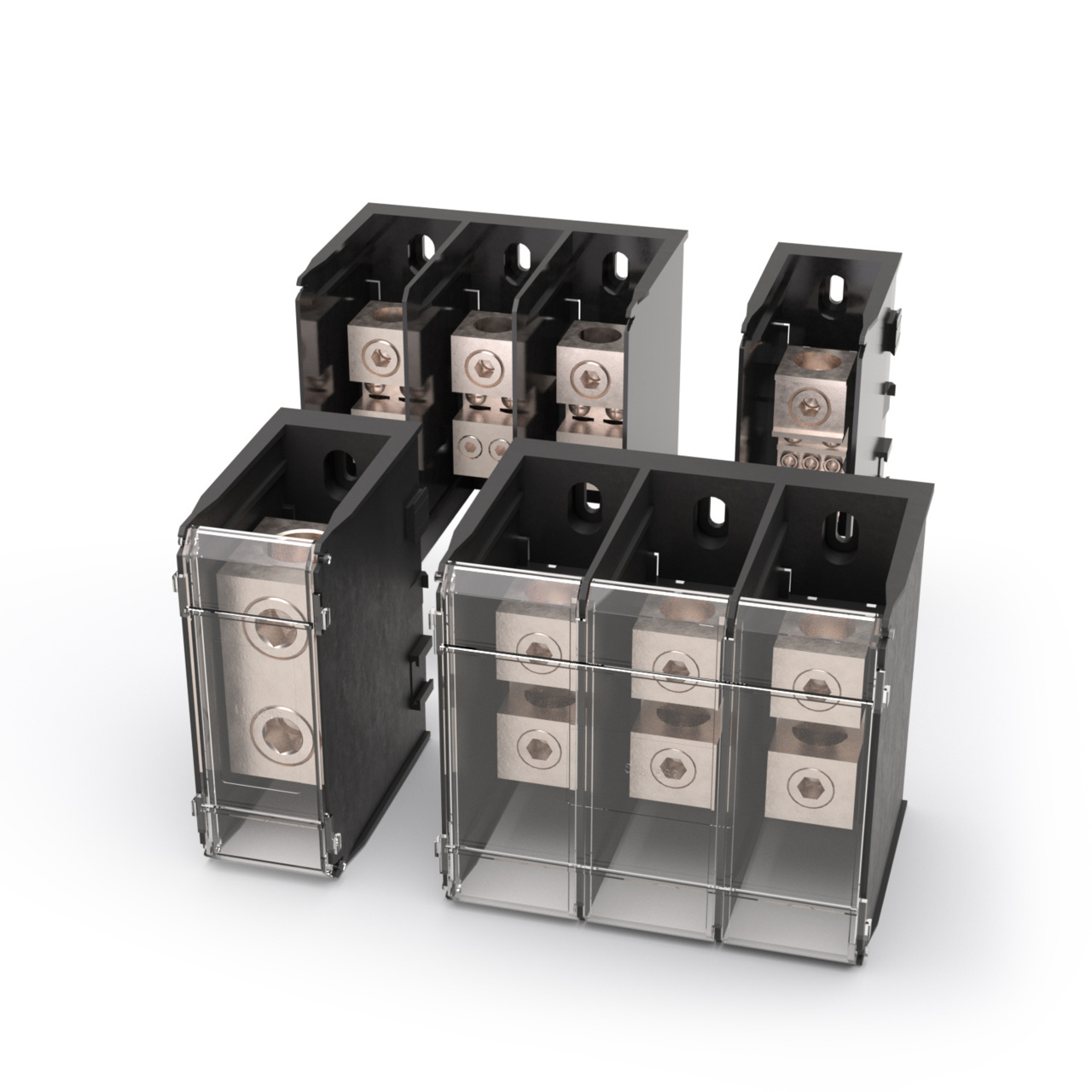
LFD04013DIST BLOK 600V 175A 3 POLE LINE 1 LOAD 6 | Connectors, Interconnects | 1 | Active | POWR-BLOKS power distribution blocks offer a safe, convenient way of splicing cables, providing a fixed junction tap-off point or splitting primary power into secondary circuits. LX2XXX-DIN series offers integral DIN-Rail mount and an optional hinged safety cover. |
LFD14003DIST BLOK 600V 115A 3 POLE LINE 1 LOAD 4 | Connectors, Interconnects | 1 | Active | POWR-BLOKS power distribution blocks offer a safe, convenient way of splicing cables, providing a fixed junction tap-off point or splitting primary power into secondary circuits. LX2XXX-DIN series offers integral DIN-Rail mount and an optional hinged safety cover. |
LFD25702DIST BLOCK 175A 2 POLE LINE 1 LOAD 4 | Terminal Blocks | 1 | Active | POWR-BLOKS power distribution blocks offer a safe, convenient way of splicing cables, providing a fixed junction tap-off point or splitting primary power into secondary circuits. LX2XXX-DIN series offers integral DIN-Rail mount and an optional hinged safety cover. |