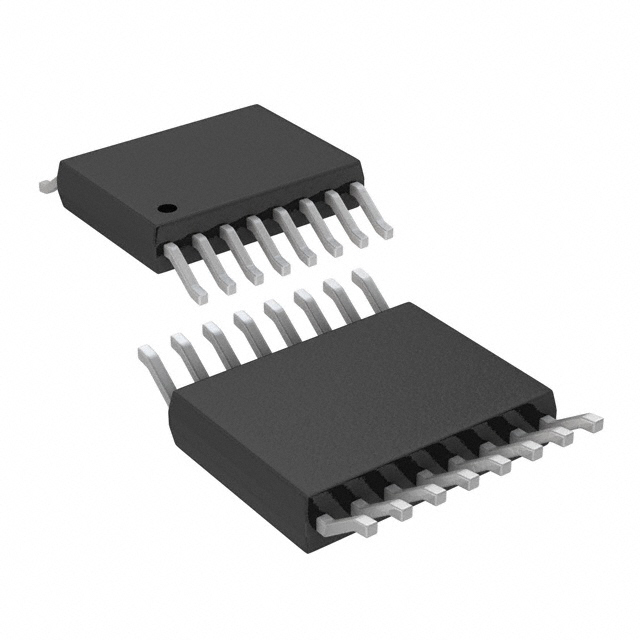
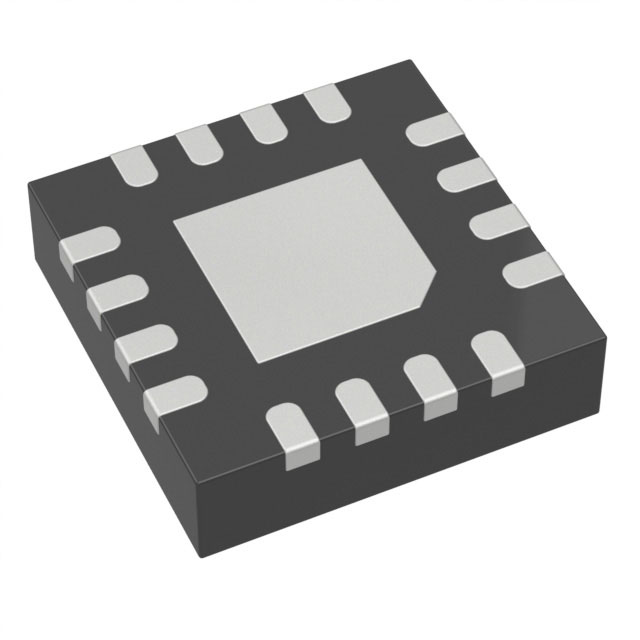
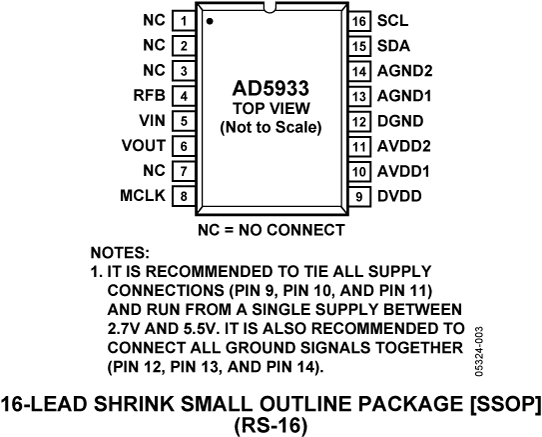
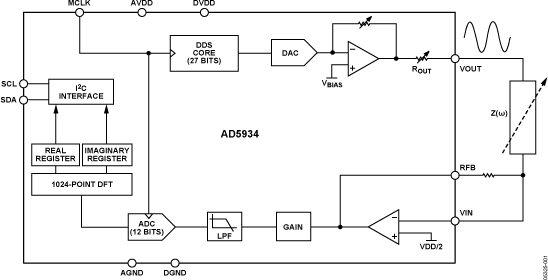
AD59331 MSPS, 12-Bit Impedance Converter, Network Analyzer | Evaluation and Demonstration Boards and Kits | 4 | Active | The AD5933 is a high precision impedance converter system solution that combines an on-board frequency generator with a 12-bit, 1 MSPS, analog-to-digital converter (ADC). The frequency generator allows an external complex impedance to be excited with a known frequency. The response signal from the impedance is sampled by the on-board ADC and a discrete Fourier transform (DFT) is processed by an on-board DSP engine. The DFT algorithm returns a real (R) and imaginary (I) data-word at each output frequency.Once calibrated, the magnitude of the impedance and relative phase of the impedance at each frequency point along the sweep is easily calculated. This is done off chip using the real and imaginary register contents, which can be read from the serial I2C interface.A similar device, also available from Analog Devices, Inc., is theAD5934, a 2.7 V to 5.5 V, 250 kSPS, 12-bit impedance converter, with an internal temperature sensor and is packaged in a 16-lead SSOPApplicationsElectrochemical analysisBioelectrical impedance analysisImpedance spectroscopyComplex impedance measurementCorrosion monitoring and protection equipmentBiomedical and automotive sensorsProximity sensingNondestructive testingMaterial property analysisFuel/battery cell condition monitoring |
| Integrated Circuits (ICs) | 2 | Active | |
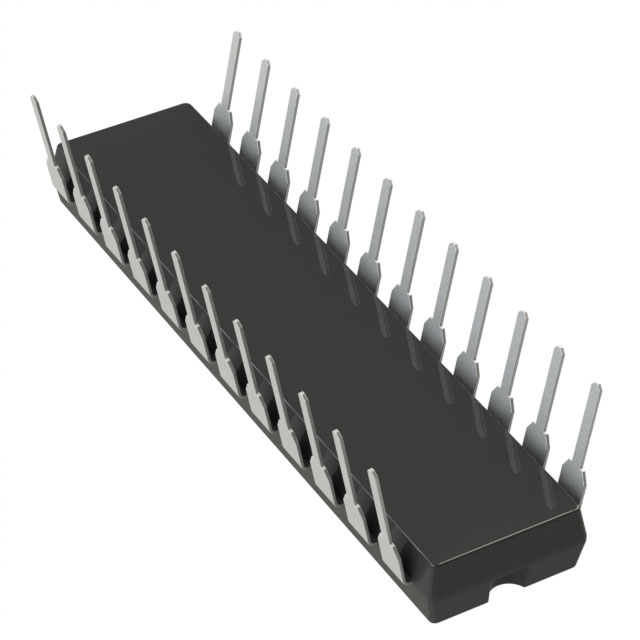
AD594Type J Thermocouple Amplifier with Cold Junction Compensation | PMIC | 3 | Active | The AD594/AD595 is a complete instrumentation amplifier and thermocouple cold junction compensator on a monolithic chip. It combines an ice point reference with a precalibrated amplifier to produce a high level (10 mV/°C) output directly from a thermocouple signal. Pin-strapping options allow it to be used as a linear amplifier-compensator or as a switched output setpoint controller using either fixed or remote setpoint control. It can be used to amplify its compensation voltage directly, thereby converting it to a stand-alone Celsius transducer with a low impedance voltage output.The AD594/AD595 includes a thermocouple failure alarm that indicates if one or both thermocouple leads become open. The alarm output has a flexible format which includes TTL drive capability.The AD594/AD595 can be powered from a single ended supply (including +5 V) and by including a negative supply, temperatures below 0°C can be measured. To minimize self-heating, an unloaded AD594/AD595 will typically operate with a total supply current 160 µA, but is also capable of delivering in excess of ±5 mA to a load.The AD594 is precalibrated by laser wafer trimming to match the characteristic of type J (iron-constantan) thermocouples and the AD595 is laser trimmed for type K (chromel-alumel) inputs. The temperature transducer voltages and gain control resistors are available at the package pins so that the circuit can be recalibrated for the thermocouple types by the addition of two or three resistors. These terminals also allow more precise calibration for both thermocouple and thermometer applications.The AD594/AD595 is available in two performance grades. The C and the A versions have calibration accuracies of ±1°C and ±3°C, respectively. Both are designed to be used from 0°C to +50°C, and are available in 14-pin, hermetically sealed, side-brazed ceramic DIPs as well as low cost cerdip packages. |
AD5940High-Precision, Impedance & Electrochemical Front End | Data Acquisition | 3 | Active | The AD5940 and AD5941 are high precision, low power analog front ends (AFEs) designed for portable applications that require high precision, electrochemical-based measurement techniques, such as amperometric, voltammetric, or impedance measurements. The AD5940/AD5941 is designed for skin impedance and body impedance measurements, and works with the AD8233 AFE in a complete bioelectric or biopotential measurement system. The AD5940/AD5941 is designed for electrochemical toxic gas sensing.The AD5940/AD5941 consist of two high precision excitation loops and one common measurement channel, which enables a wide capability of measurements of the sensor under test. The first excitation loop consists of an ultra low power, dual-output string, digital-to-analog converter (DAC), and a low power, low noise potentiostat. One output of the DAC controls the noninverting input of the potentiostat, and the other output controls the noninverting input of the transimpedance amplifier (TIA). This low power excitation loop is capable of generating signals from dc to 200 Hz.The second excitation loop consists of a 12-bit DAC, referred to as the high speed DAC. This DAC is capable of generating high frequency excitation signals up to 200 kHz.The AD5940/AD5941 measurement channel features a 16-bit, 800 kSPS, multichannel successive approximation register (SAR) analog-to-digital converter (ADC) with input buffers, a built in antialias filter, and a programmable gain amplifier (PGA). An input multiplexer (mux) in front of the ADC allows the user to select an input channel for measurement. These input channels include multiple external current inputs, external voltage inputs, and internal channels. The internal channels allow diagnostic measurements of the internal supply voltages, die temperature, and reference voltages.The current inputs include two TIAs with programmable gain and load resistors for measuring different sensor types. The first TIA, referred to as the low power TIA, measures low bandwidth signals. The second TIA, referred to as the high speed TIA, measures high bandwidth signals up to 200 kHz.An ultra low leakage, programmable switch matrix connects the sensor to the internal analog excitation and measurement blocks. This matrix provides an interface for connecting external transimpedance amplifier resistors (RTIAs) and calibration resistors. The matrix can also be used to multiplex multiple electronic measurement devices to the same wearable electrodes.A precision 1.82 V and 2.5 V on-chip reference source is available. The internal ADC and DAC circuits use this on-chip reference source to ensure low drift performance for the 1.82 V and 2.5 V peripherals.The AD5940/AD5941 measurement blocks can be controlled via direct register writes through the serial peripheral interface (SPI) interface, or, alternatively, by using a preprogrammable sequencer, which provides autonomous control of the AFE chip. 6 kB of static random access memory (SRAM) is partitioned for a deep data first in, first out (FIFO) and command FIFO. Measurement commands are stored in the command FIFO and measurement results are stored in the data FIFO. A number of FIFO related interrupts are available to indicate when the FIFO is full.A number of general-purpose inputs/outputs (GPIOs) are available and controlled using the AFE sequencer. The AFE sequencer allows cycle accurate control of multiple external sensor devices.The AD5940/AD5941 operate from a 2.8 V to 3.6 V supply and are specified over a temperature range of −40°C to +85°C. The AD5940 is packaged in a 56-lead, 3.6 mm × 4.2 mm WLCSP. The AD5941 is packaged in a 48-lead LFCSP.APPLICATIONSElectrochemical measurementsElectrochemical gas sensorsPotentiostat/amperometric/voltammetry/cyclic voltammetryBioimpedance applicationsSkin impedanceBody impedanceContinuous glucose monitoringBattery impedance |
AD5941High Precision, Impedance & Electrochemical Front End | Development Boards, Kits, Programmers | 4 | Active | The AD5940 and AD5941 are high precision, low power analog front ends (AFEs) designed for portable applications that require high precision, electrochemical-based measurement techniques, such as amperometric, voltammetric, or impedance measurements. The AD5940/AD5941 is designed for skin impedance and body impedance measurements, and works with the AD8233 AFE in a complete bioelectric or biopotential measurement system. The AD5940/AD5941 is designed for electrochemical toxic gas sensing.The AD5940/AD5941 consist of two high precision excitation loops and one common measurement channel, which enables a wide capability of measurements of the sensor under test. The first excitation loop consists of an ultra low power, dual-output string, digital-to-analog converter (DAC), and a low power, low noise potentiostat. One output of the DAC controls the noninverting input of the potentiostat, and the other output controls the noninverting input of the transimpedance amplifier (TIA). This low power excitation loop is capable of generating signals from dc to 200 Hz.The second excitation loop consists of a 12-bit DAC, referred to as the high speed DAC. This DAC is capable of generating high frequency excitation signals up to 200 kHz.The AD5940/AD5941 measurement channel features a 16-bit, 800 kSPS, multichannel successive approximation register (SAR) analog-to-digital converter (ADC) with input buffers, a built in antialias filter, and a programmable gain amplifier (PGA). An input multiplexer (mux) in front of the ADC allows the user to select an input channel for measurement. These input channels include multiple external current inputs, external voltage inputs, and internal channels. The internal channels allow diagnostic measurements of the internal supply voltages, die temperature, and reference voltages.The current inputs include two TIAs with programmable gain and load resistors for measuring different sensor types. The first TIA, referred to as the low power TIA, measures low bandwidth signals. The second TIA, referred to as the high speed TIA, measures high bandwidth signals up to 200 kHz.An ultra low leakage, programmable switch matrix connects the sensor to the internal analog excitation and measurement blocks. This matrix provides an interface for connecting external transimpedance amplifier resistors (RTIAs) and calibration resistors. The matrix can also be used to multiplex multiple electronic measurement devices to the same wearable electrodes.A precision 1.82 V and 2.5 V on-chip reference source is available. The internal ADC and DAC circuits use this on-chip reference source to ensure low drift performance for the 1.82 V and 2.5 V peripherals.The AD5940/AD5941 measurement blocks can be controlled via direct register writes through the serial peripheral interface (SPI) interface, or, alternatively, by using a preprogrammable sequencer, which provides autonomous control of the AFE chip. 6 kB of static random access memory (SRAM) is partitioned for a deep data first in, first out (FIFO) and command FIFO. Measurement commands are stored in the command FIFO and measurement results are stored in the data FIFO. A number of FIFO related interrupts are available to indicate when the FIFO is full.A number of general-purpose inputs/outputs (GPIOs) are available and controlled using the AFE sequencer. The AFE sequencer allows cycle accurate control of multiple external sensor devices.The AD5940/AD5941 operate from a 2.8 V to 3.6 V supply and are specified over a temperature range of −40°C to +85°C. The AD5940 is packaged in a 56-lead, 3.6 mm × 4.2 mm WLCSP. The AD5941 is packaged in a 48-lead LFCSP.APPLICATIONSElectrochemical measurementsElectrochemical gas sensorsPotentiostat/amperometric/voltammetry/cyclic voltammetryBioimpedance applicationsSkin impedanceBody impedanceContinuous glucose monitoringBattery impedance |
AD595Type K Thermocouple Amplifier with Cold Junction Compensation | Integrated Circuits (ICs) | 5 | Active | The AD594/AD595 is a complete instrumentation amplifier and thermocouple cold junction compensator on a monolithic chip. It combines an ice point reference with a precalibrated amplifier to produce a high level (10 mV/°C) output directly from a thermocouple signal. Pin-strapping options allow it to be used as a linear amplifier-compensator or as a switched output setpoint controller using either fixed or remote setpoint control. It can be used to amplify its compensation voltage directly, thereby converting it to a stand-alone Celsius transducer with a low impedance voltage output.The AD594/AD595 includes a thermocouple failure alarm that indicates if one or both thermocouple leads become open. The alarm output has a flexible format which includes TTL drive capability.The AD594/AD595 can be powered from a single ended supply (including +5 V) and by including a negative supply, temperatures below 0°C can be measured. To minimize self-heating, an unloaded AD594/AD595 will typically operate with a total supply current 160 µA, but is also capable of delivering in excess of ±5 mA to a load.The AD594 is precalibrated by laser wafer trimming to match the characteristic of type J (iron-constantan) thermocouples and the AD595 is laser trimmed for type K (chromel-alumel) inputs. The temperature transducer voltages and gain control resistors are available at the package pins so that the circuit can be recalibrated for the thermocouple types by the addition of two or three resistors. These terminals also allow more precise calibration for both thermocouple and thermometer applications.The AD594/AD595 is available in two performance grades. The C and the A versions have calibration accuracies of ±1°C and ±3°C, respectively. Both are designed to be used from 0°C to +50°C, and are available in 14-pin, hermetically sealed, side-brazed ceramic DIPs as well as low cost cerdip packages. |
AD597Type K Thermocouple Conditioner and Setpoint Controller | Integrated Circuits (ICs) | 1 | Active | The AD596/AD597 is a monolithic temperature setpoint controller which has been optimized for use at elevated temperatures such as those found in oven control applications. The device cold junction compensates and amplifies a type J or K thermocouple input to derive an internal signal proportional to temperature. The internal signal is then compared with an externally applied setpoint voltage to yield a low impedance switched output voltage. Dead-Band or switching hysteresis can be programmed using a single external resistor. Alternately, the AD596/ AD597 can be configured to provide a voltage output (10 mV/°C) directly from a type J or K thermocouple signal. It can also be used as a stand-alone voltage output temperature sensor.The AD596/AD597 can be powered with a single supply from +5 V to +30 V, or dual supplies up to a total span of 36 V. Typical quiescent supply current is 160 µA which minimizes self-heating errors.The AD596/AD597 H package option includes a thermocouple failure alarm that indicates an open thermocouple lead when operated in the temperature proportional measurement mode. The alarm output has a flexible format which can be used to drive relays, LEDs or TTL logic.The device is packaged in a reliability qualified, cost effective 10-pin metal can, 8-pin plastic mini-DIP or SOIC and is trimmed to operate over an ambient temperature range from +25°C to +100°C. Operation over an extended ambient temperature range is possible with slightly reduced accuracy. The AD596 will amplify thermocouple signals covering the entire -200°C to +760°C temperature range recommended for type J thermocouples while the AD597 can accommodate -200°C to +1250°C type K inputs.The AD596/AD597 has a calibration accuracy of ±4°C at an ambient temperature of 60°C and an ambient temperature stability specification of 0.05°C/°C from +25°C to +100°C. If higher accuracy, or a lower ambient operating temperature is required, either the AD594 (J thermocouple) or AD595 (K thermocouple) should be considered. |
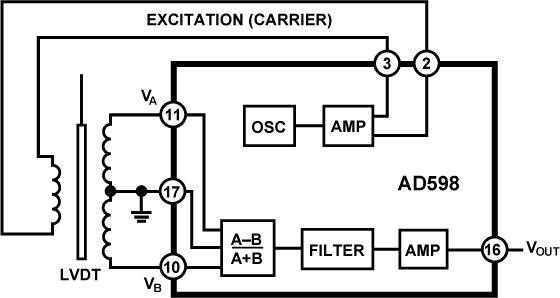
AD598LVDT Signal Conditioner | Sensor and Detector Interfaces | 2 | Active | The AD598 is a complete, monolithic Linear Variable Differential Transformer (LVDT) signal conditioning subsystem. It is used in conjunction with LVDTs to convert transducer mechanical position to a unipolar or bipolar dc voltage with a high degree of accuracy and repeatability. All circuit functions are included on the chip. With the addition of a few external passive components to set frequency and gain, the AD598 converts the raw LVDT secondary output to a scaled dc signal. The device can also be used with RVDT transducers.The AD598 contains a low distortion sine wave oscillator to drive the LVDT primary. The LVDT secondary output consists of two sine waves that drive the AD598 directly. The AD598 operates upon the two signals, dividing their difference by their sum, producing a scaled unipolar or bipolar dc output.The AD598 uses a unique ratiometric architecture (patent pending) to eliminate several of the disadvantages associated with traditional approaches to LVDT interfacing. The benefits of this new circuit are: no adjustments are necessary, transformer null voltage and primary to secondary phase shift does not affect system accuracy, temperature stability is improved, and transducer interchangeability is improved. |
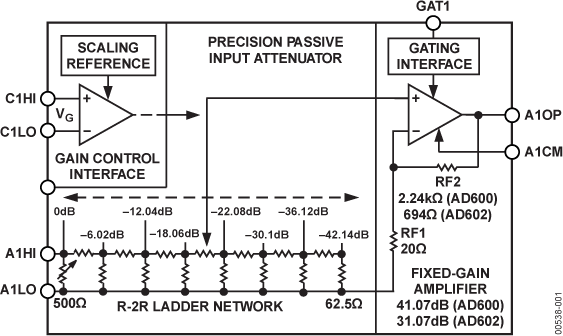
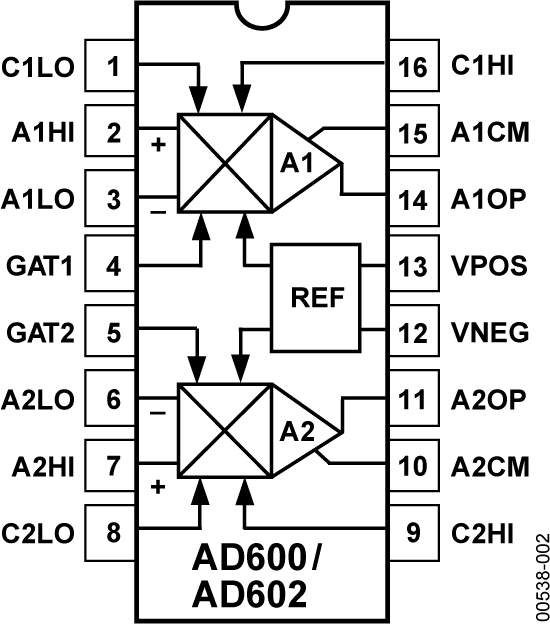
AD600Dual, Low Noise, Wideband Variable Gain Amplifier, 0dB To +40dB Gain | Integrated Circuits (ICs) | 8 | Active | The AD600/AD602 dual channel, low noise, variable gain amplifiers are optimized for use in ultrasound imaging systems, but are applicable to any application requiring precise gain, low noise and distortion, and wide bandwidth. Each independent channel provides a gain of 0 dB to +40 dB in the AD600 and -10 dB to +30 dB in the AD602. The lower gain of the AD602 results in an improved signal-to-noise ratio (SNR) at the output. However, both products have the same 1.4 nV/√Hz input noise spectral density. The decibel gain is directly proportional to the control voltage, accurately calibrated, and supply and temperature-stable.To achieve the difficult performance objectives, a proprietary circuit form, the X-AMP®, was developed. Each channel of the X-AMP comprises a variable attenuator of 0 dB to -42.14 dB followed by a high speed fixed gain amplifier. In this way, the amplifier never has to cope with large inputs, and can benefit from the use of negative feedback to precisely define the gain and dynamics. The attenuator is realized as a 7-stage R-2R ladder network having an input resistance of 100W, laser trimmed to ±2%. The attenuation between tap points is 6.02 dB; the gain-control circuit provides continuous interpolation between these taps. The resulting control function is linear in dB.The gain-control interfaces are fully differential, providing an input resistance of ~15 MWand a scale factor of 32 dB/V (that is, 31.25 mV/dB) defined by an internal voltage reference. The response time of this interface is less than 1 µs. Each channel also has an independent gating facility that optionally blocks signal transmission and sets the dc output level to within a few millivolts of the output ground. The gating control input is TTL- and CMOS-compatible.The maximum gain of the AD600 is 41.07 dB, and the maximum gain of the AD602 is 31.07 dB; the -3 dB bandwidth of both models is nominally 35 MHz, essentially independent of the gain. The SNR for a 1 V rms output and a 1 MHz noise bandwidth is typically 76 dB for the AD600 and 86 dB for the AD602. The amplitude response is flat within ±0.5 dB from 100 kHz to 10 MHz; over this frequency range, the group delay varies by less than ±2 ns at all gain settings.Each amplifier channel can drive 100Wload impedances with low distortion. For example, the peak specified output is ±2.5 V minimum into a 500Wload, or ±1 V into a 100Wload. For a 200Wload in shunt with 5 pF, the total harmonic distortion for a ±1 V sinusoidal output at 10 MHz is typically -60 dBc.The AD600J/AD602J are specified for operation from 0°C to 70°C and are available in 16-lead PDIP (N) and 16-lead SOIC packages. The AD600A/AD602A are specified for operation from -40°C to +85°C and are available in 16-lead CERDIP (Q) and 16-lead SOIC packages. The AD600S/AD602S are specified for operation from -55°C to +125°C, are available in a 16-lead CERDIP (Q) package, and are MIL-STD-883 compliant. The AD600S/AD602S are also available under DESC SMD 5962-94572.AD600 - Gain Range: 0 dB to 40 dBAD602 - Gain Range: -10 dB to + 30 dB |
AD602Dual, Low Noise, Wideband Variable Gain Amplifier, -10dB To +30dB Gain | Linear | 6 | Active | The AD600/AD602 dual channel, low noise, variable gain amplifiers are optimized for use in ultrasound imaging systems, but are applicable to any application requiring precise gain, low noise and distortion, and wide bandwidth. Each independent channel provides a gain of 0 dB to +40 dB in the AD600 and –10 dB to +30 dB in the AD602. The lower gain of the AD602 results in an improved signal-to-noise ratio (SNR) at the output. However, both products have the same 1.4 nV/√Hz input noise spectral density. The decibel gain is directly proportional to the control voltage, accurately calibrated, and supply and temperature-stable.To achieve the difficult performance objectives, a proprietary circuit form, the X-AMP®, was developed. Each channel of the X-AMP comprises a variable attenuator of 0 dB to –42.14 dB followed by a high speed fixed gain amplifier. In this way, the amplifier never has to cope with large inputs, and can benefit from the use of negative feedback to precisely define the gain and dynamics. The attenuator is realized as a 7-stage R-2R ladder network having an input resistance of 100W, laser trimmed to ±2%. The attenuation between tap points is 6.02 dB; the gain-control circuit provides continuous interpolation between these taps. The resulting control function is linear in dB.The gain-control interfaces are fully differential, providing an input resistance of ~15 MWand a scale factor of 32 dB/V (that is, 31.25 mV/dB) defined by an internal voltage reference. The response time of this interface is less than 1 µs. Each channel also has an independent gating facility that optionally blocks signal transmission and sets the dc output level to within a few millivolts of the output ground. The gating control input is TTL- and CMOS-compatible.The maximum gain of the AD600 is 41.07 dB, and the maximum gain of the AD602 is 31.07 dB; the –3 dB bandwidth of both models is nominally 35 MHz, essentially independent of the gain. The SNR for a 1 V rms output and a 1 MHz noise bandwidth is typically 76 dB for the AD600 and 86 dB for the AD602. The amplitude response is flat within ±0.5 dB from 100 kHz to 10 MHz; over this frequency range, the group delay varies by less than ±2 ns at all gain settings.Each amplifier channel can drive 100Wload impedances with low distortion. For example, the peak specified output is ±2.5 V minimum into a 500Wload, or ±1 V into a 100Wload. For a 200Wload in shunt with 5 pF, the total harmonic distortion for a ±1 V sinusoidal output at 10 MHz is typically -60 dBc.The AD600J/AD602J are specified for operation from 0°C to 70°C and are available in 16-lead PDIP (N) and 16-lead SOIC packages. The AD600A/AD602A are specified for operation from –40°C to +85°C and are available in 16-lead CERDIP (Q) and 16-lead SOIC packages. The AD600S/AD602S are specified for operation from –55°C to +125°C, are available in a 16-lead CERDIP (Q) package, and are MIL-STD-883 compliant. The AD600S/AD602S are also available under DESC SMD 5962-94572.AD600 - Gain Range: 0 dB to 40 dBAD602 - Gain Range: –10 dB to + 30 dB |