PCM5100A-Q1 Series
Automotive Catalog 2VRMS DirectPath™, 100dB Audio Stereo DAC with 32-bit, 384kHz PCM Interface
Manufacturer: Texas Instruments
Catalog
Automotive Catalog 2VRMS DirectPath™, 100dB Audio Stereo DAC with 32-bit, 384kHz PCM Interface
Key Features
• Ultra Low Out-of-Band NoiseIntegrated High-Performance Audio PLL with BCKReference to Generate SCK InternallyDirect Line Level 2.1-VRMSOutputNo DC Blocking Capacitors RequiredLine Level Output Down to 1KΩIntelligent Muting System; Soft Up or Down Rampand Analog Mute For 120-dB Mute SNRAccepts 16-, 24-, and 32-Bit Audio DataPCM Data Formats: I2S, Left-JustifiedAutomatic Power-Save Mode When LRCK AndBCK Are Deactivated1.8 V or 3.3 V Failsafe LVCMOS Digital InputsSimple Configuration Using Hardware PinsSingle-Supply Operation: 143.3 V Analog, 1.8 V or 3.3 V DigitalQualified in Accordance with AEC-Q100Ultra Low Out-of-Band NoiseIntegrated High-Performance Audio PLL with BCKReference to Generate SCK InternallyDirect Line Level 2.1-VRMSOutputNo DC Blocking Capacitors RequiredLine Level Output Down to 1KΩIntelligent Muting System; Soft Up or Down Rampand Analog Mute For 120-dB Mute SNRAccepts 16-, 24-, and 32-Bit Audio DataPCM Data Formats: I2S, Left-JustifiedAutomatic Power-Save Mode When LRCK AndBCK Are Deactivated1.8 V or 3.3 V Failsafe LVCMOS Digital InputsSimple Configuration Using Hardware PinsSingle-Supply Operation: 143.3 V Analog, 1.8 V or 3.3 V DigitalQualified in Accordance with AEC-Q100
Description
AI
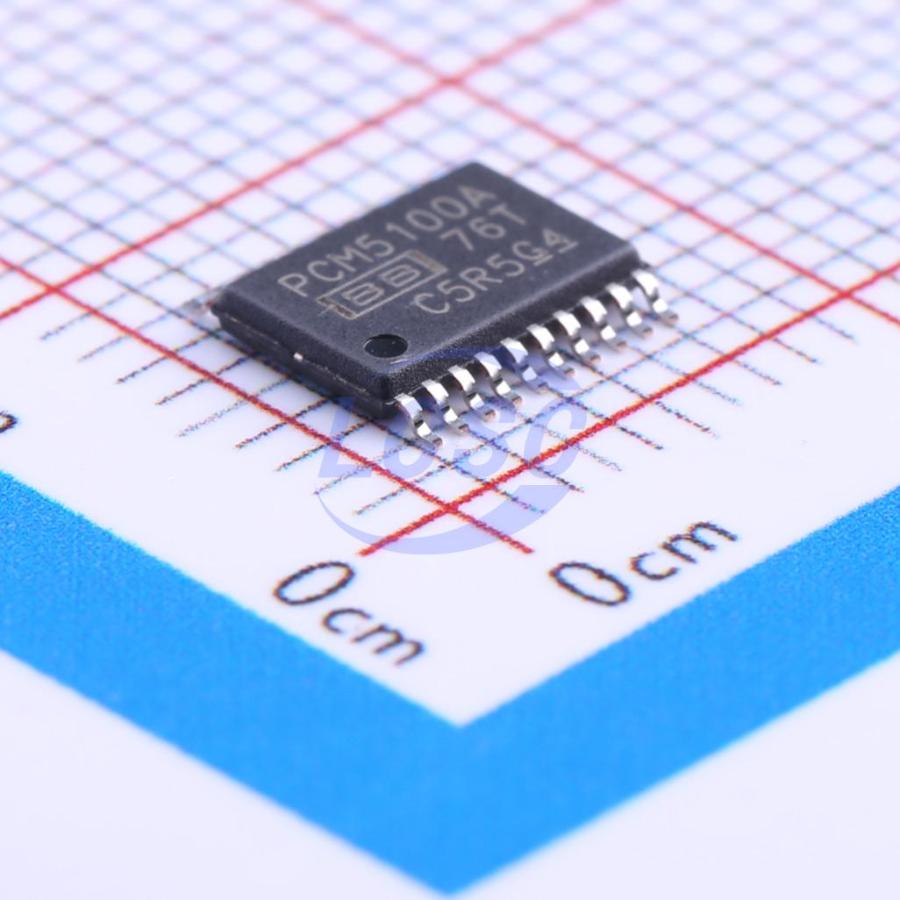
The PCM510xA devices are a family of monolithic CMOS-integrated circuits that include a stereo digital-to-analog converter and additional support circuitry in a small TSSOP package. The PCM510xA devices use the latest generation of TI’s advanced segment-DAC architecture to achieve excellent dynamic performance and improved tolerance to clock jitter.
Using Directpath™ charge-pump technology, the PCM510xA devices provide 2.1-VRMSground centered outputs, allowing designers to eliminate DC blocking capacitors on the output, as well as external muting circuits traditionally associated with single-supply line drivers.
The integrated line driver surpasses all other charge-pump based line drivers by supporting loads down to 1 kΩ per pin.
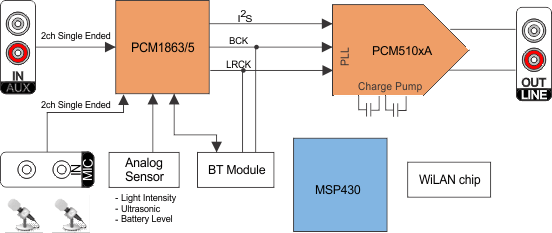
The integrated PLL on the device removes the requirement for a system clock (commonly known as master clock), allowing a 3-wire I2S connection and reducing system EMI.
Intelligent clock error and PowerSense undervoltage protection utilizes a two-level mute system for pop-free performance.
Compared with many conventional switched capacitor DAC architectures, the PCM510xA family offers up to 20 dB lower out-of-band noise, reducing EMI and aliasing in downstream amplifiers/ADCs, measured from the traditional 100-kHz OBN measurements to 3 MHz).
The PCM510xA devices are a family of monolithic CMOS-integrated circuits that include a stereo digital-to-analog converter and additional support circuitry in a small TSSOP package. The PCM510xA devices use the latest generation of TI’s advanced segment-DAC architecture to achieve excellent dynamic performance and improved tolerance to clock jitter.
Using Directpath™ charge-pump technology, the PCM510xA devices provide 2.1-VRMSground centered outputs, allowing designers to eliminate DC blocking capacitors on the output, as well as external muting circuits traditionally associated with single-supply line drivers.
The integrated line driver surpasses all other charge-pump based line drivers by supporting loads down to 1 kΩ per pin.
The integrated PLL on the device removes the requirement for a system clock (commonly known as master clock), allowing a 3-wire I2S connection and reducing system EMI.
Intelligent clock error and PowerSense undervoltage protection utilizes a two-level mute system for pop-free performance.
Compared with many conventional switched capacitor DAC architectures, the PCM510xA family offers up to 20 dB lower out-of-band noise, reducing EMI and aliasing in downstream amplifiers/ADCs, measured from the traditional 100-kHz OBN measurements to 3 MHz).