TAS2552 Series
4-W, digital/analog input smart amp with I/V sense for speaker protection & integ. 8.5-V boost
Manufacturer: Texas Instruments
Catalog
4-W, digital/analog input smart amp with I/V sense for speaker protection & integ. 8.5-V boost
Key Features
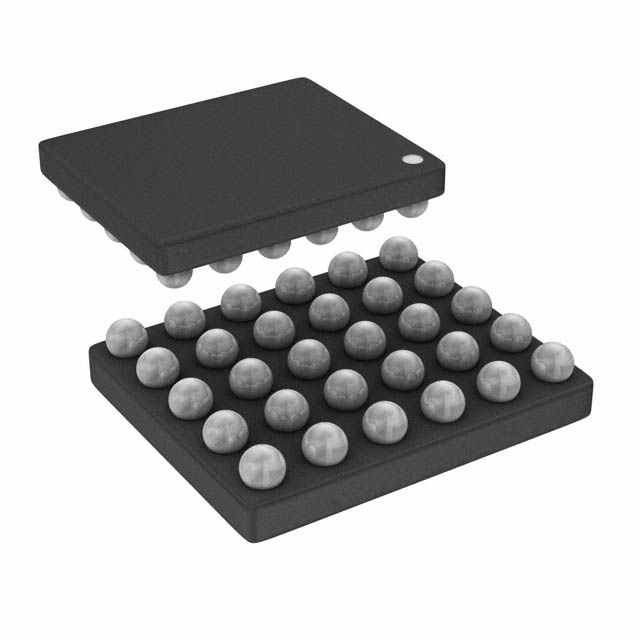
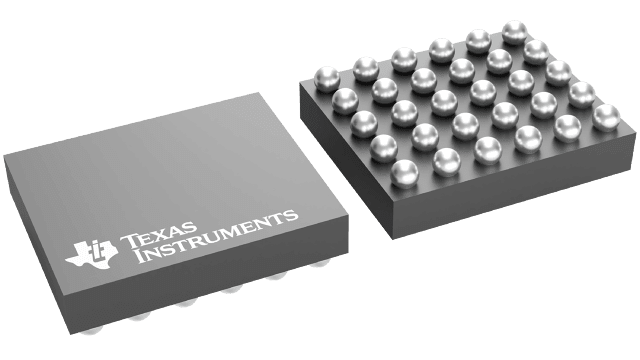
• Analog or Digital Input Mono Boosted Class-DAmplifier4.0 W into 8 Ω Load from 4.2 V Supply (1%THD+N)Efficiency of 85% at Rated PowerI2S, Left-Justified, Right-Justified, DSP, PDM, andTDM Input and Output InterfaceInput Sample Rates from 8 kHz to 192 kHzHigh Efficiency Class-G Boost ConverterAutomatically Adjusts Class-D SupplyBuilt-In Speaker SenseMeasures Speaker Current and VoltageMeasures VBAT and VBOOST VoltagesBuilt-In Automatic Gain Control (AGC)Limits Battery Current ConsumptionAdjustable Class-D Switching Edge-Rate ControlPower SuppliesBoost Input: 3.0 V to 5.5 VAnalog: 1.65 V to 1.95 VDigital I/O: 1.5 V to 3.6 VThermal and Short-Circuit ProtectionI2C Interface for Register ControlStereo Configuration Using Two TAS2552sI2C Address Select Terminal (ADDR)2.855 mm × 2.575 mm, 0.4 mm Pitch 30-BallWCSPAnalog or Digital Input Mono Boosted Class-DAmplifier4.0 W into 8 Ω Load from 4.2 V Supply (1%THD+N)Efficiency of 85% at Rated PowerI2S, Left-Justified, Right-Justified, DSP, PDM, andTDM Input and Output InterfaceInput Sample Rates from 8 kHz to 192 kHzHigh Efficiency Class-G Boost ConverterAutomatically Adjusts Class-D SupplyBuilt-In Speaker SenseMeasures Speaker Current and VoltageMeasures VBAT and VBOOST VoltagesBuilt-In Automatic Gain Control (AGC)Limits Battery Current ConsumptionAdjustable Class-D Switching Edge-Rate ControlPower SuppliesBoost Input: 3.0 V to 5.5 VAnalog: 1.65 V to 1.95 VDigital I/O: 1.5 V to 3.6 VThermal and Short-Circuit ProtectionI2C Interface for Register ControlStereo Configuration Using Two TAS2552sI2C Address Select Terminal (ADDR)2.855 mm × 2.575 mm, 0.4 mm Pitch 30-BallWCSP
Description
AI
The TAS2552 is a high efficiency Class-D audio power amplifier with advanced battery current management and an integrated Class-G boost converter. The device constantly measures the current and voltage across the load and provides a digital stream of this information.
The Class-G boost converter generates the Class-D amplifier supply rail. During low Class-D output power, the boost improves efficiency by deactivating and connecting VBAT directly to the Class-D amplifier supply. When high power audio is required, the boost quickly activates to provide significantly louder audio than a stand-alone amplifier connected directly to the battery.
The AGC automatically adjusts Class-D gain to reduce battery current at end-of-charge voltages, preventing output clipping, distortion and early system shutdown. The fixed gain is adjustable via I2C. The gain range is –7 dB to +24 dB in 1 dB steps.
In addition to a differential mono analog input, the TAS2552 has built-in a 16-bit D/A converter used with a digital input. Moving the D/A converter from the digital host processor into the integrated amplifier process provides better dynamic performance at lower system cost. Additionally, since the PCB routing is digital rather than analog, sensitivity to external perturbations such as GSM frame-rate noise is decreased at the system level.
The TAS2552 is a high efficiency Class-D audio power amplifier with advanced battery current management and an integrated Class-G boost converter. The device constantly measures the current and voltage across the load and provides a digital stream of this information.
The Class-G boost converter generates the Class-D amplifier supply rail. During low Class-D output power, the boost improves efficiency by deactivating and connecting VBAT directly to the Class-D amplifier supply. When high power audio is required, the boost quickly activates to provide significantly louder audio than a stand-alone amplifier connected directly to the battery.
The AGC automatically adjusts Class-D gain to reduce battery current at end-of-charge voltages, preventing output clipping, distortion and early system shutdown. The fixed gain is adjustable via I2C. The gain range is –7 dB to +24 dB in 1 dB steps.
In addition to a differential mono analog input, the TAS2552 has built-in a 16-bit D/A converter used with a digital input. Moving the D/A converter from the digital host processor into the integrated amplifier process provides better dynamic performance at lower system cost. Additionally, since the PCB routing is digital rather than analog, sensitivity to external perturbations such as GSM frame-rate noise is decreased at the system level.