Catalog
12-Bit, 250-MSPS Analog-to-Digital Converter (ADC)
Key Features
• ADS41B49: 14-Bit, 250 MSPSADS41B29: 12-Bit, 250 MSPSIntegrated High-ImpedanceAnalog Input Buffer:Input Capacitance: 2 pF200-MHz Input Resistance: 3 kΩMaximum Sample Rate: 250 MSPSUltralow Power:1.8-V Analog Power: 180 mW3.3-V Buffer Power: 96 mWI/O Power: 135 mW (DDR LVDS)High Dynamic Performance:SNR: 69 dBFS at 170 MHzSFDR: 82.5 dBc at 170 MHzOutput Interface:Double Data Rate (DDR) LVDS with Programmable Swing and Strength:Standard Swing: 350 mVLow Swing: 200 mVDefault Strength: 100-Ω Termination2x Strength: 50-Ω Termination1.8-V Parallel CMOS Interface Also SupportedProgrammable Gain for SNR, SFDR Trade-OffDC Offset CorrectionSupports Low Input Clock AmplitudePackage: VQFN-48 (7 mm × 7 mm)ADS41B49: 14-Bit, 250 MSPSADS41B29: 12-Bit, 250 MSPSIntegrated High-ImpedanceAnalog Input Buffer:Input Capacitance: 2 pF200-MHz Input Resistance: 3 kΩMaximum Sample Rate: 250 MSPSUltralow Power:1.8-V Analog Power: 180 mW3.3-V Buffer Power: 96 mWI/O Power: 135 mW (DDR LVDS)High Dynamic Performance:SNR: 69 dBFS at 170 MHzSFDR: 82.5 dBc at 170 MHzOutput Interface:Double Data Rate (DDR) LVDS with Programmable Swing and Strength:Standard Swing: 350 mVLow Swing: 200 mVDefault Strength: 100-Ω Termination2x Strength: 50-Ω Termination1.8-V Parallel CMOS Interface Also SupportedProgrammable Gain for SNR, SFDR Trade-OffDC Offset CorrectionSupports Low Input Clock AmplitudePackage: VQFN-48 (7 mm × 7 mm)
Description
AI
The ADS41Bx9 are members of the ultralow-power ADS4xxx analog-to-digital converter (ADC) family, featuring integrated analog input buffers. These devices use innovative design techniques to achieve high dynamic performance, and consume extremely low power. The analog input pins have buffers, with benefits of constant performance and input impedance across a wide frequency range. The devices are well-suited for multi-carrier, wide bandwidth communications applications such as PA linearization.
The ADS41Bx9 have features such as digital gain and offset correction. The gain option can be used to improve SFDR performance at lower full-scale input ranges, especially at high input frequencies. The integrated dc offset correction loop can be used to estimate and cancel the ADC offset. At lower sampling rates, the ADC automatically operates at scaled-down power with no loss in performance.
The devices support both double data rate (DDR) low-voltage differential signaling (LVDS) and parallel CMOS digital output interfaces. The low data rate of the DDR LVDS interface (maximum 500 MBPS) makes using low-cost field-programmable gate array (FPGA)-based receivers possible. The devices have a low-swing LVDS mode that can be used to further reduce the power consumption. The strength of the LVDS output buffers can also be increased to support 50-Ω differential termination.
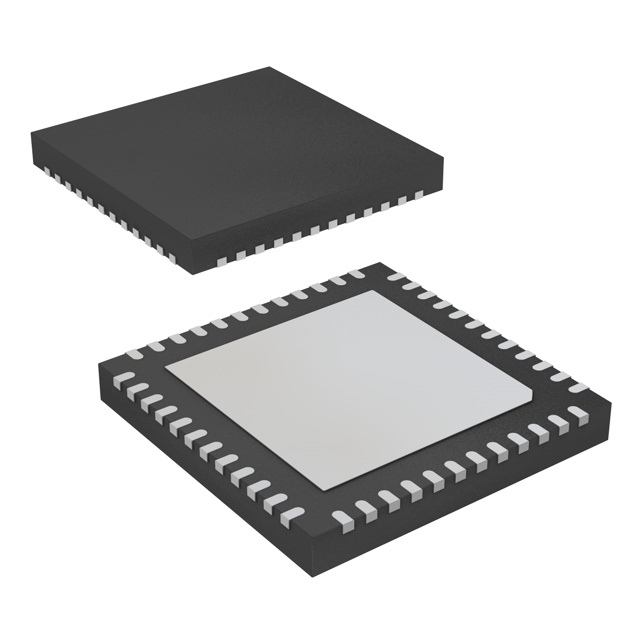
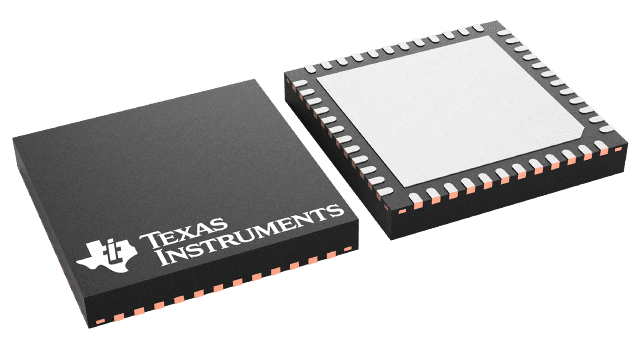
The devices are available in a compact VQFN-48 package and are specified over the industrial temperature range (–40°C to +85°C).
The ADS41Bx9 are members of the ultralow-power ADS4xxx analog-to-digital converter (ADC) family, featuring integrated analog input buffers. These devices use innovative design techniques to achieve high dynamic performance, and consume extremely low power. The analog input pins have buffers, with benefits of constant performance and input impedance across a wide frequency range. The devices are well-suited for multi-carrier, wide bandwidth communications applications such as PA linearization.
The ADS41Bx9 have features such as digital gain and offset correction. The gain option can be used to improve SFDR performance at lower full-scale input ranges, especially at high input frequencies. The integrated dc offset correction loop can be used to estimate and cancel the ADC offset. At lower sampling rates, the ADC automatically operates at scaled-down power with no loss in performance.
The devices support both double data rate (DDR) low-voltage differential signaling (LVDS) and parallel CMOS digital output interfaces. The low data rate of the DDR LVDS interface (maximum 500 MBPS) makes using low-cost field-programmable gate array (FPGA)-based receivers possible. The devices have a low-swing LVDS mode that can be used to further reduce the power consumption. The strength of the LVDS output buffers can also be increased to support 50-Ω differential termination.
The devices are available in a compact VQFN-48 package and are specified over the industrial temperature range (–40°C to +85°C).