TLC6C5724-Q1 Series
Automotive 24 channel Full diagnostics constant current RGB LED driver
Manufacturer: Texas Instruments
Catalog
Automotive 24 channel Full diagnostics constant current RGB LED driver
Key Features
• AEC-Q100 Qualified for Automotive ApplicationsDevice Temperature Grade 1: –40°C to 125°C, TA24 Constant-Current-Sink Output Channels50-mA Maximum Output Current8-V Maximum Output Voltage3 Output Groups: OUTRn, OUTGn, OUTBnOutput Current Adjustment7-Bit Dot Correction for Each Channel8-Bit Intensity Control for Each GroupIntegrated PWM Grayscale GeneratorPWM Dimming for Each Individual ChannelAdjustable Global Grayscale Mode: 12-Bit, 10-Bit, 8-BitProtection and DiagnosticsLED-Open Detection, LED-Short Detection, Output Short-to-GND DetectionAdjacent-Pin Short DetectionPre-Thermal Warning, Thermal ShutdownIREF Resistor Open- and Short-Detection and -ProtectionNegate Bit Toggle for GCLK Error Detect and LOD_LSD Register Error CheckLOD_LSD Circuit Self-TestProgrammable Output Slew RateOutput Channel Group DelaySerial Data InterfaceAEC-Q100 Qualified for Automotive ApplicationsDevice Temperature Grade 1: –40°C to 125°C, TA24 Constant-Current-Sink Output Channels50-mA Maximum Output Current8-V Maximum Output Voltage3 Output Groups: OUTRn, OUTGn, OUTBnOutput Current Adjustment7-Bit Dot Correction for Each Channel8-Bit Intensity Control for Each GroupIntegrated PWM Grayscale GeneratorPWM Dimming for Each Individual ChannelAdjustable Global Grayscale Mode: 12-Bit, 10-Bit, 8-BitProtection and DiagnosticsLED-Open Detection, LED-Short Detection, Output Short-to-GND DetectionAdjacent-Pin Short DetectionPre-Thermal Warning, Thermal ShutdownIREF Resistor Open- and Short-Detection and -ProtectionNegate Bit Toggle for GCLK Error Detect and LOD_LSD Register Error CheckLOD_LSD Circuit Self-TestProgrammable Output Slew RateOutput Channel Group DelaySerial Data Interface
Description
AI
There are automotive applications for indicators and for LCD local-dimming backlighting. For these applications, more persons think multi-channel constant-current LED drivers are necessary. The requirement is to get the same intensity and color temperature of LEDs. For system-level safety, it is necessary that the LED drivers can sense faults.
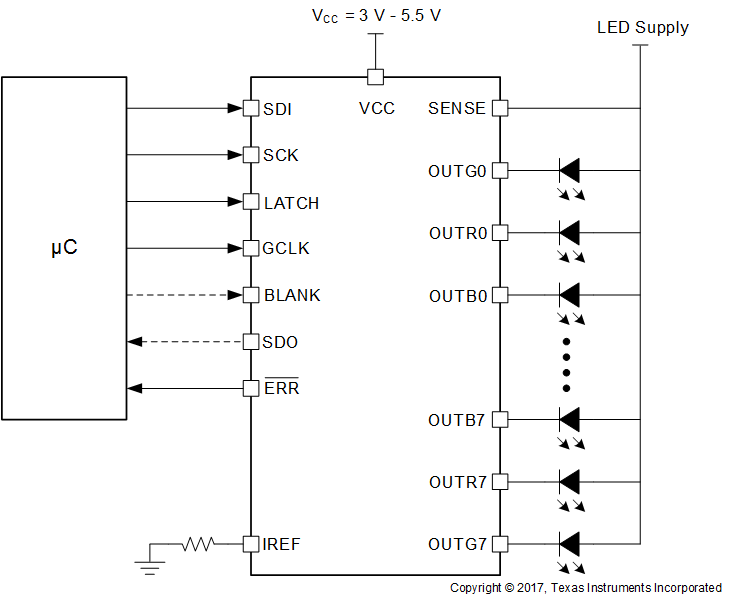
The TLC6C5724-Q1 device is an automotive 24-channel constant-current RGB LED driver that can do tests on the LEDs. The TLC6C5724-Q1 device supplies a maximum of 50‑mA output current set by an external resistor. The device has a 7-bit dot correction with two ranges for each output. The device also has an 8-bit intensity control for the outputs of each color group. A 12-,10-, or 8-bit grayscale control adjusts the intensity of each output. The device has circuits that sense faults in the system, including LED faults, adjacent-pin short faults, reference-resistor faults, and more. A slew rate control has 2 positions for adjustment to get the largest decrease in system noise. There is an interval between the changes of output level from one LED group to a different one. This interval helps to decrease the starting electrical current. The SDI and SDO pins let more than one device be connected in series for control through one serial interface.
There are automotive applications for indicators and for LCD local-dimming backlighting. For these applications, more persons think multi-channel constant-current LED drivers are necessary. The requirement is to get the same intensity and color temperature of LEDs. For system-level safety, it is necessary that the LED drivers can sense faults.
The TLC6C5724-Q1 device is an automotive 24-channel constant-current RGB LED driver that can do tests on the LEDs. The TLC6C5724-Q1 device supplies a maximum of 50‑mA output current set by an external resistor. The device has a 7-bit dot correction with two ranges for each output. The device also has an 8-bit intensity control for the outputs of each color group. A 12-,10-, or 8-bit grayscale control adjusts the intensity of each output. The device has circuits that sense faults in the system, including LED faults, adjacent-pin short faults, reference-resistor faults, and more. A slew rate control has 2 positions for adjustment to get the largest decrease in system noise. There is an interval between the changes of output level from one LED group to a different one. This interval helps to decrease the starting electrical current. The SDI and SDO pins let more than one device be connected in series for control through one serial interface.