CC1312R7 Series
SimpleLink™ Arm® Cortex®-M4F multiprotocol Sub-1 GHz wireless MCU with 704-kB Flash
Manufacturer: Texas Instruments
Catalog
SimpleLink™ Arm® Cortex®-M4F multiprotocol Sub-1 GHz wireless MCU with 704-kB Flash
Key Features
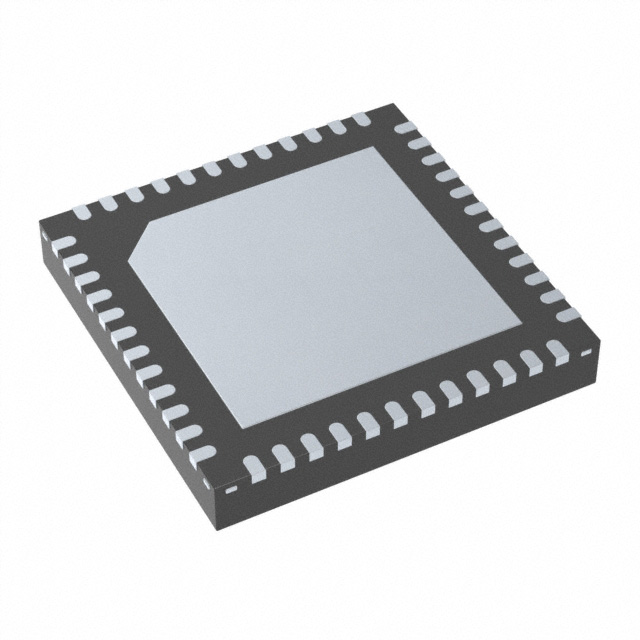
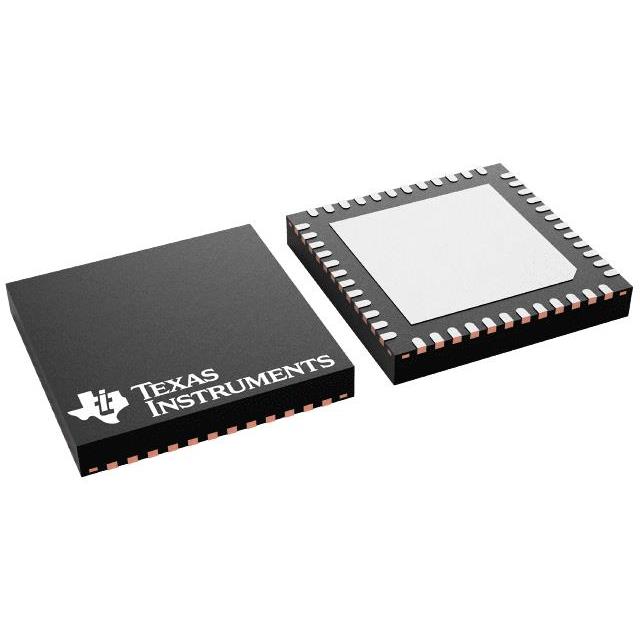
• MicrocontrollerPowerful 48-MHz Arm Cortex-M4F processorEEMBC CoreMark score: 148352KB of in-system programmable flash256KB of ROM for protocols and library functions8KB of cache SRAM (alternatively available as general-purpose RAM)80KB of ultra-low leakage SRAM. The SRAM is protected by parity to ensure high reliability of operation.2-pin cJTAG and JTAG debuggingSupports over-the-air (OTA) updateUltra-low power sensor controller with 4KB of SRAMSample, store, and process sensor dataOperation independent from system CPUFast wake-up for low-power operationTI-RTOS, drivers, bootloader, and IEEE 802.15.4 MAC in ROM for optimized application sizeRoHS-compliant package7-mm × 7-mm RGZ VQFN48 (30 GPIOs)PeripheralsDigital peripherals can be routed to any GPIO4× 32-bit or 8× 16-bit general-purpose timers12-bit ADC, 200 kSamples/s, 8 channels2× comparators with internal reference DAC (1× continuous time, 1× ultra-low power)Programmable current source2× UART2× SSI (SPI, MICROWIRE, TI)I2CI2SReal-time clock (RTC)AES 128- and 256-bit cryptographic acceleratorECC and RSA public key hardware acceleratorSHA2 accelerator (full suite up to SHA-512)True random number generator (TRNG)Capacitive sensing, up to 8 channelsIntegrated temperature and battery monitorExternal systemOn-chip buck DC/DC converterTCXO supportLow powerWide supply voltage range: 1.8 V to 3.8 VActive mode RX: 5.8 mA (3.6 V, 868 MHz)Active mode TX at +14 dBm: 24.9 mA (868 MHz)Active mode MCU 48 MHz (CoreMark): 2.9 mA (60 µA/MHz)Sensor controller, low power-mode, 2 MHz, running infinite loop: 30.1 µASensor controller, active mode, 24 MHz, running infinite loop: 808 µAStandby: 0.85 µA (RTC on, 80KB RAM and CPU retention)Shutdown: 150 nA (wakeup on external events)Radio sectionFlexible high-performance sub-1 GHz RF transceiverExcellent receiver sensitivity: -121 dBm for SimpleLink long-range mode -110 dBm at 50 kbpsOutput power up to +14 dBm with temperature compensationSuitable for systems targeting compliance with worldwide radio frequency regulationsETSI EN 300 220 Receiver Category 1.5 and 2, EN 303 131, EN 303 204 (Europe)FCC CFR47 Part 15ARIB STD-T108Wide standard supportWireless protocolsIEEE 802.15.4g, IPv6-enabled smart objects (6LoWPAN), MIOTY, Wireless M-Bus, Wi-SUN, KNX RF, Amazon Sidewalk, proprietary systems, SimpleLink™ TI 15.4 stack (Sub-1 GHz), and dynamic multiprotocol manager (DMM) driver.DevelopmentTools and SoftwareCC1312R LaunchPad™ Development KitSimpleLink™ CC13x2 and CC26x2 Software Development Kit (SDK)SmartRF™ Studiofor simple radio configurationSensor Controller Studiofor building low-power sensing applicationsMicrocontrollerPowerful 48-MHz Arm Cortex-M4F processorEEMBC CoreMark score: 148352KB of in-system programmable flash256KB of ROM for protocols and library functions8KB of cache SRAM (alternatively available as general-purpose RAM)80KB of ultra-low leakage SRAM. The SRAM is protected by parity to ensure high reliability of operation.2-pin cJTAG and JTAG debuggingSupports over-the-air (OTA) updateUltra-low power sensor controller with 4KB of SRAMSample, store, and process sensor dataOperation independent from system CPUFast wake-up for low-power operationTI-RTOS, drivers, bootloader, and IEEE 802.15.4 MAC in ROM for optimized application sizeRoHS-compliant package7-mm × 7-mm RGZ VQFN48 (30 GPIOs)PeripheralsDigital peripherals can be routed to any GPIO4× 32-bit or 8× 16-bit general-purpose timers12-bit ADC, 200 kSamples/s, 8 channels2× comparators with internal reference DAC (1× continuous time, 1× ultra-low power)Programmable current source2× UART2× SSI (SPI, MICROWIRE, TI)I2CI2SReal-time clock (RTC)AES 128- and 256-bit cryptographic acceleratorECC and RSA public key hardware acceleratorSHA2 accelerator (full suite up to SHA-512)True random number generator (TRNG)Capacitive sensing, up to 8 channelsIntegrated temperature and battery monitorExternal systemOn-chip buck DC/DC converterTCXO supportLow powerWide supply voltage range: 1.8 V to 3.8 VActive mode RX: 5.8 mA (3.6 V, 868 MHz)Active mode TX at +14 dBm: 24.9 mA (868 MHz)Active mode MCU 48 MHz (CoreMark): 2.9 mA (60 µA/MHz)Sensor controller, low power-mode, 2 MHz, running infinite loop: 30.1 µASensor controller, active mode, 24 MHz, running infinite loop: 808 µAStandby: 0.85 µA (RTC on, 80KB RAM and CPU retention)Shutdown: 150 nA (wakeup on external events)Radio sectionFlexible high-performance sub-1 GHz RF transceiverExcellent receiver sensitivity: -121 dBm for SimpleLink long-range mode -110 dBm at 50 kbpsOutput power up to +14 dBm with temperature compensationSuitable for systems targeting compliance with worldwide radio frequency regulationsETSI EN 300 220 Receiver Category 1.5 and 2, EN 303 131, EN 303 204 (Europe)FCC CFR47 Part 15ARIB STD-T108Wide standard supportWireless protocolsIEEE 802.15.4g, IPv6-enabled smart objects (6LoWPAN), MIOTY, Wireless M-Bus, Wi-SUN, KNX RF, Amazon Sidewalk, proprietary systems, SimpleLink™ TI 15.4 stack (Sub-1 GHz), and dynamic multiprotocol manager (DMM) driver.DevelopmentTools and SoftwareCC1312R LaunchPad™ Development KitSimpleLink™ CC13x2 and CC26x2 Software Development Kit (SDK)SmartRF™ Studiofor simple radio configurationSensor Controller Studiofor building low-power sensing applications
Description
AI
The SimpleLink™ CC1312R7 device is a multiprotocol Sub-1 GHz wireless microcontroller (MCU) supporting IEEE 802.15.4g, IPv6-enabled smart objects (6LoWPAN),mioty,Wi-SUN, proprietary systems, including theTI 15.4-Stack(Sub-1 GHz), and concurrent multiprotocol through a Dynamic Multiprotocol Manager (DMM) driver. The CC1312R7 is based on an Arm®Cortex®M4F main processor and optimized for low-power wireless communication and advanced sensing ingrid infrastructure,building automation,retail automation,personal electronicsandmedical applications.
The CC1312R7 has a software defined radio powered by an Arm® Cortex® M0, which allows support for multiple physical layers and RF standards. The device supports operation in 287 to 351-MHz, 359 to 527-MHz, 861 to 1054-MHz, and 1076 to 1315-MHz frequency bands. PHY and frequency band switching can be done runtime through a dynamic multiprotocol manager (DMM) driver. The CC1312R7 has an efficient built-in PA that supports +14 dBm TX at 24.9 mA current consumption. In RX it has -121 dBm sensitivity and 88 dB blocking ±10 MHz in SimpleLink™ long-range mode with 2.5-kbps data rate.
The CC1312R7 has a low sleep current of 0.9 µA with RTC and 144KB RAM retention. In addition to the main Cortex® M4F processor, the device also has an autonomous ultra-low power Sensor Controller CPU with fast wake-up capability. As an example, the sensor controller is capable of 1-Hz ADC sampling at 1-µA system current.
The CC1312R7 hasLow SER (Soft Error Rate) FIT (Failure-in-time)for long operational lifetime. Always-on SRAM parity minimizes risk for corruption due to potential radiation events. Consistent with many customers’ 10 to 15 years or longer life cycle requirements, TI has aproduct life cycle policywith a commitment to product longevity and continuity of supply.
The CC1312R7 device is part of the SimpleLink™ MCU platform, which consists of Wi-Fi®,Bluetooth®Low Energy, Thread, Zigbee, Wi-SUN®, Amazon Sidewalk, mioty®, Sub-1 GHz MCUs, and host MCUs. CC1312R7 is part of a scalable portfolio with flash sizes from 32KB to 704KB with pin-to-pin compatible package options. The commonSimpleLink™CC13xx and CC26xx Software Development Kit (SDK)andSysConfigsystem configuration tool supports migration between devices in the portfolio. A comprehensive number of software stacks, application examples and SimpleLink™ Academy training sessions are included in the SDK. For more information, visitwireless connectivity.
The SimpleLink™ CC1312R7 device is a multiprotocol Sub-1 GHz wireless microcontroller (MCU) supporting IEEE 802.15.4g, IPv6-enabled smart objects (6LoWPAN),mioty,Wi-SUN, proprietary systems, including theTI 15.4-Stack(Sub-1 GHz), and concurrent multiprotocol through a Dynamic Multiprotocol Manager (DMM) driver. The CC1312R7 is based on an Arm®Cortex®M4F main processor and optimized for low-power wireless communication and advanced sensing ingrid infrastructure,building automation,retail automation,personal electronicsandmedical applications.
The CC1312R7 has a software defined radio powered by an Arm® Cortex® M0, which allows support for multiple physical layers and RF standards. The device supports operation in 287 to 351-MHz, 359 to 527-MHz, 861 to 1054-MHz, and 1076 to 1315-MHz frequency bands. PHY and frequency band switching can be done runtime through a dynamic multiprotocol manager (DMM) driver. The CC1312R7 has an efficient built-in PA that supports +14 dBm TX at 24.9 mA current consumption. In RX it has -121 dBm sensitivity and 88 dB blocking ±10 MHz in SimpleLink™ long-range mode with 2.5-kbps data rate.
The CC1312R7 has a low sleep current of 0.9 µA with RTC and 144KB RAM retention. In addition to the main Cortex® M4F processor, the device also has an autonomous ultra-low power Sensor Controller CPU with fast wake-up capability. As an example, the sensor controller is capable of 1-Hz ADC sampling at 1-µA system current.
The CC1312R7 hasLow SER (Soft Error Rate) FIT (Failure-in-time)for long operational lifetime. Always-on SRAM parity minimizes risk for corruption due to potential radiation events. Consistent with many customers’ 10 to 15 years or longer life cycle requirements, TI has aproduct life cycle policywith a commitment to product longevity and continuity of supply.
The CC1312R7 device is part of the SimpleLink™ MCU platform, which consists of Wi-Fi®,Bluetooth®Low Energy, Thread, Zigbee, Wi-SUN®, Amazon Sidewalk, mioty®, Sub-1 GHz MCUs, and host MCUs. CC1312R7 is part of a scalable portfolio with flash sizes from 32KB to 704KB with pin-to-pin compatible package options. The commonSimpleLink™CC13xx and CC26xx Software Development Kit (SDK)andSysConfigsystem configuration tool supports migration between devices in the portfolio. A comprehensive number of software stacks, application examples and SimpleLink™ Academy training sessions are included in the SDK. For more information, visitwireless connectivity.