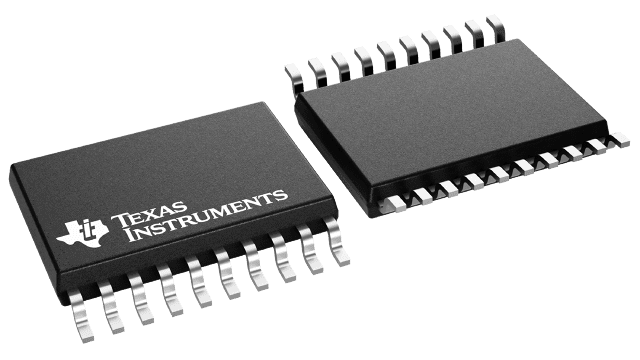
SN75C3223E Series
3- to 5.5-V dual channel 1Mbps RS-232 line driver/receiver with +/-15-kV IEC-ESD protection
Manufacturer: Texas Instruments
Catalog
3- to 5.5-V dual channel 1Mbps RS-232 line driver/receiver with +/-15-kV IEC-ESD protection
Key Features
• ESD Protection for RS-232 Bus Pins±15-kV Human-Body Model (HBM)±8-kV IEC 61000-4-2, Contact Discharge±15-kV IEC 61000-4-2, Air-Gap DischargeMeet or Exceed the Requirements of TIA/EIA-232-F and ITU v.28 StandardsOperate With 3-V to 5.5-V VCCSupplyOperate up to 1000 kbit/sTwo Drivers and Two ReceiversLow Standby Current . . . 1 µA TypExternal Capacitors . . . 4 × 0.1 µFAccepts 5-V Logic Input With 3.3-V SupplyAPPLICATIONSBattery-Powered SystemsPDAsNotebooksLaptopsPalmtop PCsHand-Held EquipmentESD Protection for RS-232 Bus Pins±15-kV Human-Body Model (HBM)±8-kV IEC 61000-4-2, Contact Discharge±15-kV IEC 61000-4-2, Air-Gap DischargeMeet or Exceed the Requirements of TIA/EIA-232-F and ITU v.28 StandardsOperate With 3-V to 5.5-V VCCSupplyOperate up to 1000 kbit/sTwo Drivers and Two ReceiversLow Standby Current . . . 1 µA TypExternal Capacitors . . . 4 × 0.1 µFAccepts 5-V Logic Input With 3.3-V SupplyAPPLICATIONSBattery-Powered SystemsPDAsNotebooksLaptopsPalmtop PCsHand-Held Equipment
Description
AI
The SN65C3223 and SN75C3223 consist of two line drivers, two line receivers, and a dual charge-pump circuit with ±15-kV ESD protection pin to pin (serial-port connection pins, including GND). The devices provide the electrical interface between an asynchronous communication controller and the serial-port connector. The charge pump and four small external capacitors allow operation from a single 3-V to 5.5-V supply. The devices operate at data signaling rates up to 1 Mbit/s and a driver output slew rate of 24 V/µs to 150 V/µs.
Flexible control options for power management are available when the serial port is inactive. The auto-powerdown feature functions when FORCEON is low and FORCEOFF\ is high. During this mode of operation, if the device does not sense a valid RS-232 signal, the driver outputs are disabled. If FORCEOFF\ is set low and EN is high, both drivers and receivers are shut off, and the supply current is reduced to 1 µA. Disconnecting the serial port or turning off the peripheral drivers causes auto-powerdown to occur. Auto-powerdown can be disabled when FORCEON and FORCEOFF\ are high. With auto-powerdown enabled, the device is activated automatically when a valid signal is applied to any receiver input. The INVALID\ output is used to notify the user if an RS-232 signal is present at any receiver input. INVALID\ is high (valid data) if any receiver input voltage is greater than 2.7 V or less than –2.7 V or has been between –0.3 V and 0.3 V for less than 30 µs. INVALID\ is low (invalid data) if the receiver input voltage is between –0.3 V and 0.3 V for more than 30 µs. Refer to Figure 4 for receiver input levels.
The SN65C3223 and SN75C3223 consist of two line drivers, two line receivers, and a dual charge-pump circuit with ±15-kV ESD protection pin to pin (serial-port connection pins, including GND). The devices provide the electrical interface between an asynchronous communication controller and the serial-port connector. The charge pump and four small external capacitors allow operation from a single 3-V to 5.5-V supply. The devices operate at data signaling rates up to 1 Mbit/s and a driver output slew rate of 24 V/µs to 150 V/µs.
Flexible control options for power management are available when the serial port is inactive. The auto-powerdown feature functions when FORCEON is low and FORCEOFF\ is high. During this mode of operation, if the device does not sense a valid RS-232 signal, the driver outputs are disabled. If FORCEOFF\ is set low and EN is high, both drivers and receivers are shut off, and the supply current is reduced to 1 µA. Disconnecting the serial port or turning off the peripheral drivers causes auto-powerdown to occur. Auto-powerdown can be disabled when FORCEON and FORCEOFF\ are high. With auto-powerdown enabled, the device is activated automatically when a valid signal is applied to any receiver input. The INVALID\ output is used to notify the user if an RS-232 signal is present at any receiver input. INVALID\ is high (valid data) if any receiver input voltage is greater than 2.7 V or less than –2.7 V or has been between –0.3 V and 0.3 V for less than 30 µs. INVALID\ is low (invalid data) if the receiver input voltage is between –0.3 V and 0.3 V for more than 30 µs. Refer to Figure 4 for receiver input levels.