ADS1146 Series
16-Bit 2kSPS 1-Ch ADC With PGA for Precision Sensor Measurement
Manufacturer: Texas Instruments
Catalog
16-Bit 2kSPS 1-Ch ADC With PGA for Precision Sensor Measurement
Key Features
• Programmable Data Rates Up to 2 kSPSSingle-Cycle Settling for All Data RatesSimultaneous 50-Hz and 60-Hz Rejection at20 SPSAnalog Multiplexer With 8 (ADS1148) and4 (ADS1147) Independently Selectable InputsProgrammable Gain: 1 V/V to 128 V/VDual-Matched Programmable Excitation Current SourcesLow-Drift Internal 2.048-V ReferenceSensor Burnout Detection4 or 8 General-Purpose I/Os (ADS1147 and ADS1148)Internal Temperature SensorPower Supply and VREFMonitoring (ADS1147 and ADS1148)Self and System CalibrationSPI™-Compatible Serial InterfaceAnalog Supply: Unipolar (2.7 V to 5.25 V) or Bipolar (±2.5 V)Digital Supply: 2.7 V to 5.25 VProgrammable Data Rates Up to 2 kSPSSingle-Cycle Settling for All Data RatesSimultaneous 50-Hz and 60-Hz Rejection at20 SPSAnalog Multiplexer With 8 (ADS1148) and4 (ADS1147) Independently Selectable InputsProgrammable Gain: 1 V/V to 128 V/VDual-Matched Programmable Excitation Current SourcesLow-Drift Internal 2.048-V ReferenceSensor Burnout Detection4 or 8 General-Purpose I/Os (ADS1147 and ADS1148)Internal Temperature SensorPower Supply and VREFMonitoring (ADS1147 and ADS1148)Self and System CalibrationSPI™-Compatible Serial InterfaceAnalog Supply: Unipolar (2.7 V to 5.25 V) or Bipolar (±2.5 V)Digital Supply: 2.7 V to 5.25 V
Description
AI
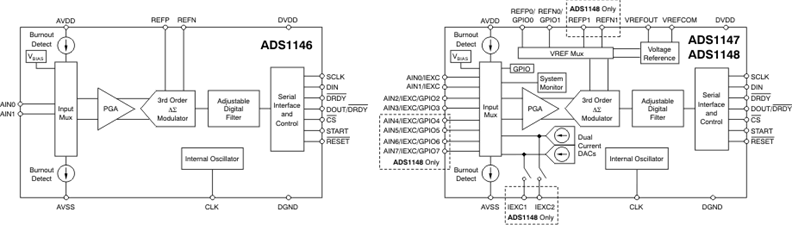
The ADS1146, ADS1147, and ADS1148 devices are precision, 16-bit analog-to-digital converters (ADCs) that include many integrated features to reduce system cost and component count for sensor measurement applications. The devices feature a low-noise, programmable gain amplifier (PGA), a precision delta-sigma (ΔΣ) ADC with a single-cycle settling digital filter, and an internal oscillator. The ADS1147 and ADS1148 devices also provide a built-in, low-drift voltage reference, and two matched programmable excitation current sources (IDACs).
An input multiplexer supports four differential inputs for the ADS1148, two for the ADS1147, and one for the ADS1146. In addition, the multiplexer integrates sensor burn-out detection, voltage bias for thermocouples, system monitoring, and general purpose digital I/Os (ADS1147 and ADS1148). The PGA provides selectable gains up to 128 V/V. These features provide a complete front-end solution for temperature sensor measurement applications including thermocouples, thermistors, and resistance temperature detectors (RTDs) and other small signal measurements including resistive bridge sensors. The digital filter settles in a single cycle to support fast channel cycling when using the input multiplexer and provides data rates up to 2 kSPS. For data rates of 20 SPS or less, both 50-Hz and 60-Hz interference are rejected by the filter.
The ADS1146, ADS1147, and ADS1148 devices are precision, 16-bit analog-to-digital converters (ADCs) that include many integrated features to reduce system cost and component count for sensor measurement applications. The devices feature a low-noise, programmable gain amplifier (PGA), a precision delta-sigma (ΔΣ) ADC with a single-cycle settling digital filter, and an internal oscillator. The ADS1147 and ADS1148 devices also provide a built-in, low-drift voltage reference, and two matched programmable excitation current sources (IDACs).
An input multiplexer supports four differential inputs for the ADS1148, two for the ADS1147, and one for the ADS1146. In addition, the multiplexer integrates sensor burn-out detection, voltage bias for thermocouples, system monitoring, and general purpose digital I/Os (ADS1147 and ADS1148). The PGA provides selectable gains up to 128 V/V. These features provide a complete front-end solution for temperature sensor measurement applications including thermocouples, thermistors, and resistance temperature detectors (RTDs) and other small signal measurements including resistive bridge sensors. The digital filter settles in a single cycle to support fast channel cycling when using the input multiplexer and provides data rates up to 2 kSPS. For data rates of 20 SPS or less, both 50-Hz and 60-Hz interference are rejected by the filter.