LM8323 Series
Mobile I/O Companion Supporting Keyscan, I/O Expansion, PWM, and ACCESS.bus Host Interface
Manufacturer: Texas Instruments
Catalog
Mobile I/O Companion Supporting Keyscan, I/O Expansion, PWM, and ACCESS.bus Host Interface
Key Features
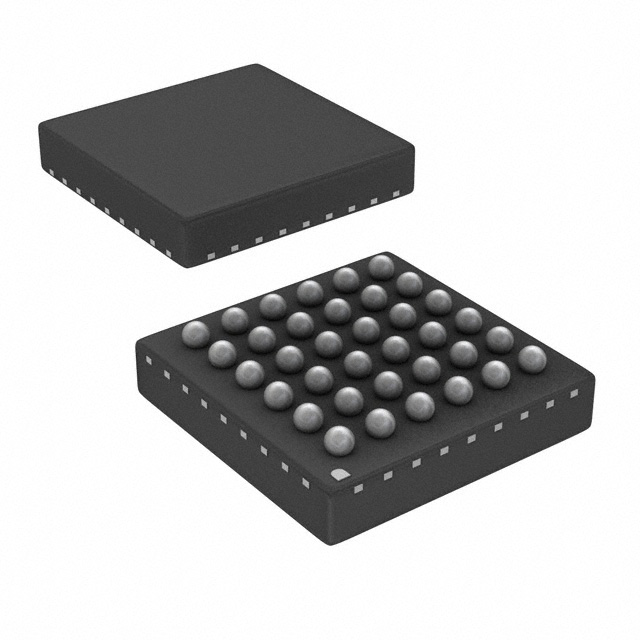
• Key FeaturesSupports Keypad Matrices of up to 8 × 12 Keys Plus 8 Special-function (SF) Keys for a Total of 104 Keys. SF Keys Pull Keypad Scan Inputs Directly to Ground, Rather than Connecting to a Keypad Scan Output.Supports I2C-compatible ACCESS.bus Interface in Slave Mode up to 400 kHz (Fast-mode).Three Host-programmable PWM Outputs Useful for Smooth LED Brightness Modulation.Supports General-purpose I/O Expansion on Pins Not Otherwise Used for Keypad or Rotary Encoder Interface.Key-scan Event Storage in a FIFO Buffer for up to 15 Events.Key Events, Errors, and Dedicated Hardware Interrupts Request Host Service by Asserting theIRQOutput.The Correct Reception of a Command May be Assumed, if No Error is Reported from the LM8323 After Receiving it.Wake-up from Halt Mode on any Matrix Key-scan Event, any Use of the SF Keys, or Any Activity on the ACCESS.bus Interface, or Any Change in the Rotary Encoder Counter Value (if Enabled).Host-Controlled FunctionsThree PWM OutputsPeriod of Inactivity that Triggers Entry into Halt ModeDebounce Time for Reliable Key Event PollingConfiguration of General-purpose I/O PortsVarious Initialization Options (Keypad Size, etc.)Key Device Characteristics1.8V ± 180 mV Single-supply OperationOn-chip Power-on Reset (POR)Watchdog TimerDedicated Slow Clock Input for 32 kHz-40°C to +85°C Industrial Temperature Range36-pin csBGA PackageAll trademarks are the property of their respective owners.Key FeaturesSupports Keypad Matrices of up to 8 × 12 Keys Plus 8 Special-function (SF) Keys for a Total of 104 Keys. SF Keys Pull Keypad Scan Inputs Directly to Ground, Rather than Connecting to a Keypad Scan Output.Supports I2C-compatible ACCESS.bus Interface in Slave Mode up to 400 kHz (Fast-mode).Three Host-programmable PWM Outputs Useful for Smooth LED Brightness Modulation.Supports General-purpose I/O Expansion on Pins Not Otherwise Used for Keypad or Rotary Encoder Interface.Key-scan Event Storage in a FIFO Buffer for up to 15 Events.Key Events, Errors, and Dedicated Hardware Interrupts Request Host Service by Asserting theIRQOutput.The Correct Reception of a Command May be Assumed, if No Error is Reported from the LM8323 After Receiving it.Wake-up from Halt Mode on any Matrix Key-scan Event, any Use of the SF Keys, or Any Activity on the ACCESS.bus Interface, or Any Change in the Rotary Encoder Counter Value (if Enabled).Host-Controlled FunctionsThree PWM OutputsPeriod of Inactivity that Triggers Entry into Halt ModeDebounce Time for Reliable Key Event PollingConfiguration of General-purpose I/O PortsVarious Initialization Options (Keypad Size, etc.)Key Device Characteristics1.8V ± 180 mV Single-supply OperationOn-chip Power-on Reset (POR)Watchdog TimerDedicated Slow Clock Input for 32 kHz-40°C to +85°C Industrial Temperature Range36-pin csBGA PackageAll trademarks are the property of their respective owners.
Description
AI
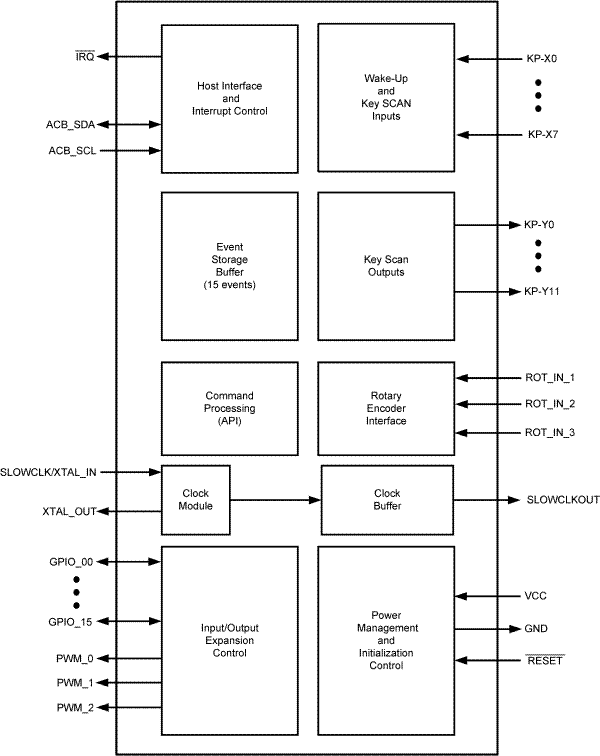
The LM8323 key-scan controller is a dedicated device to unburden a host from scanning a matrix-addressed keypad. In addition, the LM8323 provides general-purpose I/O expansion, a rotary encoder interface and PWM outputs useful for dynamic LED brightness modulation.
It communicates with the host through an I2C-compatible ACCESS.bus interface. An interrupt output is available for signaling key-press and key-release events. Communication frequencies up to 400 kHz (Fast-mode) bus speed are supported. The LM8323 supports a predefined set of commands. These commands enable a host device to keep control over all functions.
The LM8323 key-scan controller is a dedicated device to unburden a host from scanning a matrix-addressed keypad. In addition, the LM8323 provides general-purpose I/O expansion, a rotary encoder interface and PWM outputs useful for dynamic LED brightness modulation.
It communicates with the host through an I2C-compatible ACCESS.bus interface. An interrupt output is available for signaling key-press and key-release events. Communication frequencies up to 400 kHz (Fast-mode) bus speed are supported. The LM8323 supports a predefined set of commands. These commands enable a host device to keep control over all functions.