Catalog
3V Enhanced CMOS Quad Differential Line Receiver
Key Features
• Low Power CMOS Design (30 mW Typical)Interoperable With Existing 5V RS-422 NetworksIndustrial Temperature RangeMeets TIA/EIA-422-B (RS-422) and ITU-T V.11 Recommendation3.3V Operation±7V Common Mode Range @ VID= 3V±10V Common Mode Range @ VID= 0.2VReceiver OPEN Input Failsafe FeatureEnsured AC Parameter:Maximum Receiver Skew: 4 nsTransition Time: 10 nsPin Compatible With DS34C86T32 MHz Toggle Frequency>6.5k ESD Tolerance (HBM)Available in SOIC PackagingAll trademarks are the property of their respective owners.Low Power CMOS Design (30 mW Typical)Interoperable With Existing 5V RS-422 NetworksIndustrial Temperature RangeMeets TIA/EIA-422-B (RS-422) and ITU-T V.11 Recommendation3.3V Operation±7V Common Mode Range @ VID= 3V±10V Common Mode Range @ VID= 0.2VReceiver OPEN Input Failsafe FeatureEnsured AC Parameter:Maximum Receiver Skew: 4 nsTransition Time: 10 nsPin Compatible With DS34C86T32 MHz Toggle Frequency>6.5k ESD Tolerance (HBM)Available in SOIC PackagingAll trademarks are the property of their respective owners.
Description
AI
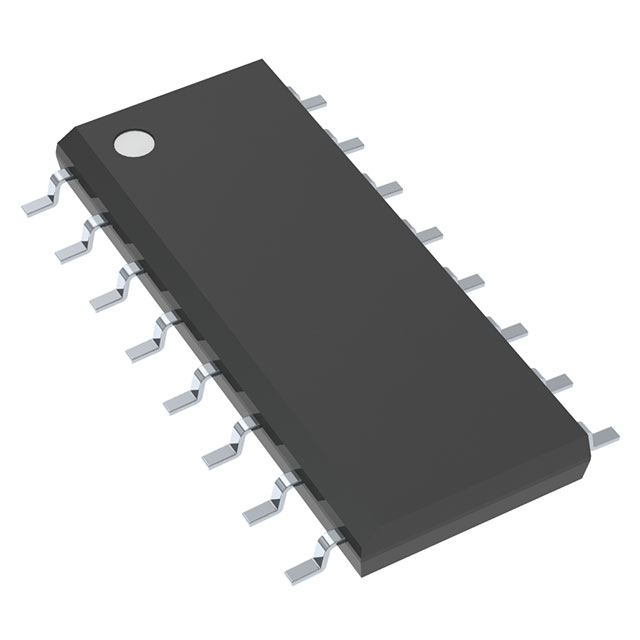
The DS34LV86T is a high speed quad differential CMOS receiver that meets the requirements of both TIA/EIA-422-B and ITU-T V.11. The CMOS DS34LV86T features typical low static ICCof 9 mA which makes it ideal for battery powered and power conscious applications. The Tri-State enables, EN, allow the device to be disabled when not in use to minimize power consumption. The dual enable scheme allows for flexibility in turning receivers on and off.
The receiver output (RO) is ensured to be High when the inputs are left open. The receiver can detect signals as low as ±200 mV over the common mode range of ±10V. The receiver outputs (RO) are compatible with TTL and LVCMOS levels.
The DS34LV86T is a high speed quad differential CMOS receiver that meets the requirements of both TIA/EIA-422-B and ITU-T V.11. The CMOS DS34LV86T features typical low static ICCof 9 mA which makes it ideal for battery powered and power conscious applications. The Tri-State enables, EN, allow the device to be disabled when not in use to minimize power consumption. The dual enable scheme allows for flexibility in turning receivers on and off.
The receiver output (RO) is ensured to be High when the inputs are left open. The receiver can detect signals as low as ±200 mV over the common mode range of ±10V. The receiver outputs (RO) are compatible with TTL and LVCMOS levels.