Zenode.ai Logo
Beta
TPS65983B

TPS65983B Series

USB Type-C® and USB-C® Power Delivery 3.0 controller

Manufacturer: Texas Instruments

Catalog

USB Type-C® and USB-C® Power Delivery 3.0 controller

Key Features

This device is certified by the USB-IF for PD3.0PD3.0 silicon is required for certification of new USB PD designsArticle onPD2.0 vs PD3.0USB3 & Thunderbolt 3 (TBT3) USB PD controllerThe TPS65983 B only supports TBT3 device designs following an Intel reference design document number 569174Port data multiplexerUSB 2.0 HS data and low speed endpointSideband-use data for alternate modesSupport for DisplayPort alternate mode and Thunderbolt alternate modeFor a more extensive selection guide and getting started information, please refer towww.ti.com/usb-candE2E guideIntegrated fully managed power paths:Integrated 5-V, 3-A, 50-mΩ sourcing switchIntegrated 5-V to 20-V, 3-A, 95-mΩ bi-directional load switchGate control and current sense for external 5-V to 20-V, 5-A bidirectional switch (back-to back NFETs)Integrated robust power path protectionIntegrated reverse current protection, undervoltage protection, overvoltage protection, and slew rate control the high-voltage bi-directional power pathIntegrated undervoltage and overvoltage protection and current limiting for inrush current protection for the 5-V/3-A source power pathUSB Type-C Power Delivery (PD) controller8 configurable GPIOsBC1.2 charging supportUSB PD 2.0 certifiedUSB Type-C specification certifiedCable attach and orientation detectionIntegrated VCONN switchPhysical layer and policy engine3.3-V LDO output for dead battery supportPower supply from 3.3 V or VBUS source1 I2C primary port1 I2C secondary portThis device is certified by the USB-IF for PD3.0PD3.0 silicon is required for certification of new USB PD designsArticle onPD2.0 vs PD3.0USB3 & Thunderbolt 3 (TBT3) USB PD controllerThe TPS65983 B only supports TBT3 device designs following an Intel reference design document number 569174Port data multiplexerUSB 2.0 HS data and low speed endpointSideband-use data for alternate modesSupport for DisplayPort alternate mode and Thunderbolt alternate modeFor a more extensive selection guide and getting started information, please refer towww.ti.com/usb-candE2E guideIntegrated fully managed power paths:Integrated 5-V, 3-A, 50-mΩ sourcing switchIntegrated 5-V to 20-V, 3-A, 95-mΩ bi-directional load switchGate control and current sense for external 5-V to 20-V, 5-A bidirectional switch (back-to back NFETs)Integrated robust power path protectionIntegrated reverse current protection, undervoltage protection, overvoltage protection, and slew rate control the high-voltage bi-directional power pathIntegrated undervoltage and overvoltage protection and current limiting for inrush current protection for the 5-V/3-A source power pathUSB Type-C Power Delivery (PD) controller8 configurable GPIOsBC1.2 charging supportUSB PD 2.0 certifiedUSB Type-C specification certifiedCable attach and orientation detectionIntegrated VCONN switchPhysical layer and policy engine3.3-V LDO output for dead battery supportPower supply from 3.3 V or VBUS source1 I2C primary port1 I2C secondary port

Description

AI
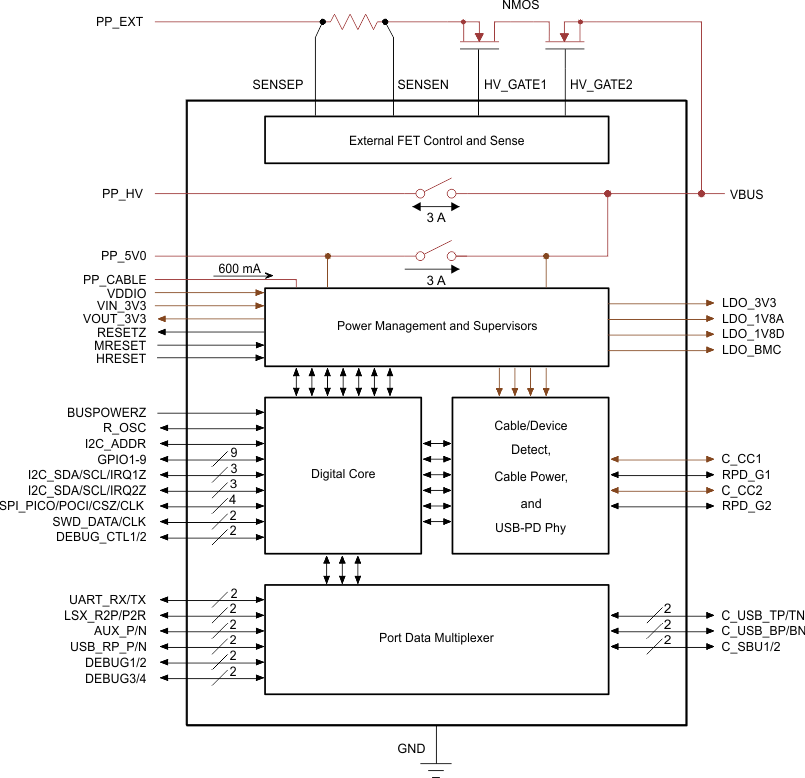
The TPS65983 B is a highly integrated stand-alone USB Type-C and Power Delivery (PD) controller optimized for notebook applications. The TPS65983 B integrates fully managed power paths with robust protection for a complete USB-C PD solution. The TPS65983 B includes a high speed multiplexer which is dependent the USB Type-C cable orientation that the CC pins provide. The multiplexer passes through side-band use data for alternate modes. The TPS65983 B has a BGA MicroStar Junior package with 0.5-mm Pitch and through-Hole via compatible for all pins. The mixed-signal front end on the CC pins advertises default (500 mA), 1.5 A or 3 A for Type-C power sources, detects a plug event and determines the USB Type-C cable orientation, and autonomously negotiates USB PD contracts by adhering to the specified bi-phase marked coding (BMC) and physical layer (PHY) protocol. The port power switch provides up to 3 A downstream at 5 V for legacy and Type-C USB power. An additional bidirectional switch path provides USB PD power up to 3 A at a maximum of 20 V as either a source (host), sink (device), or source-sink. The TPS65983 B is also an Upstream-Facing Port (UFP), Downstream-Facing Port (DFP), or Dual-Role Port for data. The port data multiplexer passes data to or from the top or bottom D+/D– signal pair at the port for USB 2.0 HS and has a USB 2.0 Low Speed Endpoint. Additionally, the Sideband-Use (SBU) signal pair is used for auxiliary or Alternate Modes of communication (DisplayPort or Thunderbolt, for example). The power management circuitry uses a 3.3 V inside the system and also uses VBUS to start up and negotiate power for a dead-battery or no-battery condition. The TPS65983 B is a highly integrated stand-alone USB Type-C and Power Delivery (PD) controller optimized for notebook applications. The TPS65983 B integrates fully managed power paths with robust protection for a complete USB-C PD solution. The TPS65983 B includes a high speed multiplexer which is dependent the USB Type-C cable orientation that the CC pins provide. The multiplexer passes through side-band use data for alternate modes. The TPS65983 B has a BGA MicroStar Junior package with 0.5-mm Pitch and through-Hole via compatible for all pins. The mixed-signal front end on the CC pins advertises default (500 mA), 1.5 A or 3 A for Type-C power sources, detects a plug event and determines the USB Type-C cable orientation, and autonomously negotiates USB PD contracts by adhering to the specified bi-phase marked coding (BMC) and physical layer (PHY) protocol. The port power switch provides up to 3 A downstream at 5 V for legacy and Type-C USB power. An additional bidirectional switch path provides USB PD power up to 3 A at a maximum of 20 V as either a source (host), sink (device), or source-sink. The TPS65983 B is also an Upstream-Facing Port (UFP), Downstream-Facing Port (DFP), or Dual-Role Port for data. The port data multiplexer passes data to or from the top or bottom D+/D– signal pair at the port for USB 2.0 HS and has a USB 2.0 Low Speed Endpoint. Additionally, the Sideband-Use (SBU) signal pair is used for auxiliary or Alternate Modes of communication (DisplayPort or Thunderbolt, for example). The power management circuitry uses a 3.3 V inside the system and also uses VBUS to start up and negotiate power for a dead-battery or no-battery condition.