TPS2555 Series
0.5-2.5A adjustable, 2 settable ILIMIT, 4.5-5.5V, 73mΩ USB power switch, active-low
Manufacturer: Texas Instruments
Catalog
0.5-2.5A adjustable, 2 settable ILIMIT, 4.5-5.5V, 73mΩ USB power switch, active-low
Key Features
• Meets USB Current-Limiting RequirementsAdjustable Current Limit, 500 mA to 2.5 A (typ)Two Independently-Settable, Current-Limit ThresholdsFast Overcurrent Response - 1.5 μs (typ)73-mΩ High-Side MOSFET3.8-μA Maximum Standby Supply CurrentPowerPAD™ Thermal ManagementAutomatic Output Discharge when DisabledBoth High-Enable (TPS2554) and Low-Enable (TPS2555) Versions AvailableMeets USB Current-Limiting RequirementsAdjustable Current Limit, 500 mA to 2.5 A (typ)Two Independently-Settable, Current-Limit ThresholdsFast Overcurrent Response - 1.5 μs (typ)73-mΩ High-Side MOSFET3.8-μA Maximum Standby Supply CurrentPowerPAD™ Thermal ManagementAutomatic Output Discharge when DisabledBoth High-Enable (TPS2554) and Low-Enable (TPS2555) Versions Available
Description
AI
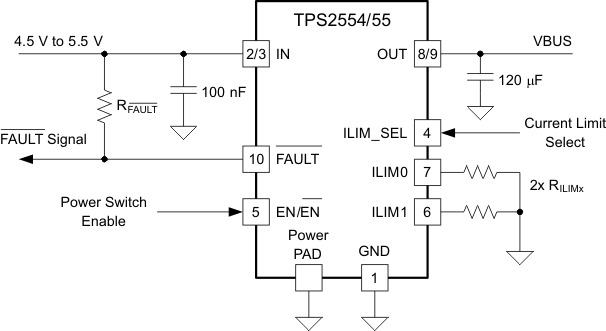
The TPS2554/55 power-distribution switches are intended for applications where precision current limiting is required or heavy capacitive loads and short circuits are encountered. These devices offer a programmable current-limit threshold between 500 mA and 2.5 A (typ) via an external resistor.
TPS2554/55 devices limit the output current to a safe level by switching into a constant-current mode when the output load exceeds the current-limit threshold. TheFAULTlogic output asserts low during overcurrent and over-temperature conditions.
The TPS2554/55 power-distribution switches are intended for applications where precision current limiting is required or heavy capacitive loads and short circuits are encountered. These devices offer a programmable current-limit threshold between 500 mA and 2.5 A (typ) via an external resistor.
TPS2554/55 devices limit the output current to a safe level by switching into a constant-current mode when the output load exceeds the current-limit threshold. TheFAULTlogic output asserts low during overcurrent and over-temperature conditions.