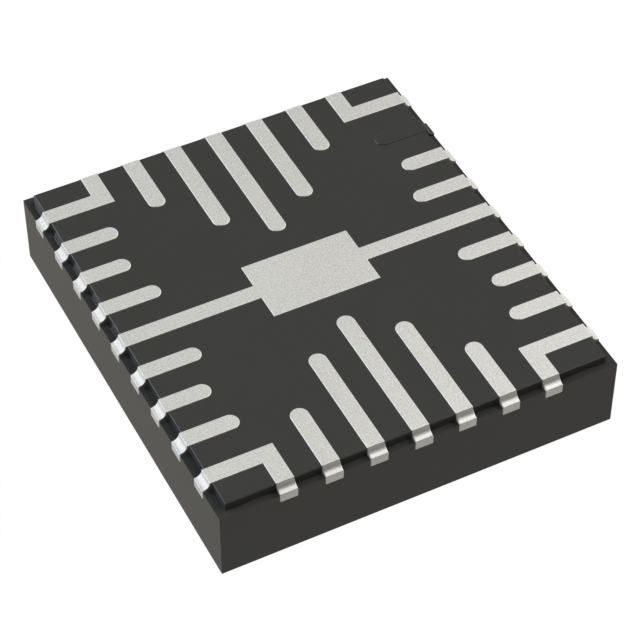
LP87745 Series
Three 3-A low-noise buck converter, I/O LDO and 5-V boost converter PMIC for industrial radar MMICs
Manufacturer: Texas Instruments
Catalog
Three 3-A low-noise buck converter, I/O LDO and 5-V boost converter PMIC for industrial radar MMICs
Key Features
• Device operating temperature : –40°C to +125°C ambientInput voltage: 3.3 V nominal (3 V to 4 V range)Three low-noise step-down DC/DC converters:Output voltage: 0.9 V to 1.9 V, 0.8 V (BUCK3), 0.82 V (BUCK3)Maximum output current: 3 A/ 3 A/ 3 ASwitching frequency: 4.4 MHz, 8.8 MHz, and 17.6 MHz5 V boost converterMaximum output current: 350 mA150 mA LDOOutput voltage 1.8 V or 3.3 VOutput short-circuit and overload protectionInput overvoltage protection (OVP) and undervoltage lockout (UVLO)Overtemperature warning and protectionSerial peripheral interface (SPI)Device operating temperature : –40°C to +125°C ambientInput voltage: 3.3 V nominal (3 V to 4 V range)Three low-noise step-down DC/DC converters:Output voltage: 0.9 V to 1.9 V, 0.8 V (BUCK3), 0.82 V (BUCK3)Maximum output current: 3 A/ 3 A/ 3 ASwitching frequency: 4.4 MHz, 8.8 MHz, and 17.6 MHz5 V boost converterMaximum output current: 350 mA150 mA LDOOutput voltage 1.8 V or 3.3 VOutput short-circuit and overload protectionInput overvoltage protection (OVP) and undervoltage lockout (UVLO)Overtemperature warning and protectionSerial peripheral interface (SPI)
Description
AI
The LP8774x device is designed to meet the power management requirements of the IWR MMICs in various industrial radar applications. The device has three step-down DC/DC converters, a 5-V boost converter and a 1.8 V or 3.3 V LDO. The LDO is powered from the boost and intended for xWR I/O supply. An SPI serial interface and enable signals control the device.
The step-down DC/DC converters support programmable switching frequency of 4.4 MHz, 8.8 MHz, or 17.6 MHz. High switching frequency and low noise across wide frequency range enable LDO-free power solution with minimal or no passive filtering. The high switching frequency improves thermals and transient settling for the MMIC RF rails. The device forces the switching clock into PWM mode for optimal RF performance and can also be synchronized to an external clock. The device supports remote voltage sensing to compensate IR drop between the regulator output and the point-of-load (POL) which improves the accuracy of the output voltage.
The LP8774x device supports programmable start-up and shutdown delays and sequences which are synchronized to the ENABLE signal. The sequences can also include GPO signals to control external regulators, load switches, and processor reset. The default settings for the device are programmed into nonvolatile memory (NVM). The device controls the output slew rate to minimize output voltage overshoot and in-rush current during device start-up.
The LP8774x device is designed to meet the power management requirements of the IWR MMICs in various industrial radar applications. The device has three step-down DC/DC converters, a 5-V boost converter and a 1.8 V or 3.3 V LDO. The LDO is powered from the boost and intended for xWR I/O supply. An SPI serial interface and enable signals control the device.
The step-down DC/DC converters support programmable switching frequency of 4.4 MHz, 8.8 MHz, or 17.6 MHz. High switching frequency and low noise across wide frequency range enable LDO-free power solution with minimal or no passive filtering. The high switching frequency improves thermals and transient settling for the MMIC RF rails. The device forces the switching clock into PWM mode for optimal RF performance and can also be synchronized to an external clock. The device supports remote voltage sensing to compensate IR drop between the regulator output and the point-of-load (POL) which improves the accuracy of the output voltage.
The LP8774x device supports programmable start-up and shutdown delays and sequences which are synchronized to the ENABLE signal. The sequences can also include GPO signals to control external regulators, load switches, and processor reset. The default settings for the device are programmed into nonvolatile memory (NVM). The device controls the output slew rate to minimize output voltage overshoot and in-rush current during device start-up.