SN74HC4851-Q1 Series
Automotive 5-V, 8:1, 1-channel analog multiplexer with injection-current effect control
Manufacturer: Texas Instruments
Catalog
Automotive 5-V, 8:1, 1-channel analog multiplexer with injection-current effect control
Key Features
• AEC-Q100 qualified for automotive applicationsDevice Temperature Grade 1: –40°C to 125°C ambient operating temperatureInjection-current cross coupling <1mV/mA (see in Application Information)Low crosstalk between switchesTerminal compatible with CD74HC4051, SN74LV4051A, and CD4051B devices2V to 5.5V VCC operationLatch-up performance exceeds 100mA per JESD 78, class IIAEC-Q100 qualified for automotive applicationsDevice Temperature Grade 1: –40°C to 125°C ambient operating temperatureInjection-current cross coupling <1mV/mA (see in Application Information)Low crosstalk between switchesTerminal compatible with CD74HC4051, SN74LV4051A, and CD4051B devices2V to 5.5V VCC operationLatch-up performance exceeds 100mA per JESD 78, class II
Description
AI
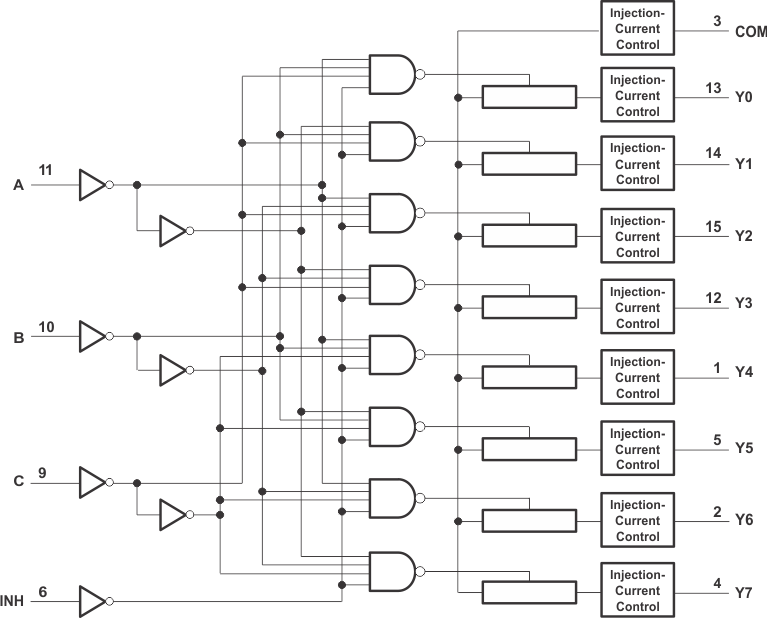
This eight-channel CMOS analog multiplexer/demultiplexer is terminal compatible with the function of the ’4051 device, and features injection-current effect control, which has excellent value in automotive applications where voltages in excess of normal supply voltages are common.
The injection-current effect control allows signals at disabled analog input channels to exceed the supply voltage without affecting the signal of the enabled analog channel. This feature eliminates the need for external diode/resistor networks typically used to keep the analog channel signals within the supply-voltage range.
This eight-channel CMOS analog multiplexer/demultiplexer is terminal compatible with the function of the ’4051 device, and features injection-current effect control, which has excellent value in automotive applications where voltages in excess of normal supply voltages are common.
The injection-current effect control allows signals at disabled analog input channels to exceed the supply voltage without affecting the signal of the enabled analog channel. This feature eliminates the need for external diode/resistor networks typically used to keep the analog channel signals within the supply-voltage range.