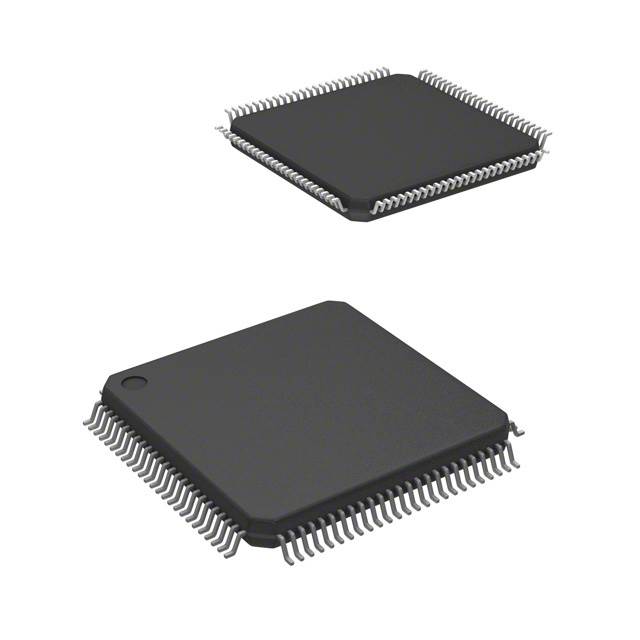
MSP430F4491 Series
8-MHz MCU with 60-KB flash, 2-KB SRAM, comparator, SPI/UART, 160 seg LCD
Manufacturer: Texas Instruments
Catalog
8-MHz MCU with 60-KB flash, 2-KB SRAM, comparator, SPI/UART, 160 seg LCD
Key Features
• Low Supply-Voltage Range, 1.8 V to 3.6 VUltralow-Power Consumption:Active Mode: 280 µA at 1 MHz, 2.2 VStandby Mode: 1.1 µAOff Mode (RAM Retention): 0.1 µAFive Power Saving ModesWake-Up From Standby Mode in Less Than 6 µs16-Bit RISC Architecture, 125-ns Instruction Cycle Time12-Bit A/D Converter With Internal Reference, Sample-and-Hold andAutoscan Feature16-Bit Timer_B With Three(1)or Seven(2)Capture/Compare-With-Shadow Registers16-Bit Timer_A With Three Capture/Compare RegistersOn-Chip ComparatorSerial Communication Interface (USART), Select Asynchronous UART orSynchronous SPI by Software:Two USARTs (USART0, USART1)(1)One USART (USART0)(2)Brownout DetectorSupply Voltage Supervisor/Monitor With Programmable Level DetectionSerial Onboard Programming, No External Programming Voltage NeededProgrammable Code Protection by Security FuseIntegrated LCD Driver for up to 160 SegmentsBootstrap LoaderFamily Members Include:MSP430F435, MSP430F4351(3):16KB+256B Flash Memory512B RAMMSP430F436, MSP430F4361(3):24KB+256B Flash Memory1KB RAMMSP430F437, MSP430F4371(3):32KB+256B Flash Memory1KB RAMMSP430F447:32KB+256B Flash Memory1KB RAMMSP430F448, MSP430F4481(3):48KB+256B Flash Memory2KB RAMMSP430F449, MSP430F4491(3):60KB+256B Flash Memory2KB RAMFor Complete Module Descriptions, See TheMSP430x4xx Family User’s Guide, Literature Number SLAU056(1)MSP430F43x, and MSP430F43x1 devices(2)MSP430F44x, and MSP430F44x1 devices(3)The MSP430F43x1 and MSP430F44x1 devices are identical to the MSP430F43x and MSP430F44x devices, respectively – with the exception that the ADC12 module is not implemented.Low Supply-Voltage Range, 1.8 V to 3.6 VUltralow-Power Consumption:Active Mode: 280 µA at 1 MHz, 2.2 VStandby Mode: 1.1 µAOff Mode (RAM Retention): 0.1 µAFive Power Saving ModesWake-Up From Standby Mode in Less Than 6 µs16-Bit RISC Architecture, 125-ns Instruction Cycle Time12-Bit A/D Converter With Internal Reference, Sample-and-Hold andAutoscan Feature16-Bit Timer_B With Three(1)or Seven(2)Capture/Compare-With-Shadow Registers16-Bit Timer_A With Three Capture/Compare RegistersOn-Chip ComparatorSerial Communication Interface (USART), Select Asynchronous UART orSynchronous SPI by Software:Two USARTs (USART0, USART1)(1)One USART (USART0)(2)Brownout DetectorSupply Voltage Supervisor/Monitor With Programmable Level DetectionSerial Onboard Programming, No External Programming Voltage NeededProgrammable Code Protection by Security FuseIntegrated LCD Driver for up to 160 SegmentsBootstrap LoaderFamily Members Include:MSP430F435, MSP430F4351(3):16KB+256B Flash Memory512B RAMMSP430F436, MSP430F4361(3):24KB+256B Flash Memory1KB RAMMSP430F437, MSP430F4371(3):32KB+256B Flash Memory1KB RAMMSP430F447:32KB+256B Flash Memory1KB RAMMSP430F448, MSP430F4481(3):48KB+256B Flash Memory2KB RAMMSP430F449, MSP430F4491(3):60KB+256B Flash Memory2KB RAMFor Complete Module Descriptions, See TheMSP430x4xx Family User’s Guide, Literature Number SLAU056(1)MSP430F43x, and MSP430F43x1 devices(2)MSP430F44x, and MSP430F44x1 devices(3)The MSP430F43x1 and MSP430F44x1 devices are identical to the MSP430F43x and MSP430F44x devices, respectively – with the exception that the ADC12 module is not implemented.
Description
AI
The Texas Instruments MSP430 family of ultralow power microcontrollers consists of several devices featuring different sets of peripherals targeted for various applications. The architecture, combined with five low-power modes, is optimized to achieve extended battery life in portable measurement applications. The devices feature a powerful 16-bit RISC CPU, 16-bit registers, and constant generators that contribute to maximum code efficiency. The digitally controlled oscillator (DCO) allows wake-up from low-power modes to active mode in less than6 µs.
The MSP430x43x(1) and the MSP430x44x(1) series are microcontroller configurations with two built-in 16-bit timers, a fast 12-bit A/D converter (not implemented on the MSP430F43x1 and MSP430F44x1 devices), one or two universal serial synchronous/asynchronous communication interfaces (USART), 48 I/O pins, and a liquid crystal driver (LCD) with up to 160 segments.
Typical applications include sensor systems that capture analog signals, convert them to digital values, and process and transmit the data to a host system, or process this data and display it on a LCD panel. The timers make the configurations ideal for industrial control applications such as ripple counters, digital motor control, EE-meters, hand-held meters, etc. The hardware multiplier enhances the performance and offers a broad code and hardware-compatible family solution.
The Texas Instruments MSP430 family of ultralow power microcontrollers consists of several devices featuring different sets of peripherals targeted for various applications. The architecture, combined with five low-power modes, is optimized to achieve extended battery life in portable measurement applications. The devices feature a powerful 16-bit RISC CPU, 16-bit registers, and constant generators that contribute to maximum code efficiency. The digitally controlled oscillator (DCO) allows wake-up from low-power modes to active mode in less than6 µs.
The MSP430x43x(1) and the MSP430x44x(1) series are microcontroller configurations with two built-in 16-bit timers, a fast 12-bit A/D converter (not implemented on the MSP430F43x1 and MSP430F44x1 devices), one or two universal serial synchronous/asynchronous communication interfaces (USART), 48 I/O pins, and a liquid crystal driver (LCD) with up to 160 segments.
Typical applications include sensor systems that capture analog signals, convert them to digital values, and process and transmit the data to a host system, or process this data and display it on a LCD panel. The timers make the configurations ideal for industrial control applications such as ripple counters, digital motor control, EE-meters, hand-held meters, etc. The hardware multiplier enhances the performance and offers a broad code and hardware-compatible family solution.