TLC6984 Series
48 current sources, 64 scans, common cathode matrix LED display driver
Manufacturer: Texas Instruments
Catalog
48 current sources, 64 scans, common cathode matrix LED display driver
Key Features
• Separated VCCand VR/G/Bpower supplyVCCvoltage range: 2.5 V – 5.5 VVR/G/Bvoltage range: 2.5 V – 5.5 V48 current source channels from 0.2 mA to 20 mAChannel-to-channel accuracy: ±0.5% (typ.), ±2% (max.); device-to-device accuracy: ±0.5% (typ.), ±2% (max.)Low knee voltage: 0.26 V (max.) when IOUT= 5 mA3-bits (8 steps) global brightness control8-bits (256 steps) color brightness controlMaximum 16-bits (65536 steps) PWM grayscale control16 scan line switches with 190-mΩ RDS(ON)Ultra low power consumptionIndependent VCCdown to 2.5 VLowest ICCdown to 3.6 mA with 50-MHz GCLKIntelligent power saving mode with ICCdown to 0.9mABuilt-in SRAM to support 1 – 64 multiplexingSingle device with 16 multiplexing to support 48 × 16 LEDs or 16 × 16 RGB pixelsDual devices stackable with 32 multiplexing to support 96 × 32 LEDs or 32 × 32 RGB pixelsThree devices stackable with 48 multiplexing to support 144 × 48 LEDs or 48 × 48 RGB pixelsFour devices stackable with 64 multiplexing to support 192 × 64 LEDs or 64 × 64 RGB pixelsHigh speed and low EMI Continuous Clock Series Interface (CCSI)Only three wires: SCLK / SIN / SOUTExternal 25-MHz (max.) SCLK with dual-edge transmission mechanism (internal 50 MHz)Internal frequency multiplier to support high GCLK frequencyOptimized display performanceProgrammable scan line sequenceUpside and downside ghosting removalLow grayscale enhancementLED open, short, and weak short detection and removalSeparated VCCand VR/G/Bpower supplyVCCvoltage range: 2.5 V – 5.5 VVR/G/Bvoltage range: 2.5 V – 5.5 V48 current source channels from 0.2 mA to 20 mAChannel-to-channel accuracy: ±0.5% (typ.), ±2% (max.); device-to-device accuracy: ±0.5% (typ.), ±2% (max.)Low knee voltage: 0.26 V (max.) when IOUT= 5 mA3-bits (8 steps) global brightness control8-bits (256 steps) color brightness controlMaximum 16-bits (65536 steps) PWM grayscale control16 scan line switches with 190-mΩ RDS(ON)Ultra low power consumptionIndependent VCCdown to 2.5 VLowest ICCdown to 3.6 mA with 50-MHz GCLKIntelligent power saving mode with ICCdown to 0.9mABuilt-in SRAM to support 1 – 64 multiplexingSingle device with 16 multiplexing to support 48 × 16 LEDs or 16 × 16 RGB pixelsDual devices stackable with 32 multiplexing to support 96 × 32 LEDs or 32 × 32 RGB pixelsThree devices stackable with 48 multiplexing to support 144 × 48 LEDs or 48 × 48 RGB pixelsFour devices stackable with 64 multiplexing to support 192 × 64 LEDs or 64 × 64 RGB pixelsHigh speed and low EMI Continuous Clock Series Interface (CCSI)Only three wires: SCLK / SIN / SOUTExternal 25-MHz (max.) SCLK with dual-edge transmission mechanism (internal 50 MHz)Internal frequency multiplier to support high GCLK frequencyOptimized display performanceProgrammable scan line sequenceUpside and downside ghosting removalLow grayscale enhancementLED open, short, and weak short detection and removal
Description
AI
With the pixel density getting higher in narrow pixel pitch LED display or mini and micro-LED products, there are urgent demands for LED drivers to address those critical challenges. These challenges include ultra high integration to meet the strict board space limitation, ultra low power to minimize the system level power dissipation, new interface to enable high data refresh rate with low EMI impact, and excellent display performance to serve the growing needs of higher display quality.
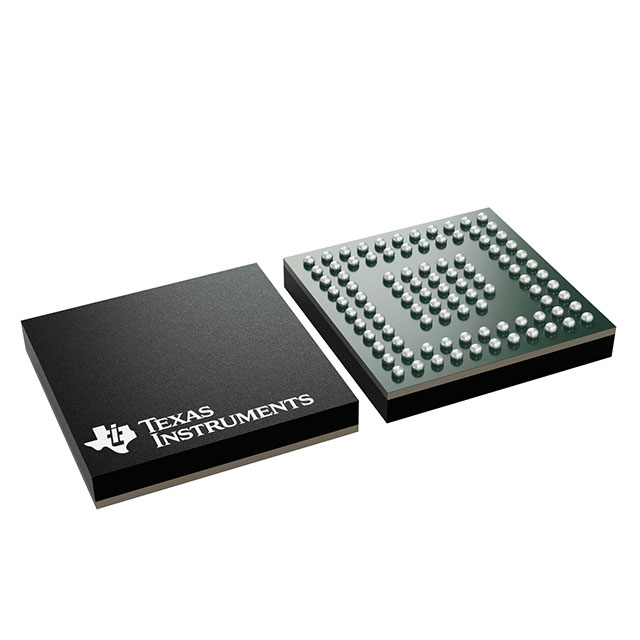
The TLC6984 is a highly-integrated, common cathode matrix LED display driver with 48 constant current sources and 16 scanning FETs. Besides driving 16 × 16 and 32 × 32 RGB LED pixels as TLC6983, three TLC6984s are capable of driving 48 × 48 RGB LED pixels and stacking four TLC6984s can drive 64 × 64 RGB LED pixels. To achieve low-power consumption, the device supports separated power supplies for the red, green, and blue LEDs by its common cathode structure. Furthermore, the operation power of the TLC6984 is significantly reduced by ultra-low operation voltage range (Vcc down to 2.5 V) and ultra-low operation current (Icc down to 3.6 mA).
The TLC6984 implements a high-speed, dual-edge transmission interface to support high device count daisy-chained and high-refresh rate while minimizing electrical-magnetic interference (EMI). The device supports up to 25-MHz SCLK (external) and 40-MHz to 160-MHz GCLK (internal, typical values) with different GCLK multiplier modes and frequencies. Meanwhile, the device integrates enhanced circuits and intelligent algorithms to solve the various display challenges in Narrow Pixel Pitch (NPP) LED display applications and mini and micro-LED products. These challenges include dim at the first scan line, upper and downside ghosting, non-uniformity in low grayscale, coupling, and caterpillar caused by open or short LEDs, which make the TLC6984 a perfect choice in such applications.
The TLC6984 also implements LED open, weak-short, short detections and removals during operations and can also report this information out to the accompanying digital processor.
With the pixel density getting higher in narrow pixel pitch LED display or mini and micro-LED products, there are urgent demands for LED drivers to address those critical challenges. These challenges include ultra high integration to meet the strict board space limitation, ultra low power to minimize the system level power dissipation, new interface to enable high data refresh rate with low EMI impact, and excellent display performance to serve the growing needs of higher display quality.
The TLC6984 is a highly-integrated, common cathode matrix LED display driver with 48 constant current sources and 16 scanning FETs. Besides driving 16 × 16 and 32 × 32 RGB LED pixels as TLC6983, three TLC6984s are capable of driving 48 × 48 RGB LED pixels and stacking four TLC6984s can drive 64 × 64 RGB LED pixels. To achieve low-power consumption, the device supports separated power supplies for the red, green, and blue LEDs by its common cathode structure. Furthermore, the operation power of the TLC6984 is significantly reduced by ultra-low operation voltage range (Vcc down to 2.5 V) and ultra-low operation current (Icc down to 3.6 mA).
The TLC6984 implements a high-speed, dual-edge transmission interface to support high device count daisy-chained and high-refresh rate while minimizing electrical-magnetic interference (EMI). The device supports up to 25-MHz SCLK (external) and 40-MHz to 160-MHz GCLK (internal, typical values) with different GCLK multiplier modes and frequencies. Meanwhile, the device integrates enhanced circuits and intelligent algorithms to solve the various display challenges in Narrow Pixel Pitch (NPP) LED display applications and mini and micro-LED products. These challenges include dim at the first scan line, upper and downside ghosting, non-uniformity in low grayscale, coupling, and caterpillar caused by open or short LEDs, which make the TLC6984 a perfect choice in such applications.
The TLC6984 also implements LED open, weak-short, short detections and removals during operations and can also report this information out to the accompanying digital processor.