LM94022-Q1 Series
Automotive Grade, ±1.5°C Temperature Sensor with Multiple Gain and Class-AB Analog Output
Manufacturer: Texas Instruments
Catalog
Automotive Grade, ±1.5°C Temperature Sensor with Multiple Gain and Class-AB Analog Output
Key Features
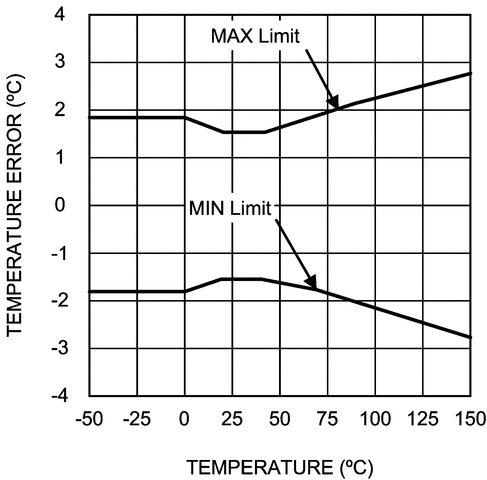
• LM94022/-Q1 is AEC-Q100 Grade 0 qualified andis Manufactured on an Automotive Grade FlowLow 1.5-V to 5.5-V Operation With Low 5.4-µASupply CurrentPush-Pull Output With ±50-µA Source Current CapabilityFour Selectable GainsVery Accurate Over Wide Temperature Range of−50°C to +150°C:±1.5ºC Temperature Accuracy for 20ºC to40ºC Range±1.8ºC Temperature Accuracy for –50ºC to70ºC Range±2.1ºC Temperature Accuracy for –50ºC to90ºC Range±2.7ºC Temperature Accuracy for –50ºC to150ºC RangeOutput is Short-Circuit ProtectedExtremely Small SC70 PackageFor the Similar Functionality in a TO-92 Package,See LMT84, LMT85, LMT86, or LMT87Footprint Compatible With the Industry-StandardLM20 Temperature SensorLM94022/-Q1 is AEC-Q100 Grade 0 qualified andis Manufactured on an Automotive Grade FlowLow 1.5-V to 5.5-V Operation With Low 5.4-µASupply CurrentPush-Pull Output With ±50-µA Source Current CapabilityFour Selectable GainsVery Accurate Over Wide Temperature Range of−50°C to +150°C:±1.5ºC Temperature Accuracy for 20ºC to40ºC Range±1.8ºC Temperature Accuracy for –50ºC to70ºC Range±2.1ºC Temperature Accuracy for –50ºC to90ºC Range±2.7ºC Temperature Accuracy for –50ºC to150ºC RangeOutput is Short-Circuit ProtectedExtremely Small SC70 PackageFor the Similar Functionality in a TO-92 Package,See LMT84, LMT85, LMT86, or LMT87Footprint Compatible With the Industry-StandardLM20 Temperature Sensor
Description
AI
The LM94022/-Q1 device is a precision analog output CMOS integrated-circuit temperature sensor with selectable linear negative temperature coefficient (NTC). A class-AB output structure gives the LM94022/-Q1 strong output source and sink current capability for driving heavy transient loads such as that presented by the input of a sample-and-hold analog-to-digital converter. The low 5.4-µA supply current and 1.5-V operating voltage of the LM94022/-Q1 make it ideal for battery-powered systems as well as general temperature-sensing applications.
The Gain Select 1 (GS1) and Gain Select 0 (GS0) logic inputs select one of four gains for the temperature-to-voltage output transfer function: −5.5 mV/°C, −8.2 mV/°C, −10.9 mV/°C, and −13.6 mV/°C. Selecting –5.5 mV/°C (GS1 and GS0 both tied low), allows the LM94022/-Q1 to operate down to 1.5-V supply while measuring temperature over the full range of −50°C to +150°C. Maximum temperature sensitivity, –13.6 mV/°C, is selected when GS1 and GS0 are both tied high. The gain-select inputs can be tied directly to VDDor Ground without any pullup or pulldown resistors, reducing component count and board area. These inputs can also be driven by logic signals allowing the system to optimize the gain during operation or system diagnostics.
The LM94022/-Q1 device is a precision analog output CMOS integrated-circuit temperature sensor with selectable linear negative temperature coefficient (NTC). A class-AB output structure gives the LM94022/-Q1 strong output source and sink current capability for driving heavy transient loads such as that presented by the input of a sample-and-hold analog-to-digital converter. The low 5.4-µA supply current and 1.5-V operating voltage of the LM94022/-Q1 make it ideal for battery-powered systems as well as general temperature-sensing applications.
The Gain Select 1 (GS1) and Gain Select 0 (GS0) logic inputs select one of four gains for the temperature-to-voltage output transfer function: −5.5 mV/°C, −8.2 mV/°C, −10.9 mV/°C, and −13.6 mV/°C. Selecting –5.5 mV/°C (GS1 and GS0 both tied low), allows the LM94022/-Q1 to operate down to 1.5-V supply while measuring temperature over the full range of −50°C to +150°C. Maximum temperature sensitivity, –13.6 mV/°C, is selected when GS1 and GS0 are both tied high. The gain-select inputs can be tied directly to VDDor Ground without any pullup or pulldown resistors, reducing component count and board area. These inputs can also be driven by logic signals allowing the system to optimize the gain during operation or system diagnostics.