DS90CF364A Series
+3.3V LVDS Receiver 18-Bit Flat Panel Display (FPD) Link - 65 MHz
Manufacturer: Texas Instruments
Catalog
+3.3V LVDS Receiver 18-Bit Flat Panel Display (FPD) Link - 65 MHz
Key Features
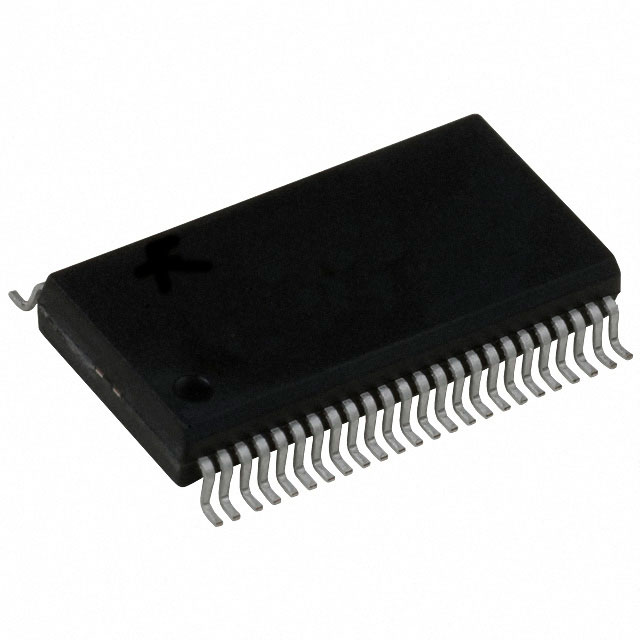
• 20 to 65 MHz shift clock supportProgrammable Transmitter (DS90C363) strobe select (Rising or Falling edge strobe)Single 3.3V supplyChipset (TX + RX) power consumption < 250 mW (typ)Power-down mode (< 0.5 mW total)Single pixel per clock XGA (1024×768) readySupports VGA, SVGA, XGA and higher addressabilityUp to 170 Megabyte/sec bandwidthUp to 1.3 Gbps throughputNarrow bus reduces cable size and cost290 mV swing LVDS devices for low EMIPLL requires no external componentsLow profile 48-lead TSSOP packageFalling edge data strobe ReceiverCompatible with TIA/EIA-644 LVDS standardESD rating > 7 kVOperating Temperature: −40°C to +85°CAll trademarks are the property of their respective owners. TRI-STATE is a trademark of Texas Instruments. TRI-STATE is a trademark of Texas Instruments.20 to 65 MHz shift clock supportProgrammable Transmitter (DS90C363) strobe select (Rising or Falling edge strobe)Single 3.3V supplyChipset (TX + RX) power consumption < 250 mW (typ)Power-down mode (< 0.5 mW total)Single pixel per clock XGA (1024×768) readySupports VGA, SVGA, XGA and higher addressabilityUp to 170 Megabyte/sec bandwidthUp to 1.3 Gbps throughputNarrow bus reduces cable size and cost290 mV swing LVDS devices for low EMIPLL requires no external componentsLow profile 48-lead TSSOP packageFalling edge data strobe ReceiverCompatible with TIA/EIA-644 LVDS standardESD rating > 7 kVOperating Temperature: −40°C to +85°CAll trademarks are the property of their respective owners. TRI-STATE is a trademark of Texas Instruments. TRI-STATE is a trademark of Texas Instruments.
Description
AI
The DS90C363 transmitter converts 21 bits of CMOS/TTL data into three LVDS (Low Voltage Differential Signaling) data streams. A phase-locked transmit clock is transmitted in parallel with the data streams over a fourth LVDS link. Every cycle of the transmit clock 21 bits of input data are sampled and transmitted. The DS90CF364 receiver converts the LVDS data streams back into 21 bits of CMOS/TTL data. At a transmit clock frequency of 65 MHz, 18 bits of RGB data and 3 bits of LCD timing and control data (FPLINE, FPFRAME, DRDY) are transmitted at a rate of 455 Mbps per LVDS data channel. Using a 65 MHz clock, the data throughput is 170 Mbyte/sec. The Transmitter is offered with programmable edge data strobes for convenient interface with a variety of graphics controllers. The Transmitter can be programmed for Rising edge strobe or Falling edge strobe through a dedicated pin. A Rising edge Transmitter will inter-operate with a Falling edge Receiver (DS90CF364) without any translation logic.
This chipset is an ideal means to solve EMI and cable size problems associated with wide, high speed TTL interfaces.
The DS90C363 transmitter converts 21 bits of CMOS/TTL data into three LVDS (Low Voltage Differential Signaling) data streams. A phase-locked transmit clock is transmitted in parallel with the data streams over a fourth LVDS link. Every cycle of the transmit clock 21 bits of input data are sampled and transmitted. The DS90CF364 receiver converts the LVDS data streams back into 21 bits of CMOS/TTL data. At a transmit clock frequency of 65 MHz, 18 bits of RGB data and 3 bits of LCD timing and control data (FPLINE, FPFRAME, DRDY) are transmitted at a rate of 455 Mbps per LVDS data channel. Using a 65 MHz clock, the data throughput is 170 Mbyte/sec. The Transmitter is offered with programmable edge data strobes for convenient interface with a variety of graphics controllers. The Transmitter can be programmed for Rising edge strobe or Falling edge strobe through a dedicated pin. A Rising edge Transmitter will inter-operate with a Falling edge Receiver (DS90CF364) without any translation logic.
This chipset is an ideal means to solve EMI and cable size problems associated with wide, high speed TTL interfaces.