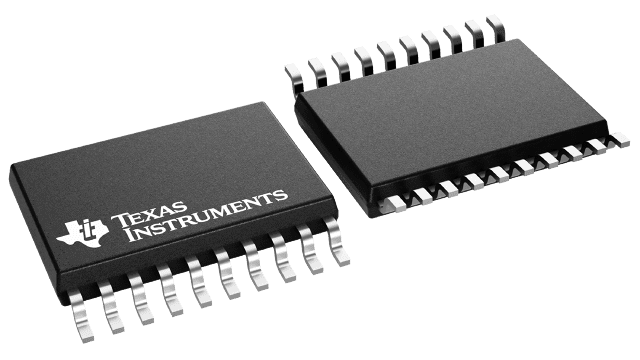
MSP430FR2310 Series
16 MHz integrated analog microcontroller with 2 KB FRAM, OpAmp, TIA, comparator with DAC, 10-bit ADC
Manufacturer: Texas Instruments
Catalog
16 MHz integrated analog microcontroller with 2 KB FRAM, OpAmp, TIA, comparator with DAC, 10-bit ADC
Key Features
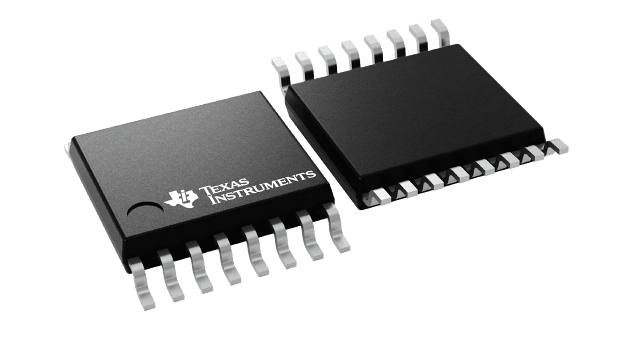
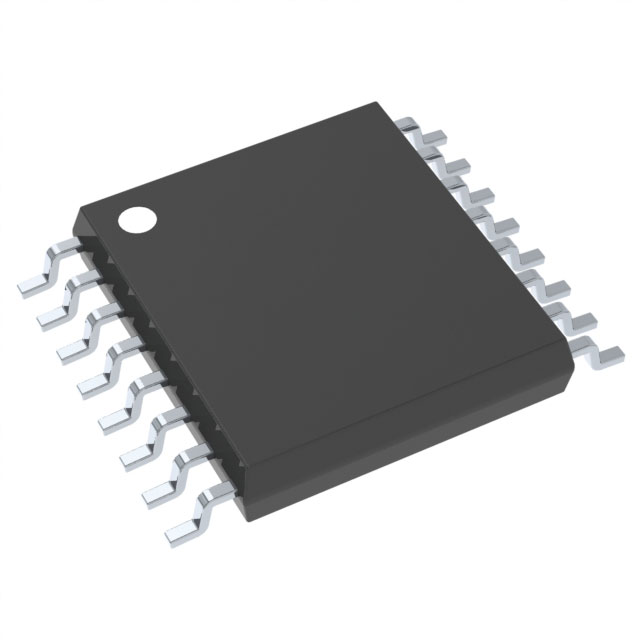
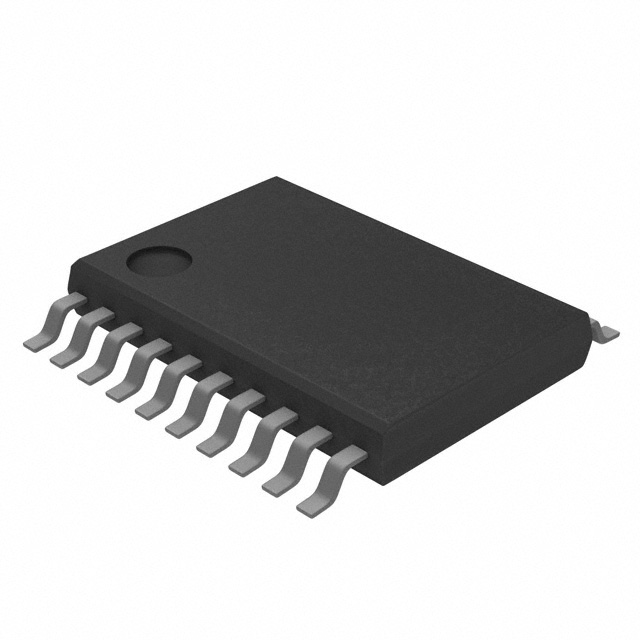
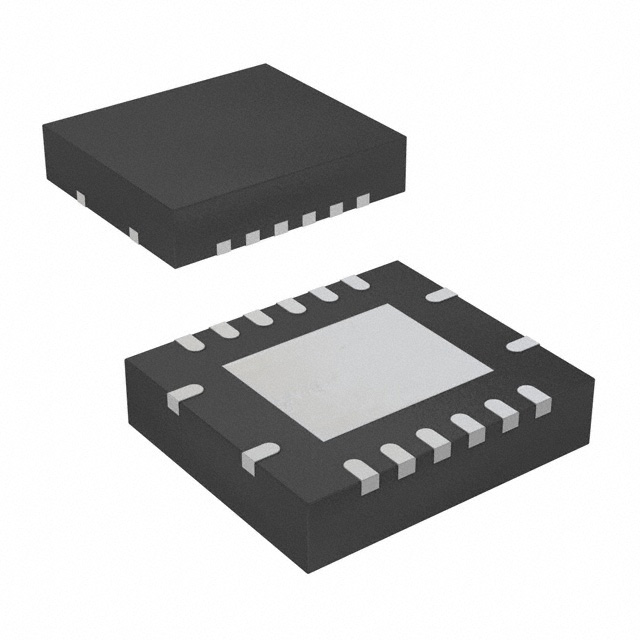
• Embedded microcontroller16-bit RISC architecture up to 16 MHzWide supply voltage range from 3.6 V down to 1.8 V (minimum supply voltage is restricted by SVS levels, see the SVS Specifications)Optimized low-power modes (at 3 V)Active mode: 126 µA/MHzStandby: real-time clock (RTC) counter (LPM3.5 with 32768-Hz crystal): 0.71 µAShutdown (LPM4.5): 32 nA without SVSHigh-performance analogTransimpedance amplifier (TIA)(1)Current-to-voltage conversionHalf-rail inputLow-leakage negative input down to 5 pA, enabled on TSSOP16 package onlyRail-to-rail outputMultiple input selectionsConfigurable high-power and low-power modes8-channel 10-bit analog-to-digital converter (ADC)Internal 1.5-V referenceSample-and-hold 200 kspsEnhanced comparator (eCOMP)Integrated 6-bit digital-to-analog converter (DAC) as reference voltageProgrammable hysteresisConfigurable high-power and low-power modesSmart analog combo (SAC-L1)Supports general-purpose op ampRail-to-rail input and outputMultiple input selectionsConfigurable high-power and low-power modesLow-power ferroelectric RAM (FRAM)Up to 3.75KB of nonvolatile memoryBuilt-in error correction code (ECC)Configurable write protectionUnified memory of program, constants, and storage1015write cycle enduranceRadiation resistant and nonmagneticIntelligent digital peripheralsIR modulation logicTwo 16-bit timers with three capture/compare registers each (Timer_B3)One 16-bit counter-only RTC counter16-bit cyclic redundancy checker (CRC)Enhanced serial communicationsEnhanced USCI A (eUSCI_A) supports UART, IrDA, and SPIEnhanced USCI B (eUSCI_B) supports SPI and I2C with support for remap feature (see Signal Descriptions)Clock system (CS)On-chip 32-kHz RC oscillator (REFO)On-chip 16-MHz digitally controlled oscillator (DCO) with frequency locked loop (FLL)±1% accuracy with on-chip reference at room temperatureOn-chip very low-frequency 10-kHz oscillator (VLO)On-chip high-frequency modulation oscillator (MODOSC)External 32-kHz crystal oscillator (LFXT)External high-frequency crystal oscillator up to 16 MHz (HFXT)Programmable MCLK prescalar of 1 to 128SMCLK derived from MCLK with programmable prescalar of 1, 2, 4, or 8General input/output and pin functionality16 I/Os on 20-pin package12 interrupt pins (8 pins of P1 and 4 pins of P2) can wake MCU from LPMsAll I/Os are capacitive touch I/OsDevelopment tools and softwareLaunchPad™ development kit (MSP‑EXP430FR2311)Target development board (MSP‑TS430PW20)Family members (also see Device Comparison)MSP430FR2311: 3.75KB of program FRAM and 1KB of RAMMSP430FR2310: 2KB of program FRAM and 1KB of RAMPackage options20-pin TSSOP (PW20)16-pin TSSOP (PW16)16-pin VQFN (RGY16)(1)The transimpedance amplifier was originally given an abbreviation of TRI in descriptive text, pin names, and register names. The abbreviation has changed to TIA in all descriptive text, but pin names and register names still use TRI.Embedded microcontroller16-bit RISC architecture up to 16 MHzWide supply voltage range from 3.6 V down to 1.8 V (minimum supply voltage is restricted by SVS levels, see the SVS Specifications)Optimized low-power modes (at 3 V)Active mode: 126 µA/MHzStandby: real-time clock (RTC) counter (LPM3.5 with 32768-Hz crystal): 0.71 µAShutdown (LPM4.5): 32 nA without SVSHigh-performance analogTransimpedance amplifier (TIA)(1)Current-to-voltage conversionHalf-rail inputLow-leakage negative input down to 5 pA, enabled on TSSOP16 package onlyRail-to-rail outputMultiple input selectionsConfigurable high-power and low-power modes8-channel 10-bit analog-to-digital converter (ADC)Internal 1.5-V referenceSample-and-hold 200 kspsEnhanced comparator (eCOMP)Integrated 6-bit digital-to-analog converter (DAC) as reference voltageProgrammable hysteresisConfigurable high-power and low-power modesSmart analog combo (SAC-L1)Supports general-purpose op ampRail-to-rail input and outputMultiple input selectionsConfigurable high-power and low-power modesLow-power ferroelectric RAM (FRAM)Up to 3.75KB of nonvolatile memoryBuilt-in error correction code (ECC)Configurable write protectionUnified memory of program, constants, and storage1015write cycle enduranceRadiation resistant and nonmagneticIntelligent digital peripheralsIR modulation logicTwo 16-bit timers with three capture/compare registers each (Timer_B3)One 16-bit counter-only RTC counter16-bit cyclic redundancy checker (CRC)Enhanced serial communicationsEnhanced USCI A (eUSCI_A) supports UART, IrDA, and SPIEnhanced USCI B (eUSCI_B) supports SPI and I2C with support for remap feature (see Signal Descriptions)Clock system (CS)On-chip 32-kHz RC oscillator (REFO)On-chip 16-MHz digitally controlled oscillator (DCO) with frequency locked loop (FLL)±1% accuracy with on-chip reference at room temperatureOn-chip very low-frequency 10-kHz oscillator (VLO)On-chip high-frequency modulation oscillator (MODOSC)External 32-kHz crystal oscillator (LFXT)External high-frequency crystal oscillator up to 16 MHz (HFXT)Programmable MCLK prescalar of 1 to 128SMCLK derived from MCLK with programmable prescalar of 1, 2, 4, or 8General input/output and pin functionality16 I/Os on 20-pin package12 interrupt pins (8 pins of P1 and 4 pins of P2) can wake MCU from LPMsAll I/Os are capacitive touch I/OsDevelopment tools and softwareLaunchPad™ development kit (MSP‑EXP430FR2311)Target development board (MSP‑TS430PW20)Family members (also see Device Comparison)MSP430FR2311: 3.75KB of program FRAM and 1KB of RAMMSP430FR2310: 2KB of program FRAM and 1KB of RAMPackage options20-pin TSSOP (PW20)16-pin TSSOP (PW16)16-pin VQFN (RGY16)(1)The transimpedance amplifier was originally given an abbreviation of TRI in descriptive text, pin names, and register names. The abbreviation has changed to TIA in all descriptive text, but pin names and register names still use TRI.
Description
AI
The MSP430FR231x FRAM microcontrollers (MCUs) are part of the MSP430™ MCU value line sensing family. The devices integrate a configurable low-leakage transimpedance amplifier (TIA) and a general purpose operational amplifier. The MCUs feature a powerful 16-bit RISC CPU, 16-bit registers, and a constant generator that contribute to maximum code efficiency. The digitally controlled oscillator (DCO) also allows the device to wake up from low-power modes to active mode typically in less than 10 µs. The feature set of these MCUs are well suited for applications ranging from smoke detectors to portable health and fitness accessories.
The ultra-low-power MSP430FR231x MCU family consists of several devices that feature embedded nonvolatile FRAM and different sets of peripherals targeted for various sensing and measurement applications. The architecture, FRAM, and peripherals, combined with extensive low-power modes, are optimized to achieve extended battery life in portable and wireless sensing applications. FRAM is a nonvolatile memory technology that combines the speed, flexibility, and endurance of SRAM with the stability and reliability of flash at lower total power consumption.
The MSP430FR231x MCUs are supported by an extensive hardware and software ecosystem with reference designs and code examples to get your design started quickly. Development kits include theMSP‑EXP430FR2311LaunchPad™ development kit and theMSP‑TS430PW2020-pin target development board. TI provides freeMSP430Ware™software, which is available as a component ofCode Composer Studio™IDE desktop and cloud versions withinTI Resource Explorer. The MSP430 MCUs are also supported by extensive online collateral, training, and online support through theE2E™ Community Forum.
For complete module descriptions, see theMSP430FR4xx and MSP430FR2xx Family User’s Guide.
The MSP430FR231x FRAM microcontrollers (MCUs) are part of the MSP430™ MCU value line sensing family. The devices integrate a configurable low-leakage transimpedance amplifier (TIA) and a general purpose operational amplifier. The MCUs feature a powerful 16-bit RISC CPU, 16-bit registers, and a constant generator that contribute to maximum code efficiency. The digitally controlled oscillator (DCO) also allows the device to wake up from low-power modes to active mode typically in less than 10 µs. The feature set of these MCUs are well suited for applications ranging from smoke detectors to portable health and fitness accessories.
The ultra-low-power MSP430FR231x MCU family consists of several devices that feature embedded nonvolatile FRAM and different sets of peripherals targeted for various sensing and measurement applications. The architecture, FRAM, and peripherals, combined with extensive low-power modes, are optimized to achieve extended battery life in portable and wireless sensing applications. FRAM is a nonvolatile memory technology that combines the speed, flexibility, and endurance of SRAM with the stability and reliability of flash at lower total power consumption.
The MSP430FR231x MCUs are supported by an extensive hardware and software ecosystem with reference designs and code examples to get your design started quickly. Development kits include theMSP‑EXP430FR2311LaunchPad™ development kit and theMSP‑TS430PW2020-pin target development board. TI provides freeMSP430Ware™software, which is available as a component ofCode Composer Studio™IDE desktop and cloud versions withinTI Resource Explorer. The MSP430 MCUs are also supported by extensive online collateral, training, and online support through theE2E™ Community Forum.
For complete module descriptions, see theMSP430FR4xx and MSP430FR2xx Family User’s Guide.