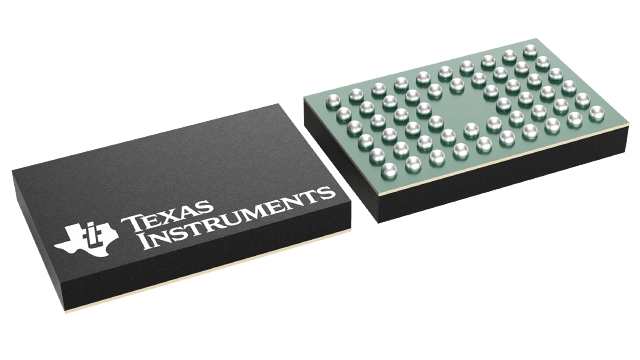
SN74VMEH22501A Series
8-Bit Universal Bus Transceiver and Two 1-Bit Bus Transceivers with 3-State Outputs
Manufacturer: Texas Instruments
Catalog
8-Bit Universal Bus Transceiver and Two 1-Bit Bus Transceivers with 3-State Outputs
Key Features
• Member of the Texas Instruments Widebus™ FamilyUBT™ Transceiver Combines D-Type Latches and D-Type Flip-Flopsfor Operation in Transparent, Latched, or Clocked ModesOEC™ Circuitry Improves Signal Integrity and ReducesElectromagnetic Interference (EMI)Compliant With VME64, 2eVME, and 2eSST ProtocolsBus Transceiver Split LVTTL Port Provides a Feedback Path for Controland Diagnostics MonitoringI/O Interfaces Are 5-V TolerantB-Port Outputs (–48 mA/64 mA)Y and A-Port Outputs (–12 mA/12 mA)Ioff, Power-Up 3-State, and BIAS VCCSupport Live InsertionBus Hold on 3A-Port Data Inputs26-Equivalent Series Resistor on 3A Ports and Y OutputsFlow-Through Architecture Facilitates Printed Circuit Board LayoutDistributed VCCand GND Pins Minimize High-Speed Switching NoiseLatch-Up Performance Exceeds 100 mA Per JESD 78, Class IIESD Protection Exceeds JESD 222000-V Human-Body Model (A114-A)200-V Machine Model (A115-A)1000-V Charged-Device Model (C101)MicroStar is a trademark of Texas Instruments.(1)VME320 is a patented backplane construction by Arizona Digital, Inc.Member of the Texas Instruments Widebus™ FamilyUBT™ Transceiver Combines D-Type Latches and D-Type Flip-Flopsfor Operation in Transparent, Latched, or Clocked ModesOEC™ Circuitry Improves Signal Integrity and ReducesElectromagnetic Interference (EMI)Compliant With VME64, 2eVME, and 2eSST ProtocolsBus Transceiver Split LVTTL Port Provides a Feedback Path for Controland Diagnostics MonitoringI/O Interfaces Are 5-V TolerantB-Port Outputs (–48 mA/64 mA)Y and A-Port Outputs (–12 mA/12 mA)Ioff, Power-Up 3-State, and BIAS VCCSupport Live InsertionBus Hold on 3A-Port Data Inputs26-Equivalent Series Resistor on 3A Ports and Y OutputsFlow-Through Architecture Facilitates Printed Circuit Board LayoutDistributed VCCand GND Pins Minimize High-Speed Switching NoiseLatch-Up Performance Exceeds 100 mA Per JESD 78, Class IIESD Protection Exceeds JESD 222000-V Human-Body Model (A114-A)200-V Machine Model (A115-A)1000-V Charged-Device Model (C101)MicroStar is a trademark of Texas Instruments.(1)VME320 is a patented backplane construction by Arizona Digital, Inc.
Description
AI
The SN74VMEH22501A 8-bit universal bus transceiver has two integral 1-bit three-wire bus transceivers and is designed for 3.3-V VCCoperation with 5-V tolerant inputs. The UBT™ transceiver allows transparent, latched, and flip-flop modes of data transfer, and the separate LVTTL input and outputs on the bus transceivers provide a feedback path for control and diagnostics monitoring. This device provides a high-speed interface between cards operating at LVTTL logic levels and VME64, VME64x, or VME320(1)backplane topologies.
The SN74VMEH22501A is pin-for-pin capatible to the SN74VMEH22501 (TI literature number SCES357), but operates at a wider operating temperature (−40°C to 85°C) range.
High-speed backplane operation is a direct result of the improved OEC™ circuitry and high drive that has been designed and tested into the VME64x backplane model. The B-port I/Os are optimized for driving large capacitive loads and include pseudo-ETL input thresholds (½ VCC± 50 mV) for increased noise immunity. These specifications support the 2eVME protocols in VME64x (ANSI/VITA 1.1) and 2eSST protocols in VITA 1.5. With proper design of a 21-slot VME system, a designer can achieve 320-Mbyte transfer rates on linear backplanes and, possibly, 1-Gbyte transfer rates on the VME320 backplane.
All inputs and outputs are 5-V tolerant and are compatible with TTL and 5-V CMOS inputs.
Active bus-hold circuitry holds unused or undriven 3A-port inputs at a valid logic state. Bus-hold circuitry is not provided on 1A or 2A inputs, any B-port input, or any control input. Use of pullup or pulldown resistors with the bus-hold circuitry is not recommended.
This device is fully specified for live-insertion applications using Ioff, power-up 3-state, and BIAS VCC. The Ioffcircuitry prevents damaging current to backflow through the device when it is powered off/on. The power-up 3-state circuitry places the outputs in the high-impedance state during power up and power down, which prevents driver conflict. The BIAS VCCcircuitry precharges and preconditions the B-port input/output connections, preventing disturbance of active data on the backplane during card insertion or removal, and permits true live-insertion capability.
When VCCis between 0 and 1.5 V, the device is in the high-impedance state during power up or power down. However, to ensure the high-impedance state above 1.5 V, output-enable (OEandOEBY) inputs should be tied to VCCthrough a pullup resistor and output-enable (OEAB) inputs should be tied to GND through a pulldown resistor; the minimum value of the resistor is determined by the drive capability of the device connected to this input.
The SN74VMEH22501A 8-bit universal bus transceiver has two integral 1-bit three-wire bus transceivers and is designed for 3.3-V VCCoperation with 5-V tolerant inputs. The UBT™ transceiver allows transparent, latched, and flip-flop modes of data transfer, and the separate LVTTL input and outputs on the bus transceivers provide a feedback path for control and diagnostics monitoring. This device provides a high-speed interface between cards operating at LVTTL logic levels and VME64, VME64x, or VME320(1)backplane topologies.
The SN74VMEH22501A is pin-for-pin capatible to the SN74VMEH22501 (TI literature number SCES357), but operates at a wider operating temperature (−40°C to 85°C) range.
High-speed backplane operation is a direct result of the improved OEC™ circuitry and high drive that has been designed and tested into the VME64x backplane model. The B-port I/Os are optimized for driving large capacitive loads and include pseudo-ETL input thresholds (½ VCC± 50 mV) for increased noise immunity. These specifications support the 2eVME protocols in VME64x (ANSI/VITA 1.1) and 2eSST protocols in VITA 1.5. With proper design of a 21-slot VME system, a designer can achieve 320-Mbyte transfer rates on linear backplanes and, possibly, 1-Gbyte transfer rates on the VME320 backplane.
All inputs and outputs are 5-V tolerant and are compatible with TTL and 5-V CMOS inputs.
Active bus-hold circuitry holds unused or undriven 3A-port inputs at a valid logic state. Bus-hold circuitry is not provided on 1A or 2A inputs, any B-port input, or any control input. Use of pullup or pulldown resistors with the bus-hold circuitry is not recommended.
This device is fully specified for live-insertion applications using Ioff, power-up 3-state, and BIAS VCC. The Ioffcircuitry prevents damaging current to backflow through the device when it is powered off/on. The power-up 3-state circuitry places the outputs in the high-impedance state during power up and power down, which prevents driver conflict. The BIAS VCCcircuitry precharges and preconditions the B-port input/output connections, preventing disturbance of active data on the backplane during card insertion or removal, and permits true live-insertion capability.
When VCCis between 0 and 1.5 V, the device is in the high-impedance state during power up or power down. However, to ensure the high-impedance state above 1.5 V, output-enable (OEandOEBY) inputs should be tied to VCCthrough a pullup resistor and output-enable (OEAB) inputs should be tied to GND through a pulldown resistor; the minimum value of the resistor is determined by the drive capability of the device connected to this input.