AFE4900 Series
Ultra-low-power integrated AFE for wearable optical, electrical biosensing
Manufacturer: Texas Instruments
Catalog
Ultra-low-power integrated AFE for wearable optical, electrical biosensing
Key Features
• Synchronized PPG, ECG signal acquisition at data rates up to 1 kHzECG signal chain:Standalone ECG acquisition up to 4 kHzInput bias: 1-lead ECG with RLD biasProgrammable INA gain: 2.15 to 12.92Input noise (1 Hz to 150 Hz): 2.5 µVrms at 1 kHz, 1.25 µVrms at 4-kHz data rateAC, DC lead-off detect: 12.5-nA to 100-nAIEC 60601 Test report available on requestPPG receiver:Supports three time-multiplexed PD inputs24-Bit representation of current from PDDC offset subtraction DAC (Up to ±126-µA) at TIA input for each LED, ambientDigital ambient subtraction at ADC outputNoise filtering with programmable bandwidthTransimpedance gain: 10 kΩ to 2 MΩDynamic range up to 100 dBReceiver operates in PPG-only mode at approximately 1-µA/Hz sampling ratePower-down mode: approximately 0 µAPPG transmitter:Four LEDs in common anode configuration8-Bit LED current up to 200 mAMode to fire two LEDs in parallelProgrammable LED on-timeSimultaneous support of three LEDs for SpO2, or multiwavelength HRMAverage current of 30 µA adequate for atypical heart-rate monitoring scenario:20-mA Setting, 60-µs pulse duration,25-Hz sampling rateClocking using an external or internal clockFIFO with 128-sample depth for ECG and PPGI2C, SPI interfaces: selectable by pin2.6-mm × 2.1-mm, 0.4-mm Pitch DSBGA packageSupplies:Rx: 1.8 V to 1.9 V (LDO bypass),2.0 V to 3.6 V (LDO enabled)Tx: 3 V to 5.25 VIO: 1.7 V to Rx_SUPSynchronized PPG, ECG signal acquisition at data rates up to 1 kHzECG signal chain:Standalone ECG acquisition up to 4 kHzInput bias: 1-lead ECG with RLD biasProgrammable INA gain: 2.15 to 12.92Input noise (1 Hz to 150 Hz): 2.5 µVrms at 1 kHz, 1.25 µVrms at 4-kHz data rateAC, DC lead-off detect: 12.5-nA to 100-nAIEC 60601 Test report available on requestPPG receiver:Supports three time-multiplexed PD inputs24-Bit representation of current from PDDC offset subtraction DAC (Up to ±126-µA) at TIA input for each LED, ambientDigital ambient subtraction at ADC outputNoise filtering with programmable bandwidthTransimpedance gain: 10 kΩ to 2 MΩDynamic range up to 100 dBReceiver operates in PPG-only mode at approximately 1-µA/Hz sampling ratePower-down mode: approximately 0 µAPPG transmitter:Four LEDs in common anode configuration8-Bit LED current up to 200 mAMode to fire two LEDs in parallelProgrammable LED on-timeSimultaneous support of three LEDs for SpO2, or multiwavelength HRMAverage current of 30 µA adequate for atypical heart-rate monitoring scenario:20-mA Setting, 60-µs pulse duration,25-Hz sampling rateClocking using an external or internal clockFIFO with 128-sample depth for ECG and PPGI2C, SPI interfaces: selectable by pin2.6-mm × 2.1-mm, 0.4-mm Pitch DSBGA packageSupplies:Rx: 1.8 V to 1.9 V (LDO bypass),2.0 V to 3.6 V (LDO enabled)Tx: 3 V to 5.25 VIO: 1.7 V to Rx_SUP
Description
AI
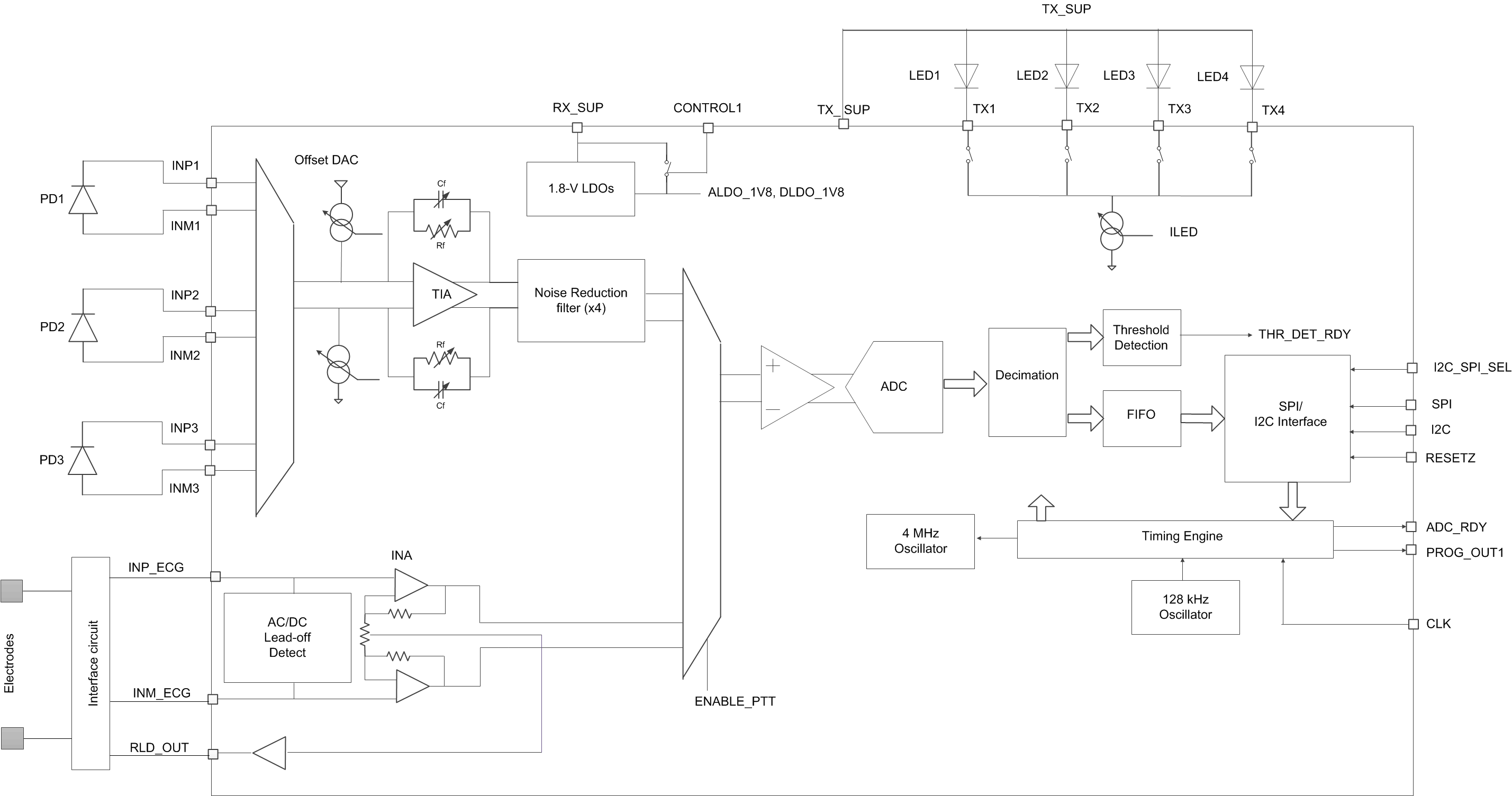
The AFE4900 device is an analog front-end (AFE) for synchronized electrocardiogram (ECG), photoplethysmogram (PPG) signal acquisition. The device can also be used for optical bio-sensing applications, such as heart-rate monitoring (HRM) and saturation of peripheral capillary oxygen (SpO2). The PPG signal chain supports up to four switching light-emitting diodes (LEDs) and up to three photodiodes (PDs). The LEDs can be switched on using a fully integrated LED driver. The current from the photodiode is converted into voltage by the transimpedance amplifier (TIA) and digitized using an analog-to-digital converter (ADC). The ECG signal chain has an instrumentation amplifier (INA) with a programmable gain that interfaces to the same ADC. A right-leg drive (RLD) amplifier set can be used to the bias for the ECG input pins. AC and dc lead-off detect schemes are supported. The ADC codes from the PPG and ECG phases can be stored in a 128-sample first in, first out (FIFO) block and read out using either an I2C or a serial programming interface (SPI) interface.
The AFE4900 device is an analog front-end (AFE) for synchronized electrocardiogram (ECG), photoplethysmogram (PPG) signal acquisition. The device can also be used for optical bio-sensing applications, such as heart-rate monitoring (HRM) and saturation of peripheral capillary oxygen (SpO2). The PPG signal chain supports up to four switching light-emitting diodes (LEDs) and up to three photodiodes (PDs). The LEDs can be switched on using a fully integrated LED driver. The current from the photodiode is converted into voltage by the transimpedance amplifier (TIA) and digitized using an analog-to-digital converter (ADC). The ECG signal chain has an instrumentation amplifier (INA) with a programmable gain that interfaces to the same ADC. A right-leg drive (RLD) amplifier set can be used to the bias for the ECG input pins. AC and dc lead-off detect schemes are supported. The ADC codes from the PPG and ECG phases can be stored in a 128-sample first in, first out (FIFO) block and read out using either an I2C or a serial programming interface (SPI) interface.