DS64BR111 Series
6.4-Gbps ultra low power 2-channel redriver with input equalization and output de-emphasis
Manufacturer: Texas Instruments
Catalog
6.4-Gbps ultra low power 2-channel redriver with input equalization and output de-emphasis
Key Features
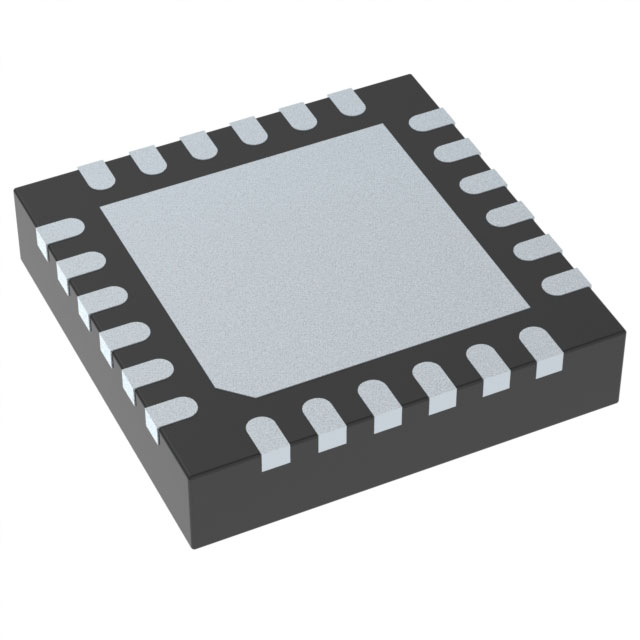
• Two Channel Repeater for up to 6.4 GbpsDS64BR111 : 1x Bidirectional LaneLow 65mW/Channel (Typical) Power Consumption, with Option to Power Down Unused ChannelsAdvanced Signal Conditioning FeaturesReceive Equalization up to +25 dBTransmit De-Emphasis up to -12 dBTransmit VOD Control: 700 to 1200 mVp-p< 0.2 UI of Residual DJ at 6.4 GbpsProgrammable via Pin Selection, EEPROM or SMBus InterfaceSingle Supply Operation Selectable: 2.5V or 3.3vFlow-Thru Pinout in 4mmx4mm 24-Pin Leadless WQFN Package>5kV HBM ESD RatingIndustrial -40 to 85°C Operating Temperature RangeAll trademarks are the property of their respective owners.Two Channel Repeater for up to 6.4 GbpsDS64BR111 : 1x Bidirectional LaneLow 65mW/Channel (Typical) Power Consumption, with Option to Power Down Unused ChannelsAdvanced Signal Conditioning FeaturesReceive Equalization up to +25 dBTransmit De-Emphasis up to -12 dBTransmit VOD Control: 700 to 1200 mVp-p< 0.2 UI of Residual DJ at 6.4 GbpsProgrammable via Pin Selection, EEPROM or SMBus InterfaceSingle Supply Operation Selectable: 2.5V or 3.3vFlow-Thru Pinout in 4mmx4mm 24-Pin Leadless WQFN Package>5kV HBM ESD RatingIndustrial -40 to 85°C Operating Temperature RangeAll trademarks are the property of their respective owners.
Description
AI
The DS64BR111 is an extremely low power, high performance dual-channel repeater for serial links with data rates up to 6.4 Gbps. The DS64BR111 pinout is configured as one bidirectional lane (one transmit, one receive channel).
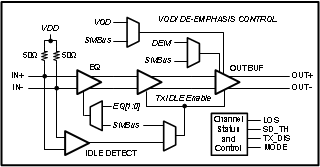
The DS64BR111 features a powerful 4-stage continuous time linear equalizer (CTLE) to provide a boost of up to +25 dB at 3.2 GHz and open an input eye that is completely closed due to inter-symbol interference (ISI) induced by the interconnect mediums such as an FR-4 backplane or AWG-30 cables. The transmitter features a programmable output de-emphasis driver with up to -12 dB and allows amplitude voltage levels to be selected from 700 mVp-p to 1200 mVp-p to suit multiple application scenarios.
The programmable settings can be applied via pin settings, SMBus (I2C) protocol or an external EEPROM. When operating in the EEPROM mode, the configuration information is automatically loaded on power up – This eliminates the need for an external microprocessor or software driver.
Part of TI's PowerWise family of energy efficient devices, the DS64BR111 consumes just 65 mW/channel (typical), and allow the option to turn-off unused channels. This ultra low power consumption eliminates the need for external heat sinks and simplifies thermal management in active cable applications.
The DS64BR111 is an extremely low power, high performance dual-channel repeater for serial links with data rates up to 6.4 Gbps. The DS64BR111 pinout is configured as one bidirectional lane (one transmit, one receive channel).
The DS64BR111 features a powerful 4-stage continuous time linear equalizer (CTLE) to provide a boost of up to +25 dB at 3.2 GHz and open an input eye that is completely closed due to inter-symbol interference (ISI) induced by the interconnect mediums such as an FR-4 backplane or AWG-30 cables. The transmitter features a programmable output de-emphasis driver with up to -12 dB and allows amplitude voltage levels to be selected from 700 mVp-p to 1200 mVp-p to suit multiple application scenarios.
The programmable settings can be applied via pin settings, SMBus (I2C) protocol or an external EEPROM. When operating in the EEPROM mode, the configuration information is automatically loaded on power up – This eliminates the need for an external microprocessor or software driver.
Part of TI's PowerWise family of energy efficient devices, the DS64BR111 consumes just 65 mW/channel (typical), and allow the option to turn-off unused channels. This ultra low power consumption eliminates the need for external heat sinks and simplifies thermal management in active cable applications.