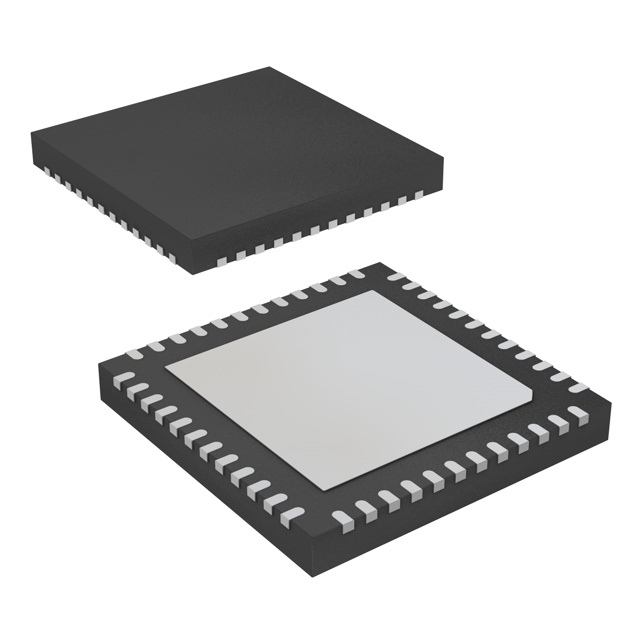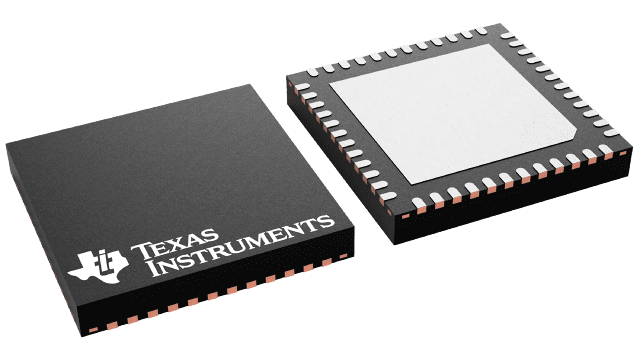
MSP430F5501 Series
25 MHz MCU with 16KB Flash, 4KB SRAM, comparator, DMA, UART/SPI/I2C, USB, timer, HW multiplier
Manufacturer: Texas Instruments
Catalog
25 MHz MCU with 16KB Flash, 4KB SRAM, comparator, DMA, UART/SPI/I2C, USB, timer, HW multiplier
Key Features
• Low supply-voltage range:3.6 V down to 1.8 VUltra-low power consumptionActive mode (AM)All system clocks active195 µA/MHz at 8 MHz, 3 V, flash program execution (typical)115 µA/MHz at 8 MHz, 3 V, RAM program execution (typical)Standby mode (LPM3)Real-time clock (RTC) with crystal, watchdog, and supply supervisor operational, full RAM retention, fast wakeup:1.9 µA at 2.2 V, 2.1 µA at 3 V (typical)Low-power oscillator (VLO), general-purpose counter, watchdog, and supply supervisor operational, full RAM retention, fast wakeup:1.4 µA at 3 V (typical)Off mode (LPM4)Full RAM retention, supply supervisor operational, fast wakeup:1.1 µA at 3 V (typical)Shutdown mode (LPM4.5)0.18 µA at 3 V (typical)Wake up from standby in less than 5 µs16-bit RISC architecture, extended memory, up to 25-MHz system clockFlexible power-management systemFully integrated LDO with programmable regulated core supply voltageSupply voltage supervision, monitoring, and brownoutUnified clock systemFLL control loop for frequency stabilizationLow-power low-frequency internal clock source (VLO)Low-frequency trimmed internal reference source (REFO)32-kHz watch crystals (XT1)High-frequency crystals up to 32 MHz (XT2)16-bit Timer TA0, Timer_A with five capture/compare registers16-bit Timer TA1, Timer_A with three capture/compare registers16-bit Timer TA2, Timer_A with three capture/compare registers16-bit Timer TB0, Timer_B with seven capture/compare shadow registersTwo universal serial communication interfaces (USCIs)USCI_A0 and USCI_A1 each support:Enhanced UART with automatic baud-rate detectionIrDA encoder and decoderSynchronous SPIUSCI_B0 and USCI_B1 each support:I2CSynchronous SPIFull-speed universal serial bus (USB)Integrated USB-PHYIntegrated 3.3-V and 1.8-V USB power systemIntegrated USB-PLLEight input and eight output endpoints10-bit analog-to-digital converter (ADC) with window comparatorComparatorHardware multiplier supports 32-bit operationsSerial onboard programming, no external programming voltage neededThree-channel internal DMABasic timer with RTC featureDevice Comparison summarizes the available family membersLow supply-voltage range:3.6 V down to 1.8 VUltra-low power consumptionActive mode (AM)All system clocks active195 µA/MHz at 8 MHz, 3 V, flash program execution (typical)115 µA/MHz at 8 MHz, 3 V, RAM program execution (typical)Standby mode (LPM3)Real-time clock (RTC) with crystal, watchdog, and supply supervisor operational, full RAM retention, fast wakeup:1.9 µA at 2.2 V, 2.1 µA at 3 V (typical)Low-power oscillator (VLO), general-purpose counter, watchdog, and supply supervisor operational, full RAM retention, fast wakeup:1.4 µA at 3 V (typical)Off mode (LPM4)Full RAM retention, supply supervisor operational, fast wakeup:1.1 µA at 3 V (typical)Shutdown mode (LPM4.5)0.18 µA at 3 V (typical)Wake up from standby in less than 5 µs16-bit RISC architecture, extended memory, up to 25-MHz system clockFlexible power-management systemFully integrated LDO with programmable regulated core supply voltageSupply voltage supervision, monitoring, and brownoutUnified clock systemFLL control loop for frequency stabilizationLow-power low-frequency internal clock source (VLO)Low-frequency trimmed internal reference source (REFO)32-kHz watch crystals (XT1)High-frequency crystals up to 32 MHz (XT2)16-bit Timer TA0, Timer_A with five capture/compare registers16-bit Timer TA1, Timer_A with three capture/compare registers16-bit Timer TA2, Timer_A with three capture/compare registers16-bit Timer TB0, Timer_B with seven capture/compare shadow registersTwo universal serial communication interfaces (USCIs)USCI_A0 and USCI_A1 each support:Enhanced UART with automatic baud-rate detectionIrDA encoder and decoderSynchronous SPIUSCI_B0 and USCI_B1 each support:I2CSynchronous SPIFull-speed universal serial bus (USB)Integrated USB-PHYIntegrated 3.3-V and 1.8-V USB power systemIntegrated USB-PLLEight input and eight output endpoints10-bit analog-to-digital converter (ADC) with window comparatorComparatorHardware multiplier supports 32-bit operationsSerial onboard programming, no external programming voltage neededThree-channel internal DMABasic timer with RTC featureDevice Comparison summarizes the available family members
Description
AI
The TI MSP family of ultra-low-power microcontrollers consists of several devices featuring different sets of peripherals targeted for various applications. The architecture, combined with extensive low-power modes, is optimized to achieve extended battery life in portable measurement applications. The device features a powerful 16-bit RISC CPU, 16-bit registers, and constant generators that contribute to maximum code efficiency. The digitally controlled oscillator (DCO) allows the device to wake up from low-power modes to active mode in less than 5 µs.
The MSP430F5510, MSP430F5509, and MSP430F5508 devices are microcontroller configurations with integrated USB and PHY supporting USB 2.0, four 16-bit timers, a high-performance 10-bit ADC, two USCIs(1), a hardware multiplier, DMA, an RTC module with alarm capabilities, and 31 or 47 I/O pins.
The MSP430F5507, MSP430F5506, MSP430F5505, and MSP430F5504 devices are microcontroller configurations with integrated USB and PHY supporting USB 2.0, four 16-bit timers, a high-performance 10-bit ADC, one USCI, a hardware multiplier, DMA, an RTC module with alarm capabilities, and 31 I/O pins.
The MSP430F5503, MSP430F5502, MSP430F5501, and MSP430F5500 devices include all of the MSP430F5507, MSP430F5506, MSP430F5505, and MSP430F5504 peripherals, except that they have a comparator instead of the 10-bit ADC.
Typical applications include analog and digital sensor systems and data loggers that require connectivity to various USB hosts.
For complete module descriptions, see theMSP430F5xx and MSP430F6xx Family User’s Guide.
(1)In the 48-pin packages, the USCI functions that are pinned out are limited to what the user configures on port 4 with the port mapping controller. It may not be possible to bring out all functions simultaneously.
The TI MSP family of ultra-low-power microcontrollers consists of several devices featuring different sets of peripherals targeted for various applications. The architecture, combined with extensive low-power modes, is optimized to achieve extended battery life in portable measurement applications. The device features a powerful 16-bit RISC CPU, 16-bit registers, and constant generators that contribute to maximum code efficiency. The digitally controlled oscillator (DCO) allows the device to wake up from low-power modes to active mode in less than 5 µs.
The MSP430F5510, MSP430F5509, and MSP430F5508 devices are microcontroller configurations with integrated USB and PHY supporting USB 2.0, four 16-bit timers, a high-performance 10-bit ADC, two USCIs(1), a hardware multiplier, DMA, an RTC module with alarm capabilities, and 31 or 47 I/O pins.
The MSP430F5507, MSP430F5506, MSP430F5505, and MSP430F5504 devices are microcontroller configurations with integrated USB and PHY supporting USB 2.0, four 16-bit timers, a high-performance 10-bit ADC, one USCI, a hardware multiplier, DMA, an RTC module with alarm capabilities, and 31 I/O pins.
The MSP430F5503, MSP430F5502, MSP430F5501, and MSP430F5500 devices include all of the MSP430F5507, MSP430F5506, MSP430F5505, and MSP430F5504 peripherals, except that they have a comparator instead of the 10-bit ADC.
Typical applications include analog and digital sensor systems and data loggers that require connectivity to various USB hosts.
For complete module descriptions, see theMSP430F5xx and MSP430F6xx Family User’s Guide.
(1)In the 48-pin packages, the USCI functions that are pinned out are limited to what the user configures on port 4 with the port mapping controller. It may not be possible to bring out all functions simultaneously.