TMUX646 Series
6-GHz, 5-V, 2:1 (SPDT) 10-channel MIPI switch with 1.8-V logic support
Manufacturer: Texas Instruments
Catalog
6-GHz, 5-V, 2:1 (SPDT) 10-channel MIPI switch with 1.8-V logic support
Key Features
• Supply range of 1.5 V to 5.5 V10-Channel 2:1 bidirectional switchSupports MIPI CSI/DSI, SATA, LVDS, RGMII, DDR, ethernet interfacesPowered-off protection: I/Os Hi-Z when VDD= 0 VLow RON: 6-Ω typicalHigh bandwidth : 6 GHzUltra low crosstalk: -40 dBLow power disable mode1.2 V logic compatibleBidirectional signal pathESD protection:6-kV human body model (HBM)2-kV human body model (CDM)Supply range of 1.5 V to 5.5 V10-Channel 2:1 bidirectional switchSupports MIPI CSI/DSI, SATA, LVDS, RGMII, DDR, ethernet interfacesPowered-off protection: I/Os Hi-Z when VDD= 0 VLow RON: 6-Ω typicalHigh bandwidth : 6 GHzUltra low crosstalk: -40 dBLow power disable mode1.2 V logic compatibleBidirectional signal pathESD protection:6-kV human body model (HBM)2-kV human body model (CDM)
Description
AI
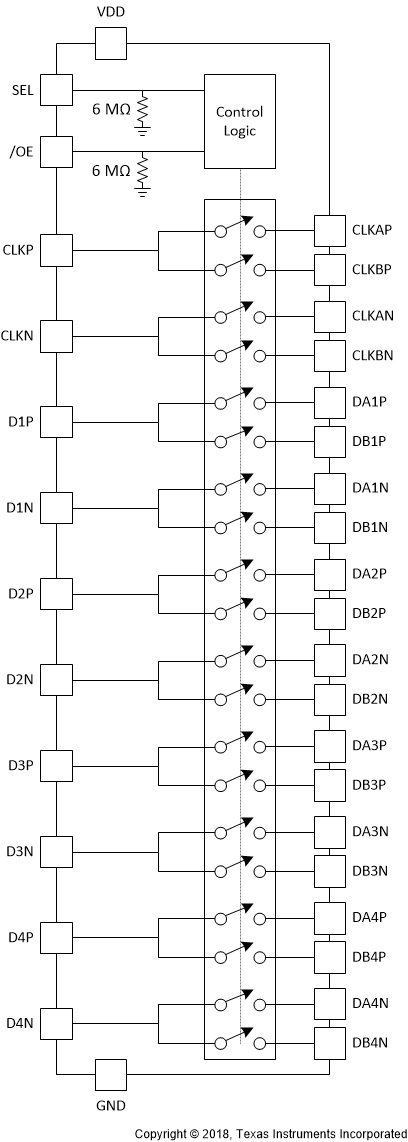
The TMUX646 is an optimized 10-channel (5 differential) single-pole, double-throw bi-directional switch for use in high speed applications. The TMUX646 is designed to facilitate multiple MIPI compliant devices to connect to a single CSI/DSI, C-PHY/D-PHY module. The device also supports SATA, SAS, MIPI DSI/CSI, LVDS, RGMII, DDR and Ethernet interfaces.
The device has a bandwidth of 6 GHz, low channel-to-channel skew with little signal degradation, and wide margins to compensate for layout losses. The device’s low current consumption meets the needs of low power applications, including mobile phones and other personal electronics.
The TMUX646 is an optimized 10-channel (5 differential) single-pole, double-throw bi-directional switch for use in high speed applications. The TMUX646 is designed to facilitate multiple MIPI compliant devices to connect to a single CSI/DSI, C-PHY/D-PHY module. The device also supports SATA, SAS, MIPI DSI/CSI, LVDS, RGMII, DDR and Ethernet interfaces.
The device has a bandwidth of 6 GHz, low channel-to-channel skew with little signal degradation, and wide margins to compensate for layout losses. The device’s low current consumption meets the needs of low power applications, including mobile phones and other personal electronics.