Catalog
4 channel PCI Express gen-4 linear redriver
Key Features
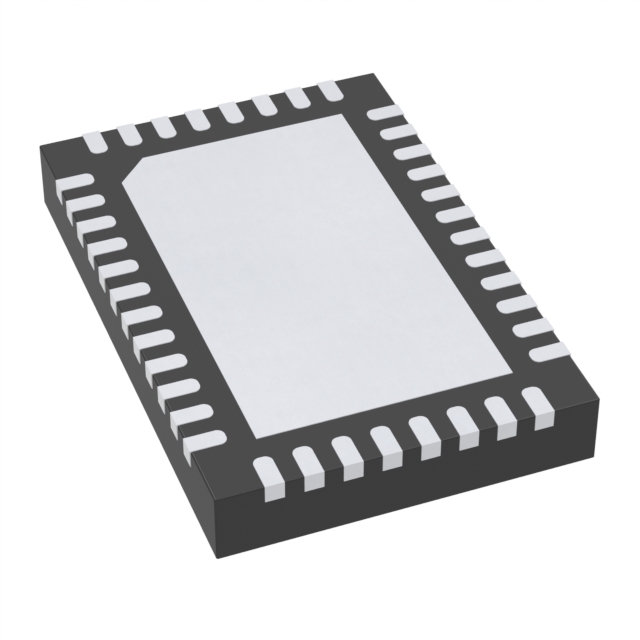
• Quad-channel linear equalizer supporting PCIe 1.0/2.0/3.0/4.0 up to 16 Gbps interfacesCTLE boosts up to 18 dB at 8 GHz helps to extend channel reachAutomatic receiver detection for PCIe use casesProtocol agnostic linear redriver allows seamless support for PCIe link trainingSupports data rates up to 25 Gbps including Ultra Path Interconnect (UPI)Ultra-low latency of 70 ps (typical)Low additive random jitter of 60 fs (typical) with PRBS dataSingle 3.3 V supplyLow active power of 124 mW/channel (typical) - no heat sink requiredPin-strap, SMBus or EEPROM programmingSupport for x2, x4, x8, x16 PCIe bus width with one or multiple DS160PR410Industrial temperature range of –40ºC to 85ºC4.0 mm × 6.0 mm, 40 pin WQFN packageQuad-channel linear equalizer supporting PCIe 1.0/2.0/3.0/4.0 up to 16 Gbps interfacesCTLE boosts up to 18 dB at 8 GHz helps to extend channel reachAutomatic receiver detection for PCIe use casesProtocol agnostic linear redriver allows seamless support for PCIe link trainingSupports data rates up to 25 Gbps including Ultra Path Interconnect (UPI)Ultra-low latency of 70 ps (typical)Low additive random jitter of 60 fs (typical) with PRBS dataSingle 3.3 V supplyLow active power of 124 mW/channel (typical) - no heat sink requiredPin-strap, SMBus or EEPROM programmingSupport for x2, x4, x8, x16 PCIe bus width with one or multiple DS160PR410Industrial temperature range of –40ºC to 85ºC4.0 mm × 6.0 mm, 40 pin WQFN package
Description
AI
The DS160PR410 is a four channel low-power high-performance linear repeater/redriver designed to support PCI Express (PCIe) Generation 1.0, 2.0, 3.0 and 4.0. The device is a protocol agnostic linear redriver that can operate for interfaces up to 25 Gbps including Ultra Path Interface (UPI) 2.0.
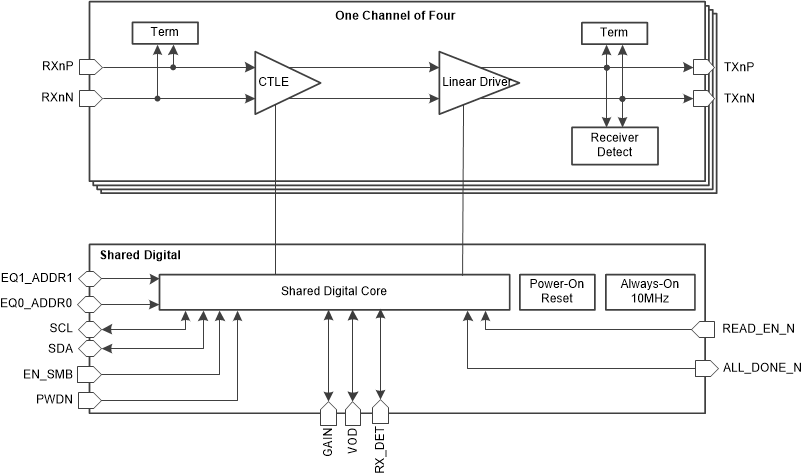
The DS160PR410 receivers deploy continuous time linear equalizers (CTLE) to provide a programmable high-frequency boost. The equalizer can open an input eye that is completely closed due to inter-symbol interference (ISI) induced by an interconnect medium, such as PCB traces. The CTLE receiver is followed by a linear output driver. The linear datapaths of DS160PR410 preserve transmit preset signal characteristics. The linear redriver becomes part of the passive channel that as a whole get link trained for best transmit and receive equalization settings. This transparency in the link training protocol result in best electrical link and lowest possible latency. The programmable equalization of the device along with its linear datapaths maximizes the flexibility of physical placement within the interconnect channel and improves overall channel performance.
The programmable settings can be applied easily through software (SMBus or I2C), direct loading from an external EEPROM, or by using pin control. In EEPROM mode, the configurations are automatically loaded on power up, eliminating the need for an external microprocessor or software driver.
The DS160PR410 is a four channel low-power high-performance linear repeater/redriver designed to support PCI Express (PCIe) Generation 1.0, 2.0, 3.0 and 4.0. The device is a protocol agnostic linear redriver that can operate for interfaces up to 25 Gbps including Ultra Path Interface (UPI) 2.0.
The DS160PR410 receivers deploy continuous time linear equalizers (CTLE) to provide a programmable high-frequency boost. The equalizer can open an input eye that is completely closed due to inter-symbol interference (ISI) induced by an interconnect medium, such as PCB traces. The CTLE receiver is followed by a linear output driver. The linear datapaths of DS160PR410 preserve transmit preset signal characteristics. The linear redriver becomes part of the passive channel that as a whole get link trained for best transmit and receive equalization settings. This transparency in the link training protocol result in best electrical link and lowest possible latency. The programmable equalization of the device along with its linear datapaths maximizes the flexibility of physical placement within the interconnect channel and improves overall channel performance.
The programmable settings can be applied easily through software (SMBus or I2C), direct loading from an external EEPROM, or by using pin control. In EEPROM mode, the configurations are automatically loaded on power up, eliminating the need for an external microprocessor or software driver.