TMUXHS4446 Series
USB-C 10-Gbps alternate mode 6 by 4 multiplexer/demultiplexer
Manufacturer: Texas Instruments
Catalog
USB-C 10-Gbps alternate mode 6 by 4 multiplexer/demultiplexer
Key Features
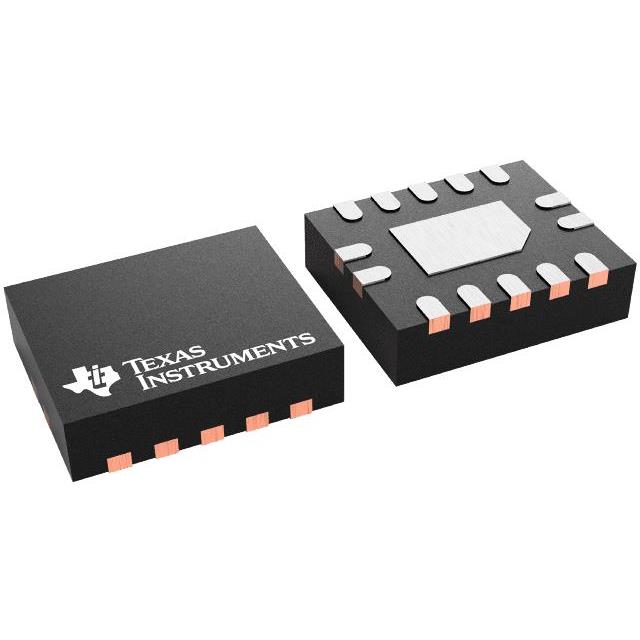
• Passive bidirectional USB-C Alternate Mode Mux to switch between USB and DisplayPort signalsSupports USB 3.2 up to 10Gbps (Gen 2.0) and DisplayPort 2.1 up to 10Gbps per lane (UHBR10)Compatible for Source/Host and Sink/Device applications−3dB differential BW: 9.5GHzDynamic characteristics:Insertion loss = −1.6dB at 5GHzReturn loss = −18dB at 5GHzSupports common mode voltage (CMV) from 0V to 1.8VAdaptive CMV tracking6V tolerant SBU pins to survive short-to-VBUS eventsCan be configured through GPIO pins or I2CSupports both 1.8V and 3.3V I2CSingle supply voltage VCC: 3.3VActive power consumption: 340µALow standby power consumption: 0.5µA (pin mode)Extended industrial temperature: −40°C to 105°CAvailable in 3mm × 6mm QFN packagePassive bidirectional USB-C Alternate Mode Mux to switch between USB and DisplayPort signalsSupports USB 3.2 up to 10Gbps (Gen 2.0) and DisplayPort 2.1 up to 10Gbps per lane (UHBR10)Compatible for Source/Host and Sink/Device applications−3dB differential BW: 9.5GHzDynamic characteristics:Insertion loss = −1.6dB at 5GHzReturn loss = −18dB at 5GHzSupports common mode voltage (CMV) from 0V to 1.8VAdaptive CMV tracking6V tolerant SBU pins to survive short-to-VBUS eventsCan be configured through GPIO pins or I2CSupports both 1.8V and 3.3V I2CSingle supply voltage VCC: 3.3VActive power consumption: 340µALow standby power consumption: 0.5µA (pin mode)Extended industrial temperature: −40°C to 105°CAvailable in 3mm × 6mm QFN package
Description
AI
The TMUXHS4446 is a high-speed bidirectional passive crosspoint switch or cossbar (Xbar). This device is used to switch between USB 3.2 Gen2 SuperSpeed and DisplayPort 1.4/2.1 (up to 10Gbps UHBR10) signals over a USB Type-C also known as USB-C interface. The device also provides switching for the low-speed SBU signals that are used for DisplayPort auxiliary channels. The TMUXHS4446 supports differential signaling with a common mode voltage (CMV) range of 0V to 1.8V and a differential amplitude from 0V to 1800mVpp. Adaptive CMV tracking enables the channel through the device to remain unchanged for the entire common-mode voltage range.
The dynamic characteristics of the TMUXHS4446 allows high-speed switching with minimum attenuation to the signal eye diagrams, and very little added jitter. The silicon design of the device is optimized for excellent frequency response at a higher frequency spectrum of the signals. The silicon signal traces and switch network of the TMUXHS4446 are matched for best intra-pair skew performance.
The TMUXHS4446 has an extended industrial temperature range (−40°C to 105°C) designed for many rugged applications, including industrial and high reliability use cases.
The TMUXHS4446 is a high-speed bidirectional passive crosspoint switch or cossbar (Xbar). This device is used to switch between USB 3.2 Gen2 SuperSpeed and DisplayPort 1.4/2.1 (up to 10Gbps UHBR10) signals over a USB Type-C also known as USB-C interface. The device also provides switching for the low-speed SBU signals that are used for DisplayPort auxiliary channels. The TMUXHS4446 supports differential signaling with a common mode voltage (CMV) range of 0V to 1.8V and a differential amplitude from 0V to 1800mVpp. Adaptive CMV tracking enables the channel through the device to remain unchanged for the entire common-mode voltage range.
The dynamic characteristics of the TMUXHS4446 allows high-speed switching with minimum attenuation to the signal eye diagrams, and very little added jitter. The silicon design of the device is optimized for excellent frequency response at a higher frequency spectrum of the signals. The silicon signal traces and switch network of the TMUXHS4446 are matched for best intra-pair skew performance.
The TMUXHS4446 has an extended industrial temperature range (−40°C to 105°C) designed for many rugged applications, including industrial and high reliability use cases.