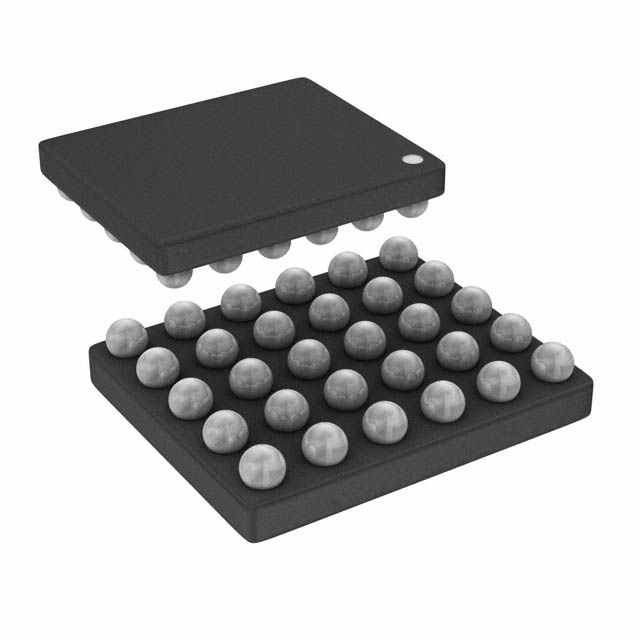
AFE4405 Series
Ultra-small integrated AFE with FIFO for wearable optical heart-rate monitoring and biosensing
Manufacturer: Texas Instruments
Catalog
Ultra-small integrated AFE with FIFO for wearable optical heart-rate monitoring and biosensing
Key Features
• Transmitter:Supports Common Anode LED ConfigurationDynamic Range: 100 dB8-Bit Programmable LED Current to 50 mA (Extendable to 100 mA)Programmable LED On-TimeSimultaneous Support of 3 LEDs for Optimized SpO2, HRM, or Multi-Wavelength HRMReceiver:Supports 2 Time-Multiplexed Photodiode Inputs24-Bit Representation of the Current Input from the Photodiode in Twos Complement FormatIndividual DC Offset Subtraction DAC(±15.75-µA Range) at TIA Input for Each LED, AmbientDigital Ambient Subtraction at ADC OutputTransimpedance Gain: 10 kΩ to 2 MΩDynamic Range: 100 dBDynamic Power-Saving Mode to Reduce Receiver Current to 200 µAPulse Frequency: 5 SPS to 1000 SPSFlexible Pulse Sequencing and Timing ControlFlexible Clock Options:External Clocking:4-MHz to 60-MHz Input ClockInternal Clocking: 4-MHz OscillatorFIFO with 240 Sample Depth:Programmable Partitioning Across PhasesI2C, SPI Interfaces: Selectable by PinOperating Temperature Range: –20°C to +70°C2.6-mm × 2.1-mm DSBGA, 0.4-mm PitchSupplies: Rx: 2 V to 3.6 V, Tx: 3 V to 5.25 V,IO: 1.8 V to 3.6 VTransmitter:Supports Common Anode LED ConfigurationDynamic Range: 100 dB8-Bit Programmable LED Current to 50 mA (Extendable to 100 mA)Programmable LED On-TimeSimultaneous Support of 3 LEDs for Optimized SpO2, HRM, or Multi-Wavelength HRMReceiver:Supports 2 Time-Multiplexed Photodiode Inputs24-Bit Representation of the Current Input from the Photodiode in Twos Complement FormatIndividual DC Offset Subtraction DAC(±15.75-µA Range) at TIA Input for Each LED, AmbientDigital Ambient Subtraction at ADC OutputTransimpedance Gain: 10 kΩ to 2 MΩDynamic Range: 100 dBDynamic Power-Saving Mode to Reduce Receiver Current to 200 µAPulse Frequency: 5 SPS to 1000 SPSFlexible Pulse Sequencing and Timing ControlFlexible Clock Options:External Clocking:4-MHz to 60-MHz Input ClockInternal Clocking: 4-MHz OscillatorFIFO with 240 Sample Depth:Programmable Partitioning Across PhasesI2C, SPI Interfaces: Selectable by PinOperating Temperature Range: –20°C to +70°C2.6-mm × 2.1-mm DSBGA, 0.4-mm PitchSupplies: Rx: 2 V to 3.6 V, Tx: 3 V to 5.25 V,IO: 1.8 V to 3.6 V
Description
AI
The AFE4405 is an analog front-end (AFE) for optical bio-sensing applications, such as heart-rate monitoring (HRM) and saturation of peripheral capillary oxygen (SpO2). The device supports three switching light-emitting diodes (LEDs) and up to two photodiodes. The current from the photodiode is converted into voltage by the transimpedance amplifier (TIA) and digitized using an analog-to-digital converter (ADC). The ADC code can be stored in a 240-sample first in, first out (FIFO) block with programmable depth. The FIFO depth can be partitioned to accommodate the phases that must be stored. The FIFO can be read out using either an I2C or a SPI interface. The AFE also has a fully-integrated LED driver with an 8-bit current control. The device has a high dynamic range transmit-and-receive circuitry that helps with the sensing of very small signal levels.
To request a full data sheet or other design resources:request AFE4405
The AFE4405 is an analog front-end (AFE) for optical bio-sensing applications, such as heart-rate monitoring (HRM) and saturation of peripheral capillary oxygen (SpO2). The device supports three switching light-emitting diodes (LEDs) and up to two photodiodes. The current from the photodiode is converted into voltage by the transimpedance amplifier (TIA) and digitized using an analog-to-digital converter (ADC). The ADC code can be stored in a 240-sample first in, first out (FIFO) block with programmable depth. The FIFO depth can be partitioned to accommodate the phases that must be stored. The FIFO can be read out using either an I2C or a SPI interface. The AFE also has a fully-integrated LED driver with an 8-bit current control. The device has a high dynamic range transmit-and-receive circuitry that helps with the sensing of very small signal levels.
To request a full data sheet or other design resources:request AFE4405