SN74LVC2G66 Series
5-V, 1:1 (SPST), 2-channel general-purpose analog switch with low on-state resistance
Manufacturer: Texas Instruments
Catalog
5-V, 1:1 (SPST), 2-channel general-purpose analog switch with low on-state resistance
Key Features
• Available in the Texas InstrumentsNanoFree™ Package1.65-V to 5.5-V VCCOperationInputs Accept Voltages to 5.5 VMax tpdof 0.8 ns at 3.3 VHigh On-Off Output Voltage RatioHigh Degree of LinearityHigh Speed, Typically 0.5 ns(VCC= 3 V, CL= 50 pF)Rail-to-Rail Input/OutputLow ON-State Resistance, Typically ≉6 Ω(VCC= 4.5 V)Latch-Up Performance Exceeds 100 mA PerJESD 78, Class IIAvailable in the Texas InstrumentsNanoFree™ Package1.65-V to 5.5-V VCCOperationInputs Accept Voltages to 5.5 VMax tpdof 0.8 ns at 3.3 VHigh On-Off Output Voltage RatioHigh Degree of LinearityHigh Speed, Typically 0.5 ns(VCC= 3 V, CL= 50 pF)Rail-to-Rail Input/OutputLow ON-State Resistance, Typically ≉6 Ω(VCC= 4.5 V)Latch-Up Performance Exceeds 100 mA PerJESD 78, Class II
Description
AI
This dual bilateral analog switch is designed for1.65-V to 5.5-V VCCoperation.
The SN74LVC2G66 device can handle both analog and digital signals. The SN74LVC2G66 device permits signals with amplitudes of up to 5.5 V (peak) to be transmitted in either direction.
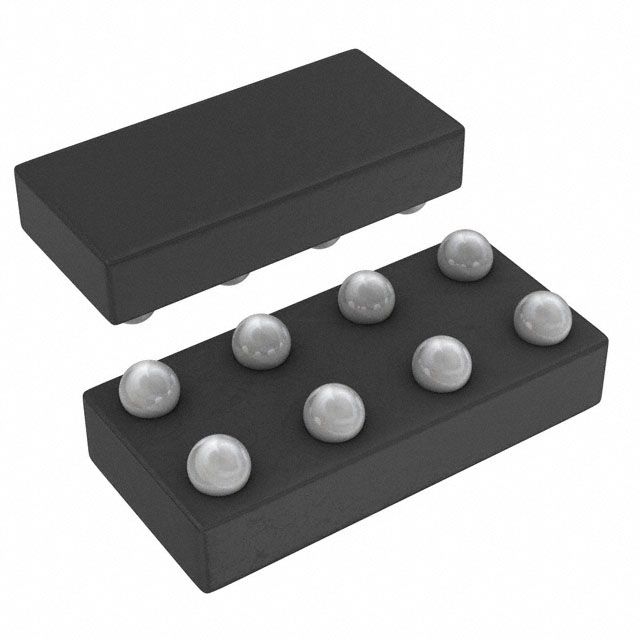
NanoFree package technology is a major breakthrough in IC packaging concepts, using the die as the package.
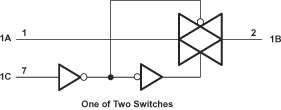
Each switch section has its own enable-input control (C). A high-level voltage applied to C turns on the associated switch section.
Applications include signal gating, chopping, modulation or demodulation (modem), and signal multiplexing for analog-to-digital and digital-to-analog conversion systems.
This dual bilateral analog switch is designed for1.65-V to 5.5-V VCCoperation.
The SN74LVC2G66 device can handle both analog and digital signals. The SN74LVC2G66 device permits signals with amplitudes of up to 5.5 V (peak) to be transmitted in either direction.
NanoFree package technology is a major breakthrough in IC packaging concepts, using the die as the package.
Each switch section has its own enable-input control (C). A high-level voltage applied to C turns on the associated switch section.
Applications include signal gating, chopping, modulation or demodulation (modem), and signal multiplexing for analog-to-digital and digital-to-analog conversion systems.