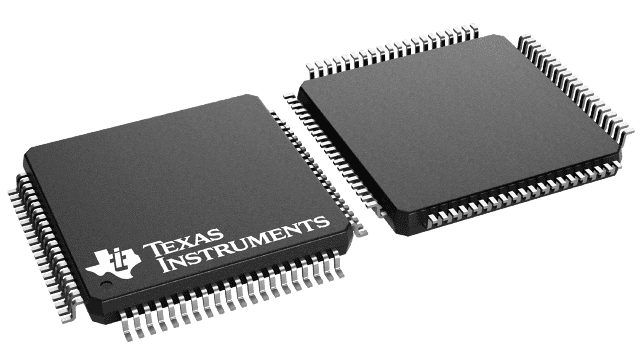
MSP430F5437 Series
18 MHz MCU with 256KB Flash, 16KB SRAM, 12-bit ADC, DMA, UART/SPI/I2C, timer, HW multiplier
Manufacturer: Texas Instruments
Catalog
18 MHz MCU with 256KB Flash, 16KB SRAM, 12-bit ADC, DMA, UART/SPI/I2C, timer, HW multiplier
Key Features
• Low Supply Voltage Range: 2.2 V to 3.6 VUltra-Low Power ConsumptionActive Mode (AM): All System Clocks Active312 µA/MHz at 8 MHz, 3.0 V, Flash Program Execution (Typical)140 µA/MHz at 8 MHz, 3.0 V, RAM Program Execution (Typical)Standby Mode (LPM3):Real-Time Clock (RTC) With Crystal, Watchdog, and Supply Supervisor Operational, Full RAM Retention, Fast Wake up: 2.6 µA at 3.0 V (Typical)Low-Power Oscillator (VLO), General-Purpose Counter, Watchdog, and Supply Supervisor Operational, Full RAM Retention, Fast Wakeup: 1.8 µA at 3.0 V (Typical)Off Mode (LPM4):Full RAM Retention, Supply Supervisor Operational, Fast Wakeup:1.69 µA at 3.0 V (Typical)Wake up From Standby Mode in Less Than 5 µs16-Bit RISC ArchitectureExtended MemoryUp to 18-MHz System ClockFlexible Power-Management SystemFully Integrated LDO With Programmable Regulated Core Supply VoltageSupply Voltage Supervision, Monitoring, and BrownoutUnified Clock System (UCS)FLL Control Loop for Frequency StabilizationLow-Power Low-Frequency Internal Clock Source (VLO)Low-Frequency Trimmed Internal Reference Source (REFO)32-kHz CrystalsHigh-Frequency Crystals up to 32 MHz16-Bit Timer TA0, Timer_A With Five Capture/Compare Registers16-Bit Timer TA1, Timer_A With Three Capture/Compare Registers16-Bit Timer TB0, Timer_B With Seven Capture/Compare Shadow RegistersUp to Four Universal Serial Communication InterfacesUSCI_A0, USCI_A1, USCI_A2, and USCI_A3 Each Support:Enhanced UART Supports Automatic Baud-Rate DetectionIrDA Encoder and DecoderSynchronous SPIUSCI_B0, USCI_B1, USCI_B2, and USCI_B3 Each Support:I2CSynchronous SPI12-Bit Analog-to-Digital Converter (ADC)Internal ReferenceSample-and-HoldAutoscan Feature14 External Channels, 2 Internal ChannelsHardware Multiplier Supporting 32-Bit OperationsSerial Onboard Programming, No External Programming Voltage Needed3-Channel Internal DMABasic Timer With RTC FeatureDevice Comparison Summarizes the Available Family MembersLow Supply Voltage Range: 2.2 V to 3.6 VUltra-Low Power ConsumptionActive Mode (AM): All System Clocks Active312 µA/MHz at 8 MHz, 3.0 V, Flash Program Execution (Typical)140 µA/MHz at 8 MHz, 3.0 V, RAM Program Execution (Typical)Standby Mode (LPM3):Real-Time Clock (RTC) With Crystal, Watchdog, and Supply Supervisor Operational, Full RAM Retention, Fast Wake up: 2.6 µA at 3.0 V (Typical)Low-Power Oscillator (VLO), General-Purpose Counter, Watchdog, and Supply Supervisor Operational, Full RAM Retention, Fast Wakeup: 1.8 µA at 3.0 V (Typical)Off Mode (LPM4):Full RAM Retention, Supply Supervisor Operational, Fast Wakeup:1.69 µA at 3.0 V (Typical)Wake up From Standby Mode in Less Than 5 µs16-Bit RISC ArchitectureExtended MemoryUp to 18-MHz System ClockFlexible Power-Management SystemFully Integrated LDO With Programmable Regulated Core Supply VoltageSupply Voltage Supervision, Monitoring, and BrownoutUnified Clock System (UCS)FLL Control Loop for Frequency StabilizationLow-Power Low-Frequency Internal Clock Source (VLO)Low-Frequency Trimmed Internal Reference Source (REFO)32-kHz CrystalsHigh-Frequency Crystals up to 32 MHz16-Bit Timer TA0, Timer_A With Five Capture/Compare Registers16-Bit Timer TA1, Timer_A With Three Capture/Compare Registers16-Bit Timer TB0, Timer_B With Seven Capture/Compare Shadow RegistersUp to Four Universal Serial Communication InterfacesUSCI_A0, USCI_A1, USCI_A2, and USCI_A3 Each Support:Enhanced UART Supports Automatic Baud-Rate DetectionIrDA Encoder and DecoderSynchronous SPIUSCI_B0, USCI_B1, USCI_B2, and USCI_B3 Each Support:I2CSynchronous SPI12-Bit Analog-to-Digital Converter (ADC)Internal ReferenceSample-and-HoldAutoscan Feature14 External Channels, 2 Internal ChannelsHardware Multiplier Supporting 32-Bit OperationsSerial Onboard Programming, No External Programming Voltage Needed3-Channel Internal DMABasic Timer With RTC FeatureDevice Comparison Summarizes the Available Family Members
Description
AI
The TI MSP family of ultra-low-power microcontrollers consists of several devices featuring different sets of peripherals targeted for various applications. The architecture, combined with five low-power modes, is optimized to achieve extended battery life in portable measurement applications. The device features a powerful 16-bit RISC CPU, 16-bit registers, and constant generators that contribute to maximum code efficiency. The digitally controlled oscillator (DCO) allows the device to wake up from low-power modes to active mode in less than 5 µs.
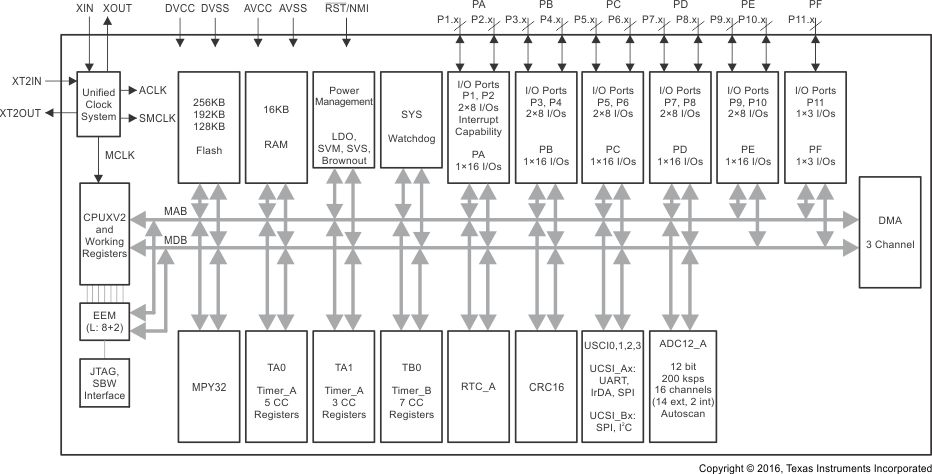
The MSP430F543x and MSP430F541x microcontrollers have three 16-bit timers, a high-performance 12-bit analog-to-digital converter (ADC), up to four universal serial communication interfaces (USCIs), a hardware multiplier, DMA, a real-time clock (RTC) module with alarm capabilities, and up to 87 I/O pins.
For complete module descriptions, see theMSP430F5xx and MSP430F6xx Family User’s Guide.
The TI MSP family of ultra-low-power microcontrollers consists of several devices featuring different sets of peripherals targeted for various applications. The architecture, combined with five low-power modes, is optimized to achieve extended battery life in portable measurement applications. The device features a powerful 16-bit RISC CPU, 16-bit registers, and constant generators that contribute to maximum code efficiency. The digitally controlled oscillator (DCO) allows the device to wake up from low-power modes to active mode in less than 5 µs.
The MSP430F543x and MSP430F541x microcontrollers have three 16-bit timers, a high-performance 12-bit analog-to-digital converter (ADC), up to four universal serial communication interfaces (USCIs), a hardware multiplier, DMA, a real-time clock (RTC) module with alarm capabilities, and up to 87 I/O pins.
For complete module descriptions, see theMSP430F5xx and MSP430F6xx Family User’s Guide.