SCAN928028 Series
8-channel 10:1 serializer with IEEE 1149.1 and at-speed BIST
Manufacturer: Texas Instruments
Catalog
8-channel 10:1 serializer with IEEE 1149.1 and at-speed BIST
Key Features
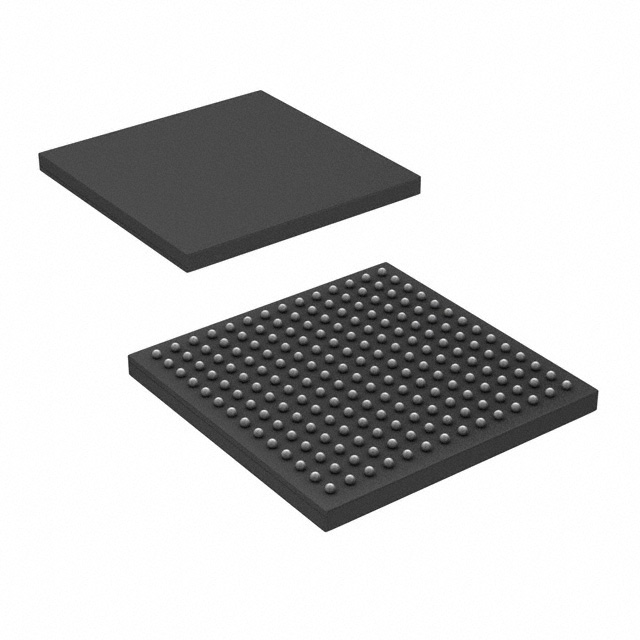
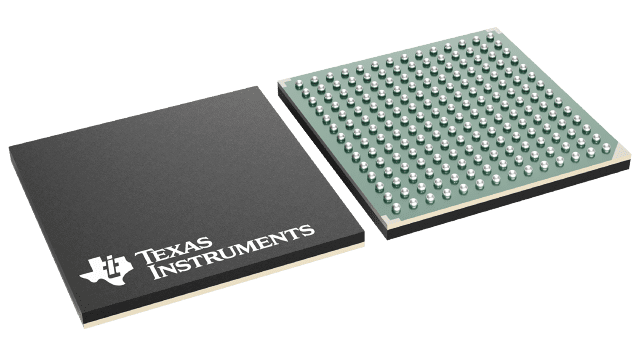
• IEEE 1149.1 (JTAG) Compliant and At-Speed BIST Test Mode.All 8 Channels Synchronous to One Parallel Clock Rate, from 18 to 66 MHzDuplicates Function of Multiple DS92LV1021 and '1023 10-Bit Serializer DevicesSerializes from One to Eight 10-Bit Parallel Inputs into Data Streams with Embedded ClockEight 5 mA Modified Bus LVDS Outputs that are Capable to Drive Double Terminations@Speed Test - PRBS Generation to Check LVDS Transmission Path to SCAN921224, SCAN921226, SCAN921260, or SCAN926260On Chip Filtering for PLL740mW Typ Power Dissipation (Loaded, PRBS, 66MHz, 3.3V)High Impedance Inputs and Outputs on Power offSingle Power Supply at +3.3V (+/-10%)196-pin NFBGA PackageIndustrial Temperature Range Operation: -40 to +85°CAll trademarks are the property of their respective owners.IEEE 1149.1 (JTAG) Compliant and At-Speed BIST Test Mode.All 8 Channels Synchronous to One Parallel Clock Rate, from 18 to 66 MHzDuplicates Function of Multiple DS92LV1021 and '1023 10-Bit Serializer DevicesSerializes from One to Eight 10-Bit Parallel Inputs into Data Streams with Embedded ClockEight 5 mA Modified Bus LVDS Outputs that are Capable to Drive Double Terminations@Speed Test - PRBS Generation to Check LVDS Transmission Path to SCAN921224, SCAN921226, SCAN921260, or SCAN926260On Chip Filtering for PLL740mW Typ Power Dissipation (Loaded, PRBS, 66MHz, 3.3V)High Impedance Inputs and Outputs on Power offSingle Power Supply at +3.3V (+/-10%)196-pin NFBGA PackageIndustrial Temperature Range Operation: -40 to +85°CAll trademarks are the property of their respective owners.
Description
AI
The SCAN928028 integrates eight serializer devices into a single chip. The SCAN928028 can simultaneously serialize up to eight 10-bit data streams. The 10-bit parallel inputs are LVTTL signal levels. The serialized outputs are LVDS signals with extra drive current for point-to-point and lightly loaded multidrop applications. Each serializer block in the SCAN928028 operates independently by using strobes from a single shared PLL.
The SCAN928028 uses a single +3.3V power supply with a typical power dissipation of 740mW (3.3V / PRBS / 66 MHz). Each serializer channel has a unique power down control to further conserve power consumption.
For high-speed LVDS serial data transmission, line quality is essential, thus the SCAN928028 includes an @SPEED TEST function. Each Serializer channel has the ability to internally generate a PRBS data pattern. This pattern is received by specific deserializers (SCAN921224) which have the complement PRBS verification circuit. The deserializer checks the data pattern for bit errors and reports any errors on the test verification pins on the deserializer.
For additional information - please see the Application Information section in this datasheet.
The SCAN928028 integrates eight serializer devices into a single chip. The SCAN928028 can simultaneously serialize up to eight 10-bit data streams. The 10-bit parallel inputs are LVTTL signal levels. The serialized outputs are LVDS signals with extra drive current for point-to-point and lightly loaded multidrop applications. Each serializer block in the SCAN928028 operates independently by using strobes from a single shared PLL.
The SCAN928028 uses a single +3.3V power supply with a typical power dissipation of 740mW (3.3V / PRBS / 66 MHz). Each serializer channel has a unique power down control to further conserve power consumption.
For high-speed LVDS serial data transmission, line quality is essential, thus the SCAN928028 includes an @SPEED TEST function. Each Serializer channel has the ability to internally generate a PRBS data pattern. This pattern is received by specific deserializers (SCAN921224) which have the complement PRBS verification circuit. The deserializer checks the data pattern for bit errors and reports any errors on the test verification pins on the deserializer.
For additional information - please see the Application Information section in this datasheet.