Catalog
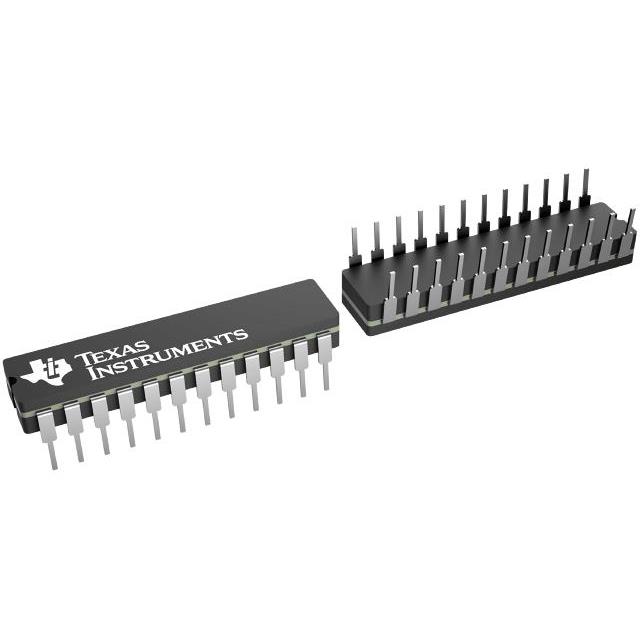
Octal Registered Transceivers with 3-State Outputs
Key Features
• Function, Pinout, and Drive Compatible With FCT and F LogicReduced VOH(Typically = 3.3 V) Versions of Equivalent FCT FunctionsEdge-Rate Control Circuitry for Significantly Improved Noise CharacteristicsIoffSupports Partial-Power-Down Mode OperationMatched Rise and Fall TimesFully Compatible With TTL Input and Output Logic Levels3-State OutputsESD Protection Exceeds JESD 222000-V Human-Body Model (A114-A)200-V Machine Model (A115-A)1000-V Charged-Device Model (C101)Separation Controls for Data Flow in Each DirectionBack-to-Back Latches for StorageCY54FCT543T48-mA Output Sink Current12-mA Output Source CurrentCY74FCT543T64-mA Output Sink Current32-mA Output Source CurrentFunction, Pinout, and Drive Compatible With FCT and F LogicReduced VOH(Typically = 3.3 V) Versions of Equivalent FCT FunctionsEdge-Rate Control Circuitry for Significantly Improved Noise CharacteristicsIoffSupports Partial-Power-Down Mode OperationMatched Rise and Fall TimesFully Compatible With TTL Input and Output Logic Levels3-State OutputsESD Protection Exceeds JESD 222000-V Human-Body Model (A114-A)200-V Machine Model (A115-A)1000-V Charged-Device Model (C101)Separation Controls for Data Flow in Each DirectionBack-to-Back Latches for StorageCY54FCT543T48-mA Output Sink Current12-mA Output Source CurrentCY74FCT543T64-mA Output Sink Current32-mA Output Source Current
Description
AI
The \x92FCT543T octal latched transceivers contain two sets of eight D-type latches with separate latch-enable (LEAB\, LEBA\) and output-enable (OEAB\, OEBA\) inputs for each set to permit independent control of input and output in either direction of data flow. For data flow from A to B, for example, the A-to-B enable (CEAB\) input must be low in order to enter data from A or to take data from B, as indicated in the function table. With CEAB\ low, a low signal on the A-to-B latch-enable (LEAB\) input makes the A-to-B latches transparent; a subsequent low-to-high transition of the LEAB\ signal puts the A latches in the storage mode and their outputs no longer change with the A inputs. With CEAB\ and OEAB\ low, the 3-state B-output buffers are active and reflect the data present at the output of the A latches. Control of data from B to A is similar, but uses CEBA\, LEBA\, and OEBA\ inputs.
These devices are fully specified for partial-power-down applications using Ioff. The Ioffcircuitry disables the outputs, preventing damaging current backflow through the device when it is powered down.
The \x92FCT543T octal latched transceivers contain two sets of eight D-type latches with separate latch-enable (LEAB\, LEBA\) and output-enable (OEAB\, OEBA\) inputs for each set to permit independent control of input and output in either direction of data flow. For data flow from A to B, for example, the A-to-B enable (CEAB\) input must be low in order to enter data from A or to take data from B, as indicated in the function table. With CEAB\ low, a low signal on the A-to-B latch-enable (LEAB\) input makes the A-to-B latches transparent; a subsequent low-to-high transition of the LEAB\ signal puts the A latches in the storage mode and their outputs no longer change with the A inputs. With CEAB\ and OEAB\ low, the 3-state B-output buffers are active and reflect the data present at the output of the A latches. Control of data from B to A is similar, but uses CEBA\, LEBA\, and OEBA\ inputs.
These devices are fully specified for partial-power-down applications using Ioff. The Ioffcircuitry disables the outputs, preventing damaging current backflow through the device when it is powered down.