PGA855 Series
Low-noise, wide-bandwidth, fully-differential-output programmable-gain instrumentation amplifier
Manufacturer: Texas Instruments
Catalog
Low-noise, wide-bandwidth, fully-differential-output programmable-gain instrumentation amplifier
Key Features
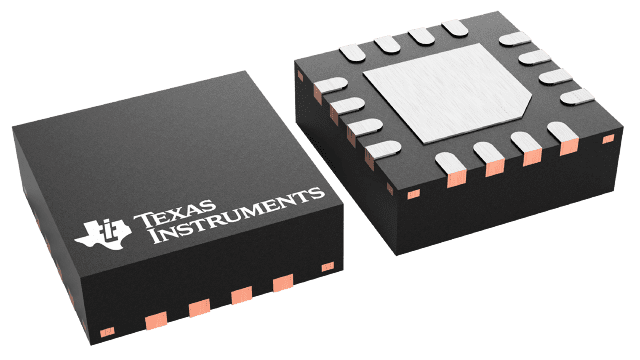
• Eight pin-programmable binary gainsG (V/V) = ⅛, ¼, ½, 1, 2, 4, 8, and 16Low gain error drift: 1 ppm/°C (max) at G = 1 V/VFully differential outputsIndependent output power-supply pins to allow for ADC input overdrive protectionOutput common-mode controlFaster signal processing:Wide bandwidth: 10 MHz at all gainsHigh slew rate: 35 V/µsSettling time: 500 ns to 0.01%, 950 ns to 0.0015%Input stage noise: 7.8 nV/√ Hz at G = 16 V/VFilter option to achieve better SNRInput overvoltage protection to ±40 V beyond suppliesInput-stage supply range:Single supply: 8 V to 36 VDual supply: ±4 V to ±18 VOutput-stage supply range:Single supply: 4.5 V to 36 VDual supply: ±2.25 V to ±18 VSpecified temperature range: –40°C to +125°CSmall package: 3-mm × 3-mm VQFNEight pin-programmable binary gainsG (V/V) = ⅛, ¼, ½, 1, 2, 4, 8, and 16Low gain error drift: 1 ppm/°C (max) at G = 1 V/VFully differential outputsIndependent output power-supply pins to allow for ADC input overdrive protectionOutput common-mode controlFaster signal processing:Wide bandwidth: 10 MHz at all gainsHigh slew rate: 35 V/µsSettling time: 500 ns to 0.01%, 950 ns to 0.0015%Input stage noise: 7.8 nV/√ Hz at G = 16 V/VFilter option to achieve better SNRInput overvoltage protection to ±40 V beyond suppliesInput-stage supply range:Single supply: 8 V to 36 VDual supply: ±4 V to ±18 VOutput-stage supply range:Single supply: 4.5 V to 36 VDual supply: ±2.25 V to ±18 VSpecified temperature range: –40°C to +125°CSmall package: 3-mm × 3-mm VQFN
Description
AI
The PGA855 is a high-bandwidth programmable gain instrumentation amplifier with fully differential outputs. The PGA855 is equipped with eight binary gain settings, from an attenuating gain of 0.125 V/V to a maximum of 16 V/V, using three digital gain selection pins. The output common-mode voltage can be independently set using the VOCM pin.
The PGA855 architecture is optimized to drive inputs of high-resolution, precision analog-to-digital converters (ADCs) with sampling rates up to 1 MSPS without the need for an additional ADC driver. The output-stage power supplies (LVSS/LVDD) are decoupled from the input stage and can be connected to power supplies of the ADC to protect the ADC or downstream device against overdrive damage.
The super-beta input transistors offer an impressively low input bias current, which in turn provides a very low input current noise density of 0.3 pA/√ Hz, making the PGA855 a versatile choice for virtually any sensor type. The low-noise current-feedback front-end architecture offers excellent gain flatness, even at high frequencies, making the PGA855 an excellent high-impedance sensor readout device. Integrated protection circuitry on the input pins handles overvoltages up to ±40 V beyond the power-supply voltages.
The PGA855 is a high-bandwidth programmable gain instrumentation amplifier with fully differential outputs. The PGA855 is equipped with eight binary gain settings, from an attenuating gain of 0.125 V/V to a maximum of 16 V/V, using three digital gain selection pins. The output common-mode voltage can be independently set using the VOCM pin.
The PGA855 architecture is optimized to drive inputs of high-resolution, precision analog-to-digital converters (ADCs) with sampling rates up to 1 MSPS without the need for an additional ADC driver. The output-stage power supplies (LVSS/LVDD) are decoupled from the input stage and can be connected to power supplies of the ADC to protect the ADC or downstream device against overdrive damage.
The super-beta input transistors offer an impressively low input bias current, which in turn provides a very low input current noise density of 0.3 pA/√ Hz, making the PGA855 a versatile choice for virtually any sensor type. The low-noise current-feedback front-end architecture offers excellent gain flatness, even at high frequencies, making the PGA855 an excellent high-impedance sensor readout device. Integrated protection circuitry on the input pins handles overvoltages up to ±40 V beyond the power-supply voltages.