MSP430FG4260 Series
8 MHz MCU with 24KB Flash, 256B SRAM, 16-bit sigma-delta ADC, 12-bit DAC, 2 OpAmp, 56 seg LCD
Manufacturer: Texas Instruments
Catalog
8 MHz MCU with 24KB Flash, 256B SRAM, 16-bit sigma-delta ADC, 12-bit DAC, 2 OpAmp, 56 seg LCD
Key Features
• Low Supply-Voltage Range, 1.8 V to 3.6 VUltralow-Power Consumption:Active Mode: 250 µA at 1 MHz, 2.2 VStandby Mode: 1.1 µAOff Mode (RAM Retention): 0.1 µAFive Power Saving ModesWake-Up From Standby Mode in Less Than 6 µs16-Bit RISC Architecture, 125-ns Instruction Cycle Time16-Bit Sigma-Delta A/D Converter With Internal Reference and Five Differential Analog Inputs12-Bit D/A ConverterTwo Configurable Operational Amplifiers16-Bit Timer_A With Three Capture/Compare RegistersBrownout DetectorBootstrap LoaderSerial Onboard Programming, No External Programming Voltage Needed Programmable Code Protection by Security FuseIntegrated LCD Driver With Contrast Control for up to 56 SegmentsMSP430FG42x0 Family Members Include:MSP430FG4250: 16KB+256B Flash Memory 256B RAMMSP430FG4260: 24KB+256B Flash Memory 256B RAMMSP430FG4270: 32KB+256B Flash Memory 256B RAMFor Complete Module Descriptions, SeeThe MSP430x4xx Family User’s Guide, Literature Number SLAU056For Additional Device Information, See theMSP430FG42x0 Device Errata, Literature Number SLAZ038Low Supply-Voltage Range, 1.8 V to 3.6 VUltralow-Power Consumption:Active Mode: 250 µA at 1 MHz, 2.2 VStandby Mode: 1.1 µAOff Mode (RAM Retention): 0.1 µAFive Power Saving ModesWake-Up From Standby Mode in Less Than 6 µs16-Bit RISC Architecture, 125-ns Instruction Cycle Time16-Bit Sigma-Delta A/D Converter With Internal Reference and Five Differential Analog Inputs12-Bit D/A ConverterTwo Configurable Operational Amplifiers16-Bit Timer_A With Three Capture/Compare RegistersBrownout DetectorBootstrap LoaderSerial Onboard Programming, No External Programming Voltage Needed Programmable Code Protection by Security FuseIntegrated LCD Driver With Contrast Control for up to 56 SegmentsMSP430FG42x0 Family Members Include:MSP430FG4250: 16KB+256B Flash Memory 256B RAMMSP430FG4260: 24KB+256B Flash Memory 256B RAMMSP430FG4270: 32KB+256B Flash Memory 256B RAMFor Complete Module Descriptions, SeeThe MSP430x4xx Family User’s Guide, Literature Number SLAU056For Additional Device Information, See theMSP430FG42x0 Device Errata, Literature Number SLAZ038
Description
AI
The Texas Instruments MSP430 family of ultralow-power microcontrollers consist of several devices featuring different sets of peripherals targeted for various applications. The architecture, combined with five low-power modes, is optimized to achieve extended battery life in portable measurement applications. The device features a powerful 16-bit RISC CPU, 16-bit registers, and constant generators that contribute to maximum code efficiency. The digitally controlled oscillator (DCO) allows wake-up from low-power modes to active mode in less than 6µs.
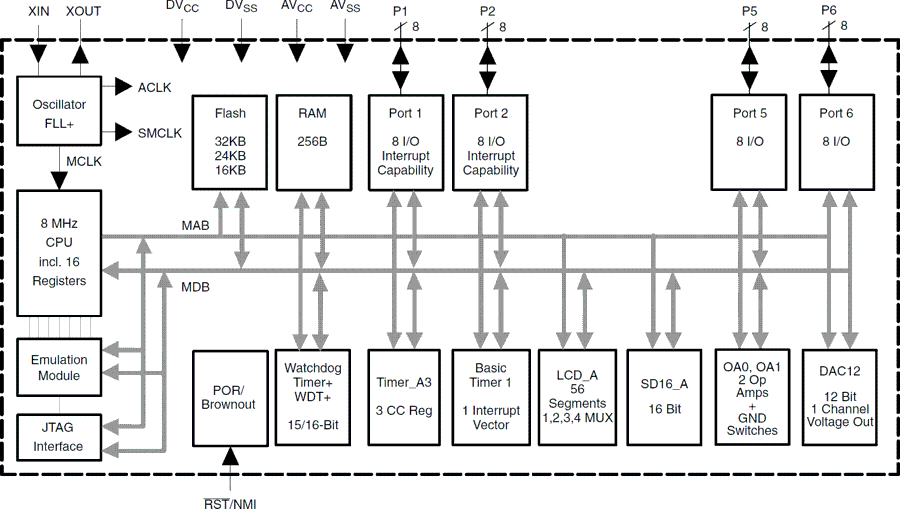
The MSP430FG42x0 is a microcontroller configuration with a 16-bit timer, a high-performance 16-bitsigma-delta A/D converter, 12-bit D/A converter, two configurable operational amplifiers, 32 I/O pins, and a liquid crystal display driver.
Typical applications for this device include analog and digital sensor systems, digital motor control, remote controls, thermostats, digital timers, hand-held meters, etc.
The Texas Instruments MSP430 family of ultralow-power microcontrollers consist of several devices featuring different sets of peripherals targeted for various applications. The architecture, combined with five low-power modes, is optimized to achieve extended battery life in portable measurement applications. The device features a powerful 16-bit RISC CPU, 16-bit registers, and constant generators that contribute to maximum code efficiency. The digitally controlled oscillator (DCO) allows wake-up from low-power modes to active mode in less than 6µs.
The MSP430FG42x0 is a microcontroller configuration with a 16-bit timer, a high-performance 16-bitsigma-delta A/D converter, 12-bit D/A converter, two configurable operational amplifiers, 32 I/O pins, and a liquid crystal display driver.
Typical applications for this device include analog and digital sensor systems, digital motor control, remote controls, thermostats, digital timers, hand-held meters, etc.