


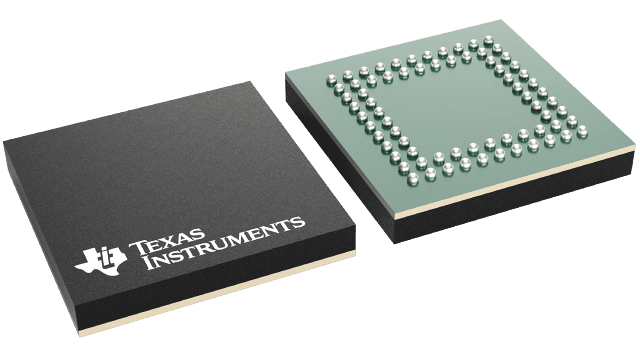
SN74CBTU4411 Series
2.5V, 4:1, 11-channel analog multiplexer suitable for DDR-II applications
Manufacturer: Texas Instruments
Catalog
2.5V, 4:1, 11-channel analog multiplexer suitable for DDR-II applications
Key Features
• Supports SSTL_18 signaling levelsSuitable for DDR-II applicationsD-port outputs are precharged by bias voltage (VBIAS)Internal termination for control inputsHigh bandwidth (400 MHz minimum)Low and flat ON-state resistance (ron) characteristics, (ron= 17 Ω maximum)Internal 400-Ω pulldown resistorsLow differential and rising or falling edge skewLatch-up performance exceeds 100 mA per JESD 78, Class IISupports SSTL_18 signaling levelsSuitable for DDR-II applicationsD-port outputs are precharged by bias voltage (VBIAS)Internal termination for control inputsHigh bandwidth (400 MHz minimum)Low and flat ON-state resistance (ron) characteristics, (ron= 17 Ω maximum)Internal 400-Ω pulldown resistorsLow differential and rising or falling edge skewLatch-up performance exceeds 100 mA per JESD 78, Class II
Description
AI
The SN74CBTU4411 device is a high-bandwidth, SSTL_18 compatible FET multiplexer/demultiplexer with low ON-state resistance (ron). The device uses an internal charge pump to elevate the gate voltage of the pass transistor, providing a low and flat ron. The low and flat ronallows for minimal propagation delay and supports rail-to-rail signaling on data input/output (I/O) ports. The device also features very low data I/O capacitance to minimize capacitive loading and signal distortion on the data bus. Matched ronand I/O capacitance among channels results in extremely low differential and rising or falling edge skew. This allows the device to show optimal performance in DDR-II applications.
The SN74CBTU4411 device is a high-bandwidth, SSTL_18 compatible FET multiplexer/demultiplexer with low ON-state resistance (ron). The device uses an internal charge pump to elevate the gate voltage of the pass transistor, providing a low and flat ron. The low and flat ronallows for minimal propagation delay and supports rail-to-rail signaling on data input/output (I/O) ports. The device also features very low data I/O capacitance to minimize capacitive loading and signal distortion on the data bus. Matched ronand I/O capacitance among channels results in extremely low differential and rising or falling edge skew. This allows the device to show optimal performance in DDR-II applications.