


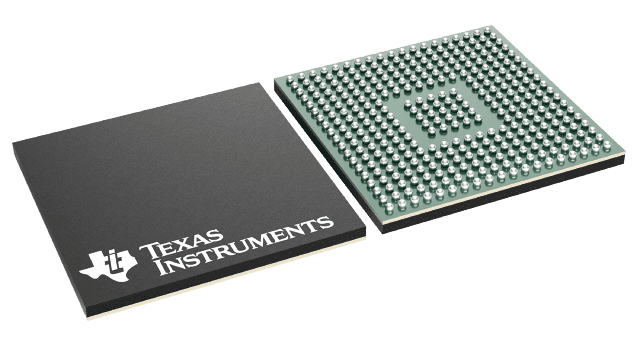
TMS320F28384D-Q1 Series
Automotive C2000™ 32-bit MCU w/ connectivity manager, 2x C28x+CLA CPU, 1.5MB flash, FPU64, Ethernet
Manufacturer: Texas Instruments
Catalog
Automotive C2000™ 32-bit MCU w/ connectivity manager, 2x C28x+CLA CPU, 1.5MB flash, FPU64, Ethernet
| Part | Speed | Connectivity | Oscillator Type | Program Memory Type | Peripherals | Operating Temperature [Min] | Operating Temperature [Max] | Voltage - Supply (Vcc/Vdd) [Max] | Voltage - Supply (Vcc/Vdd) [Min] | Mounting Type | Qualification | Number of I/O | Supplier Device Package | Data Converters | Core Size [custom] | RAM Size | Program Memory Size | Grade | Core Processor | Package / Case |
|---|---|---|---|---|---|---|---|---|---|---|---|---|---|---|---|---|---|---|---|---|
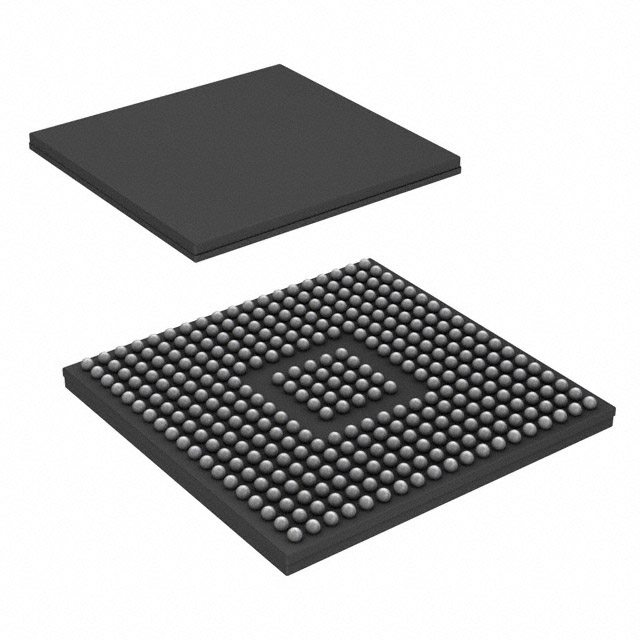 Texas Instruments | 200 MHz | CANbus Ethernet I2C McBSP SCI SPI UART/USART | Internal | FLASH | Brown-out Detect/Reset DMA POR PWM WDT | -40 °C | 125 °C | 1.26 V | 1.14 V | Surface Mount | AEC-Q100 | 169 | 337-NFBGA (16x16) | A/D 24x12b 36x16b SAR D/A 3x12b | 32-Bit Dual-Core | 216 K | 1 MB | Automotive | C28x | 337-LFBGA |
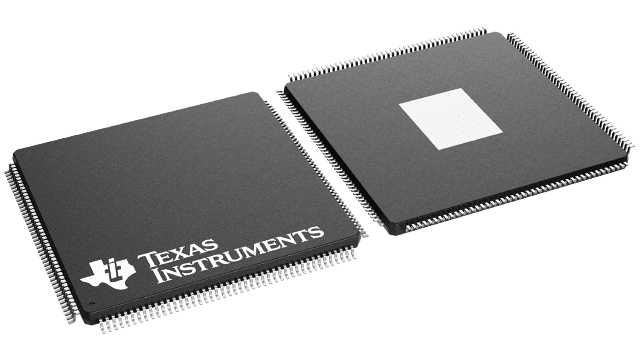 Texas Instruments | 200 MHz | CANbus Ethernet I2C McBSP SCI SPI UART/USART | Internal | FLASH | Brown-out Detect/Reset DMA POR PWM WDT | -40 °C | 125 ¯C | 1.26 V | 1.14 V | Surface Mount | 97 | 176-HLQFP (24x24) | 29x16b SAR A/D 20x12b D/A 3x12b | 32-Bit Dual-Core | 1 MB | C28x | 176-LQFP Exposed Pad | |||
Texas Instruments | 200 MHz | CANbus Ethernet I2C McBSP SCI SPI UART/USART | Internal | FLASH | Brown-out Detect/Reset DMA POR PWM WDT | -40 °C | 125 ¯C | 1.26 V | 1.14 V | Surface Mount | AEC-Q100 | 169 | 337-NFBGA (16x16) | A/D 24x12b 36x16b SAR D/A 3x12b | 32-Bit Dual-Core | 216 K | 1 MB | Automotive | C28x | 337-LFBGA |
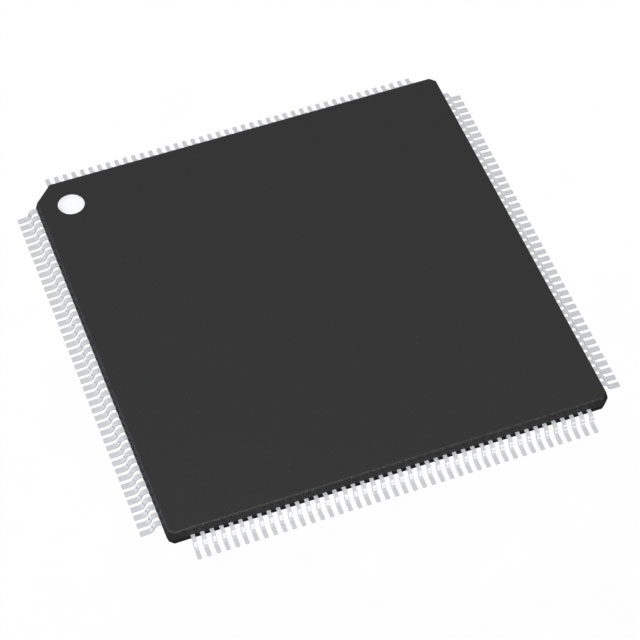 Texas Instruments | 200 MHz | CANbus Ethernet I2C McBSP SCI SPI SSI UART/USART USB | External Internal | FLASH | Brown-out Detect/Reset DMA POR PWM WDT | -40 °C | 125 ¯C | 1.26 V | 1.14 V | Surface Mount | 97 | 176-HLQFP (24x24) | A/D 20x12b 29x16b SAR A/D 3x12b | 32-Bit Dual-Core | 86 K | 512 KB | C28x | 176-LQFP Exposed Pad |
Key Features
• Dual-core C28x architectureTwo TMS320C28x 32-bit CPUs200 MHzIEEE 754 double-precision (64-bit) Floating-Point Unit (FPU)Trigonometric Math Unit (TMU)CRC engine and instructions (VCRC)Fast Integer Division (FINTDIV)512KB (256KW) of flash on each CPU (ECC-protected)44KB (22KW) of local RAM on each CPU128KB (64KW) of global RAM shared between the two CPUs (parity-protected)Two Control Law Accelerators (CLAs)200 MHzIEEE 754 single-precision floating-pointExecutes code independently of C28x CPUSystem peripheralsTwo External Memory Interfaces (EMIFs) with ASRAM and SDRAM supportTwo 6-channel Direct Memory Access (DMA) controllersUp to 169 General-Purpose Input/Output (GPIO) pins with input filteringExpanded Peripheral Interrupt controller (ePIE)Low-power mode (LPM) supportDual-zone security for third-party developmentUnique Identification (UID) numberEmbedded Real-time Analysis and Diagnostic (ERAD)Background CRC (BGCRC)Connectivity Manager (CM)Arm Cortex-M4 processor125 MHz512KB of flash (ECC-protected)96KB of RAM (ECC-protected or parity-protected)Advanced Encryption Standard (AES) acceleratorGeneric CRC (GCRC)32-channel Micro Direct Memory Access (µDMA) controllerUniversal Asynchronous Receiver/Transmitter (CM-UART)Inter-integrated Circuit (CM-I2C)Synchronous Serial Interface (SSI)10/100 Ethernet 1588 MII/RMIIC28x communications peripheralsFast Serial Interface (FSI) with two transmitters and eight receiversFour high-speed (up to 50-MHz) SPI ports (pin-bootable)Four Serial Communications Interfaces (SCI/UART) (pin-bootable)Two I2C interfaces (pin-bootable)Power-Management Bus (PMBus) interfaceTwo Multichannel Buffered Serial Ports (McBSPs)CM-C28x shared communications peripheralsEtherCAT Slave Controller (ESC)USB 2.0 (MAC + PHY)Two Controller Area Network (CAN) modules (pin-bootable)MCAN (CAN FD)Analog subsystemFour Analog-to-Digital Converters (ADCs)16-bit mode1.1 MSPS each12 differential or 24 single-ended inputs12-bit mode3.5 MSPS each24 single-ended inputsSingle sample-and-hold (S/H) on each ADCHardware post-processing of conversionsEight windowed comparators with 12-bit Digital-to-Analog Converter (DAC) referencesThree 12-bit buffered DAC outputsControl peripherals32 Pulse Width Modulator (PWM) channelsHigh resolution on both A and B channels of 8 PWM modules (16 channels)Dead-band support (on both standard and high resolution)Seven Enhanced Capture (eCAP) modulesHigh-resolution Capture (HRCAP) available on two of the seven eCAP modulesThree Enhanced Quadrature Encoder Pulse (eQEP) modulesEight Sigma-Delta Filter Module (SDFM) input channels, 2 independent filters per channelConfigurable Logic Block (CLB)Augments existing peripheral capabilitySupports position manager solutionsClock and system controlTwo internal zero-pin 10-MHz oscillatorsOn-chip crystal oscillatorWindowed watchdog timer moduleMissing clock detection circuitryDual-clock Comparator (DCC)Hardware Built-in Self Test (HWBIST)1.2-V core, 3.3-V I/O designFunctional Safety-CompliantDeveloped for functional safety applicationsDocumentation available to aid ISO 26262 and IEC 61508 system designSystematic capability up to ASIL D and SIL 3Hardware capability up to ASIL B and SIL 2Safety-related certificationISO 26262 certified up to ASIL B by TÜV SÜDIEC 61508 certified up to SIL 2 by TÜV SÜDPackage options:Lead-free, green packaging337-ball New Fine Pitch Ball Grid Array (nFBGA) [ZWT suffix]176-pin PowerPAD™ Thermally Enhanced Low-profile Quad Flatpack (HLQFP) [PTP suffix]Temperature options:S: –40°C to 125°C junctionQ: –40°C to 125°C ambient (AEC Q100 qualification for automotive applications)Dual-core C28x architectureTwo TMS320C28x 32-bit CPUs200 MHzIEEE 754 double-precision (64-bit) Floating-Point Unit (FPU)Trigonometric Math Unit (TMU)CRC engine and instructions (VCRC)Fast Integer Division (FINTDIV)512KB (256KW) of flash on each CPU (ECC-protected)44KB (22KW) of local RAM on each CPU128KB (64KW) of global RAM shared between the two CPUs (parity-protected)Two Control Law Accelerators (CLAs)200 MHzIEEE 754 single-precision floating-pointExecutes code independently of C28x CPUSystem peripheralsTwo External Memory Interfaces (EMIFs) with ASRAM and SDRAM supportTwo 6-channel Direct Memory Access (DMA) controllersUp to 169 General-Purpose Input/Output (GPIO) pins with input filteringExpanded Peripheral Interrupt controller (ePIE)Low-power mode (LPM) supportDual-zone security for third-party developmentUnique Identification (UID) numberEmbedded Real-time Analysis and Diagnostic (ERAD)Background CRC (BGCRC)Connectivity Manager (CM)Arm Cortex-M4 processor125 MHz512KB of flash (ECC-protected)96KB of RAM (ECC-protected or parity-protected)Advanced Encryption Standard (AES) acceleratorGeneric CRC (GCRC)32-channel Micro Direct Memory Access (µDMA) controllerUniversal Asynchronous Receiver/Transmitter (CM-UART)Inter-integrated Circuit (CM-I2C)Synchronous Serial Interface (SSI)10/100 Ethernet 1588 MII/RMIIC28x communications peripheralsFast Serial Interface (FSI) with two transmitters and eight receiversFour high-speed (up to 50-MHz) SPI ports (pin-bootable)Four Serial Communications Interfaces (SCI/UART) (pin-bootable)Two I2C interfaces (pin-bootable)Power-Management Bus (PMBus) interfaceTwo Multichannel Buffered Serial Ports (McBSPs)CM-C28x shared communications peripheralsEtherCAT Slave Controller (ESC)USB 2.0 (MAC + PHY)Two Controller Area Network (CAN) modules (pin-bootable)MCAN (CAN FD)Analog subsystemFour Analog-to-Digital Converters (ADCs)16-bit mode1.1 MSPS each12 differential or 24 single-ended inputs12-bit mode3.5 MSPS each24 single-ended inputsSingle sample-and-hold (S/H) on each ADCHardware post-processing of conversionsEight windowed comparators with 12-bit Digital-to-Analog Converter (DAC) referencesThree 12-bit buffered DAC outputsControl peripherals32 Pulse Width Modulator (PWM) channelsHigh resolution on both A and B channels of 8 PWM modules (16 channels)Dead-band support (on both standard and high resolution)Seven Enhanced Capture (eCAP) modulesHigh-resolution Capture (HRCAP) available on two of the seven eCAP modulesThree Enhanced Quadrature Encoder Pulse (eQEP) modulesEight Sigma-Delta Filter Module (SDFM) input channels, 2 independent filters per channelConfigurable Logic Block (CLB)Augments existing peripheral capabilitySupports position manager solutionsClock and system controlTwo internal zero-pin 10-MHz oscillatorsOn-chip crystal oscillatorWindowed watchdog timer moduleMissing clock detection circuitryDual-clock Comparator (DCC)Hardware Built-in Self Test (HWBIST)1.2-V core, 3.3-V I/O designFunctional Safety-CompliantDeveloped for functional safety applicationsDocumentation available to aid ISO 26262 and IEC 61508 system designSystematic capability up to ASIL D and SIL 3Hardware capability up to ASIL B and SIL 2Safety-related certificationISO 26262 certified up to ASIL B by TÜV SÜDIEC 61508 certified up to SIL 2 by TÜV SÜDPackage options:Lead-free, green packaging337-ball New Fine Pitch Ball Grid Array (nFBGA) [ZWT suffix]176-pin PowerPAD™ Thermally Enhanced Low-profile Quad Flatpack (HLQFP) [PTP suffix]Temperature options:S: –40°C to 125°C junctionQ: –40°C to 125°C ambient (AEC Q100 qualification for automotive applications)
Description
AI
The TMS320F2838x (F2838x) is a member of the C2000™ real-time microcontroller family of scalable, ultra-low latency devices designed for efficiency in power electronics, including but not limited to: high power density, high switching frequencies, and supporting the use ofGaN and SiC technologies.
These include such applications as:
Thereal-time control subsystemis based on TI’s 32-bit C28x DSP core, which provides 200 MHz of signal-processing performance in each core for floating- or fixed-point code running from either on-chip flash or SRAM. The C28x CPU is further boosted by theTrigonometric Math Unit (TMU)andVCRC (Cyclical Redundancy Check) extended instruction sets, speeding up common algorithms key to real-time control systems. Extended instruction sets enable IEEE double-precision 64-bit floating-point math. Finally, theControl Law Accelerator (CLA)enables an additional 200 MHz per core of independent processing ability.
This device also contains an independent Connectivity Manager (CM), based on the ARM Cortex-M4 processor, that runs at 125 MHz. With its own dedicated flash and SRAM, the CM allows fully independent control of the interfaces coming in and out of the F2838x, allowing maximum bandwidth for the C28x DSPs to focus on real-time control.
High-performance analog blocks are tightly integrated with the processing and control units to provide optimal real-time signal chain performance. Thirty-two frequency-independent PWMs enable control of multiple power stages, from a 3-phase inverter to advanced multilevel power topologies.
The inclusion of the Configurable Logic Block (CLB) allows the user to addcustom logicand potentiallyintegrate FPGA-like functionsinto the C2000 real-time MCU.
For the first time on a C2000 real-time MCU, there is an EtherCAT Slave Controller, along with other industry-standard protocols like CAN FD and USB 2.0. TheFast Serial Interface (FSI)enables up to 200 Mbps of robust communications across an isolation boundary.
Want to learn more about features that make C2000 MCUs the right choice for your real-time control system? Check outThe Essential Guide for Developing With C2000™ Real-Time Microcontrollersand visit theC2000™ real-time control MCUspage.
TheGetting Started With C2000™ Real-Time Control Microcontrollers (MCUs) Getting Started Guidecovers all aspects of development with C2000 devices from hardware to support resources. In addition to key reference documents, each section provides relevant links and resources to further expand on the information covered.
Ready to get started? Check out theTMDSCNCD28388Devaluation board and downloadC2000Ware.
The TMS320F2838x (F2838x) is a member of the C2000™ real-time microcontroller family of scalable, ultra-low latency devices designed for efficiency in power electronics, including but not limited to: high power density, high switching frequencies, and supporting the use ofGaN and SiC technologies.
These include such applications as:
Thereal-time control subsystemis based on TI’s 32-bit C28x DSP core, which provides 200 MHz of signal-processing performance in each core for floating- or fixed-point code running from either on-chip flash or SRAM. The C28x CPU is further boosted by theTrigonometric Math Unit (TMU)andVCRC (Cyclical Redundancy Check) extended instruction sets, speeding up common algorithms key to real-time control systems. Extended instruction sets enable IEEE double-precision 64-bit floating-point math. Finally, theControl Law Accelerator (CLA)enables an additional 200 MHz per core of independent processing ability.
This device also contains an independent Connectivity Manager (CM), based on the ARM Cortex-M4 processor, that runs at 125 MHz. With its own dedicated flash and SRAM, the CM allows fully independent control of the interfaces coming in and out of the F2838x, allowing maximum bandwidth for the C28x DSPs to focus on real-time control.
High-performance analog blocks are tightly integrated with the processing and control units to provide optimal real-time signal chain performance. Thirty-two frequency-independent PWMs enable control of multiple power stages, from a 3-phase inverter to advanced multilevel power topologies.
The inclusion of the Configurable Logic Block (CLB) allows the user to addcustom logicand potentiallyintegrate FPGA-like functionsinto the C2000 real-time MCU.
For the first time on a C2000 real-time MCU, there is an EtherCAT Slave Controller, along with other industry-standard protocols like CAN FD and USB 2.0. TheFast Serial Interface (FSI)enables up to 200 Mbps of robust communications across an isolation boundary.
Want to learn more about features that make C2000 MCUs the right choice for your real-time control system? Check outThe Essential Guide for Developing With C2000™ Real-Time Microcontrollersand visit theC2000™ real-time control MCUspage.
TheGetting Started With C2000™ Real-Time Control Microcontrollers (MCUs) Getting Started Guidecovers all aspects of development with C2000 devices from hardware to support resources. In addition to key reference documents, each section provides relevant links and resources to further expand on the information covered.
Ready to get started? Check out theTMDSCNCD28388Devaluation board and downloadC2000Ware.