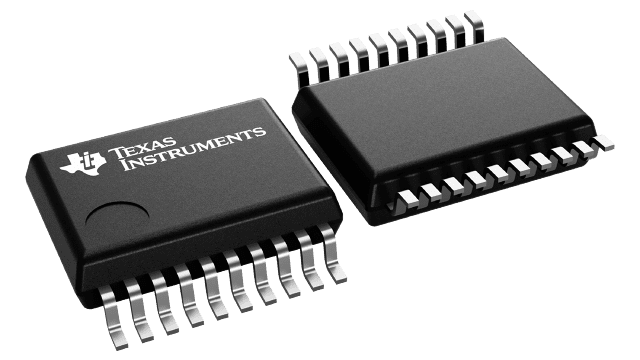
MAX3223-EP Series
3- to 5.5-V dual channel 500kbps RS-232 line driver/receiver with +/-15-kV IEC-ESD protection
Manufacturer: Texas Instruments
Catalog
3- to 5.5-V dual channel 500kbps RS-232 line driver/receiver with +/-15-kV IEC-ESD protection
Key Features
• Controlled BaselineOne AssemblyOne Test SiteOne Fabrication SiteExtended Temperature Performance of up to -55°C to 125°CEnhanced Diminishing Manufacturing Sources (DMS) SupportEnhanced Product-Change NotificationQualification Pedigree(1)RS-232 Bus-Pin ESD Protection Exceeds ±15 kV Using Human-Body Model (HBM)Meets or Exceeds the Requirements of TIA/EIA-232-F and ITU v.28 StandardsOperates With 3-V to 5.5-V VCCSupplyOperates up to 250 kbit/sTwo Drivers and Two ReceiversLow Standby Current . . . 1 µA TypicalExternal Capacitors . . . 4 × 0.1 µFAccepts 5-V Logic Input With 3.3-V SupplyAlternative High-Speed Pin-Compatible Device (1 Mbit/s)SNx5C3223APPLICATIONSBattery-Powered SystemsPDAsNotebooksLaptopsPalmtop PCsHand-Held Equipment(1)Component qualification in accordance with JEDEC and industry standards to ensure reliable operation over an extended temperature range. This includes, but is not limited to, Highly Accelerated Stress Test (HAST) or biased 85/85, temperature cycle, autoclave or unbiased HAST, electromigration, bond intermetallic life, and mold compound life. Such qualification testing should not be viewed as justifying use of this component beyond specified performance and environmental limits.Controlled BaselineOne AssemblyOne Test SiteOne Fabrication SiteExtended Temperature Performance of up to -55°C to 125°CEnhanced Diminishing Manufacturing Sources (DMS) SupportEnhanced Product-Change NotificationQualification Pedigree(1)RS-232 Bus-Pin ESD Protection Exceeds ±15 kV Using Human-Body Model (HBM)Meets or Exceeds the Requirements of TIA/EIA-232-F and ITU v.28 StandardsOperates With 3-V to 5.5-V VCCSupplyOperates up to 250 kbit/sTwo Drivers and Two ReceiversLow Standby Current . . . 1 µA TypicalExternal Capacitors . . . 4 × 0.1 µFAccepts 5-V Logic Input With 3.3-V SupplyAlternative High-Speed Pin-Compatible Device (1 Mbit/s)SNx5C3223APPLICATIONSBattery-Powered SystemsPDAsNotebooksLaptopsPalmtop PCsHand-Held Equipment(1)Component qualification in accordance with JEDEC and industry standards to ensure reliable operation over an extended temperature range. This includes, but is not limited to, Highly Accelerated Stress Test (HAST) or biased 85/85, temperature cycle, autoclave or unbiased HAST, electromigration, bond intermetallic life, and mold compound life. Such qualification testing should not be viewed as justifying use of this component beyond specified performance and environmental limits.
Description
AI
The MAX3223 consists of two line drivers, two line receivers, and a dual charge-pump circuit with ±15-kV ESD protection pin to pin (serial-port connection pins, including GND). The device meets the requirements of TIA/EIA-232-F and provides the electrical interface between an asynchronous communication controller and the serial-port connector. The charge pump and four small external capacitors allow operation from a single 3-V to 5.5-V supply. The device operates at data signaling rates up to 250 kbit/s and a maximum of 30-V/µs driver output slew rate.
Flexible control options for power management are available when the serial port is inactive. The auto-powerdown feature functions when FORCEON is low and FORCEOFF\ is high. During this mode of operation, if the device does not sense a valid RS-232 signal, the driver outputs are disabled. If FORCEOFF\ is set low and EN\ is high, both drivers and receivers are shut off, and the supply current is reduced to 1 µA. Disconnecting the serial port or turning off the peripheral drivers causes auto-powerdown to occur. Auto-powerdown can be disabled when FORCEON and FORCEOFF\ are high. With auto-powerdown enabled, the device is activated automatically when a valid signal is applied to any receiver input. The INVALID\ output is used to notify the user if an RS-232 signal is present at any receiver input. INVALID\ is high (valid data) if any receiver input voltage is greater than 2.7 V or less than –2.7 V or has been between –0.3 V and 0.3 V for less than 30 µs. INVALID\ is low (invalid data) if the receiver input voltage is between –0.3 V and 0.3 V for more than 30 µs. Refer to Figure 4 for receiver input levels.
The MAX3223 consists of two line drivers, two line receivers, and a dual charge-pump circuit with ±15-kV ESD protection pin to pin (serial-port connection pins, including GND). The device meets the requirements of TIA/EIA-232-F and provides the electrical interface between an asynchronous communication controller and the serial-port connector. The charge pump and four small external capacitors allow operation from a single 3-V to 5.5-V supply. The device operates at data signaling rates up to 250 kbit/s and a maximum of 30-V/µs driver output slew rate.
Flexible control options for power management are available when the serial port is inactive. The auto-powerdown feature functions when FORCEON is low and FORCEOFF\ is high. During this mode of operation, if the device does not sense a valid RS-232 signal, the driver outputs are disabled. If FORCEOFF\ is set low and EN\ is high, both drivers and receivers are shut off, and the supply current is reduced to 1 µA. Disconnecting the serial port or turning off the peripheral drivers causes auto-powerdown to occur. Auto-powerdown can be disabled when FORCEON and FORCEOFF\ are high. With auto-powerdown enabled, the device is activated automatically when a valid signal is applied to any receiver input. The INVALID\ output is used to notify the user if an RS-232 signal is present at any receiver input. INVALID\ is high (valid data) if any receiver input voltage is greater than 2.7 V or less than –2.7 V or has been between –0.3 V and 0.3 V for less than 30 µs. INVALID\ is low (invalid data) if the receiver input voltage is between –0.3 V and 0.3 V for more than 30 µs. Refer to Figure 4 for receiver input levels.