ONET1131EC Series
Externally modulated laser driver with integrated clock & data recovery (CDR)
Manufacturer: Texas Instruments
Catalog
Externally modulated laser driver with integrated clock & data recovery (CDR)
Key Features
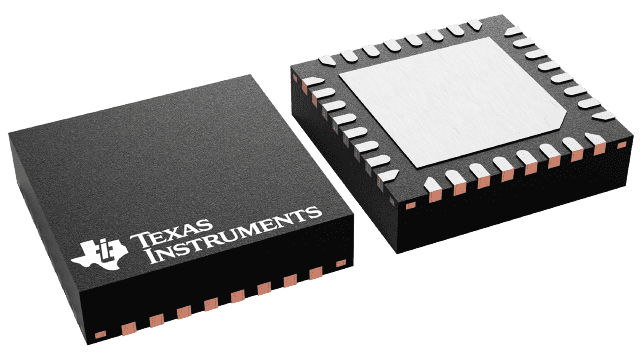
• Modulator Driver with Minimum Output Amplitude up to 2 Vpp Single-Ended and Bias Current up to 150 mA SourceSupports Externally Modulated Lasers Including the Electro-Absorption Modulator Lasers (EML) and the Mach-Zahnder Modulator (MZM) Based lasersIntegrated CDR with 9.80 – 11.7 Gbps Reference-Free OperationTwo-Wire Digital Interface with Integrated DACs and ADC for Control and Diagnostic ManagementOutput Polarity SelectProgrammable Jitter Transfer Bandwidth to Adjust CDR BandwidthCDR Bypass Mode for Low Data Rate OperationAutomatic Power Control (APC) Loop with Selectable Monitor PD RangeProgrammable Transmit Input EqualizerTransmitter Cross-Point Adjust and De-EmphasisIncludes Laser Safety FeaturesPower Supply Monitor and Temperature SensorSingle 2.5 V Supply–40°C to 100°C OperationSurface Mount 4 mm × 4 mm 32-Pin QFN Package with 0.4 mm PitchModulator Driver with Minimum Output Amplitude up to 2 Vpp Single-Ended and Bias Current up to 150 mA SourceSupports Externally Modulated Lasers Including the Electro-Absorption Modulator Lasers (EML) and the Mach-Zahnder Modulator (MZM) Based lasersIntegrated CDR with 9.80 – 11.7 Gbps Reference-Free OperationTwo-Wire Digital Interface with Integrated DACs and ADC for Control and Diagnostic ManagementOutput Polarity SelectProgrammable Jitter Transfer Bandwidth to Adjust CDR BandwidthCDR Bypass Mode for Low Data Rate OperationAutomatic Power Control (APC) Loop with Selectable Monitor PD RangeProgrammable Transmit Input EqualizerTransmitter Cross-Point Adjust and De-EmphasisIncludes Laser Safety FeaturesPower Supply Monitor and Temperature SensorSingle 2.5 V Supply–40°C to 100°C OperationSurface Mount 4 mm × 4 mm 32-Pin QFN Package with 0.4 mm Pitch
Description
AI
The ONET1131EC is a 2.5-V EML modulator driver with transmit clock and data recovery (CDR) designed to operate between 9.8 Gbps and 11.7 Gbps without the need for a reference clock. CDR bypass mode can be used for operation at lower data rates and a two-wire serial interface allows digital control of features like output polarity select and input equalization.
The transmit path consists of an adjustable input equalizer for equalization of up to 300 mm (12 inches) of microstrip or stripline transmission line of FR4 printed circuit boards, a multi-rate CDR and an output modulator driver. Output waveform control, in the form of cross-point adjustment and de-emphasis, is available to improve the optical eye mask margin. The device provides bias current for the laser and an integrated automatic power control (APC) loop to compensate for variations in average optical power over voltage, temperature and time.
The ONET1131EC contains internal analog to digital and digital to analog converters to support transceiver management and eliminate the need for special purpose microcontrollers.
The ONET1131EC is a 2.5-V EML modulator driver with transmit clock and data recovery (CDR) designed to operate between 9.8 Gbps and 11.7 Gbps without the need for a reference clock. CDR bypass mode can be used for operation at lower data rates and a two-wire serial interface allows digital control of features like output polarity select and input equalization.
The transmit path consists of an adjustable input equalizer for equalization of up to 300 mm (12 inches) of microstrip or stripline transmission line of FR4 printed circuit boards, a multi-rate CDR and an output modulator driver. Output waveform control, in the form of cross-point adjustment and de-emphasis, is available to improve the optical eye mask margin. The device provides bias current for the laser and an integrated automatic power control (APC) loop to compensate for variations in average optical power over voltage, temperature and time.
The ONET1131EC contains internal analog to digital and digital to analog converters to support transceiver management and eliminate the need for special purpose microcontrollers.