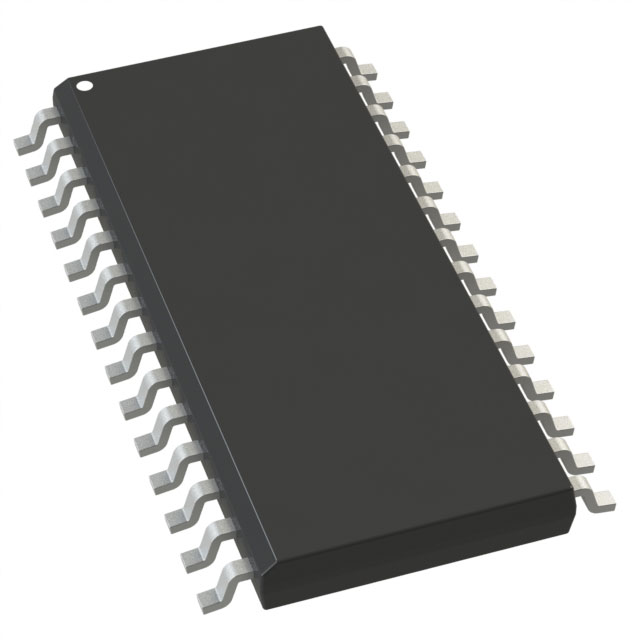
TAS5805M Series
23-W stereo, 45-W mono, 4.5- to 26.4-V supply, digital input Class-D audio amplifier w/ processing
Manufacturer: Texas Instruments
Catalog
23-W stereo, 45-W mono, 4.5- to 26.4-V supply, digital input Class-D audio amplifier w/ processing
Key Features
• Supports Multiple Output Configurations2 × 23 W in 2.0 Mode (8-Ω, 21 V, THD+N=1%)45 W in Mono Mode (4-Ω, 21 V, THD+N=1%)Excellent Audio PerformanceTHD+N ≤ 0.03% at 1 W, 1 kHz, PVDD = 12 VSNR ≥ 107 dB (A-weighted), Noise Level < 40 µVRMSLow Quiescent Current with Hybrid Modulation16.5 mA at PVDD = 13.5 V , 22 µH + 0.68 µF FilterFlexible Power Supply ConfigurationsPVDD: 4.5 V to 26.4 VDVDD and I/O: 1.8 V or 3.3 VFlexible Audio I/OI2S, LJ, RJ, TDM, 3-Wire Digital Audio Interface (No MCLK Required)Supports 32, 44.1, 48, 88.2, 96 kHz Sample RatesSDOUT for Audio Monitoring, Sub-Channel or Echo CancellationEnhanced Audio ProcessingMulti-Band Advanced DRC and AGL2×15 BQsThermal Foldback, DC BlockingInput Mixer, Output CrossbarLevel Meter5 BQs + 1 Band DRC +THD Manager for the Subwoofer ChannelSound Field Spatializer optionIntegrated Self-ProtectionAdjacent Pin to Pin Short Without DamageOver-Current Error (OCE)Over-Temperature Warning (OTW)Over-Temperature Error (OTE)Under/Over-Voltage Lock-out (UVLO/OVLO)Easy System IntegrationI2C Software ControlReduced Solution SizeFewer Passives Required Compared to Open-Loop DevicesInductor-less Operation (Ferrite Bead) for most cases where PVDD ≤ 14VSupports Multiple Output Configurations2 × 23 W in 2.0 Mode (8-Ω, 21 V, THD+N=1%)45 W in Mono Mode (4-Ω, 21 V, THD+N=1%)Excellent Audio PerformanceTHD+N ≤ 0.03% at 1 W, 1 kHz, PVDD = 12 VSNR ≥ 107 dB (A-weighted), Noise Level < 40 µVRMSLow Quiescent Current with Hybrid Modulation16.5 mA at PVDD = 13.5 V , 22 µH + 0.68 µF FilterFlexible Power Supply ConfigurationsPVDD: 4.5 V to 26.4 VDVDD and I/O: 1.8 V or 3.3 VFlexible Audio I/OI2S, LJ, RJ, TDM, 3-Wire Digital Audio Interface (No MCLK Required)Supports 32, 44.1, 48, 88.2, 96 kHz Sample RatesSDOUT for Audio Monitoring, Sub-Channel or Echo CancellationEnhanced Audio ProcessingMulti-Band Advanced DRC and AGL2×15 BQsThermal Foldback, DC BlockingInput Mixer, Output CrossbarLevel Meter5 BQs + 1 Band DRC +THD Manager for the Subwoofer ChannelSound Field Spatializer optionIntegrated Self-ProtectionAdjacent Pin to Pin Short Without DamageOver-Current Error (OCE)Over-Temperature Warning (OTW)Over-Temperature Error (OTE)Under/Over-Voltage Lock-out (UVLO/OVLO)Easy System IntegrationI2C Software ControlReduced Solution SizeFewer Passives Required Compared to Open-Loop DevicesInductor-less Operation (Ferrite Bead) for most cases where PVDD ≤ 14V
Description
AI
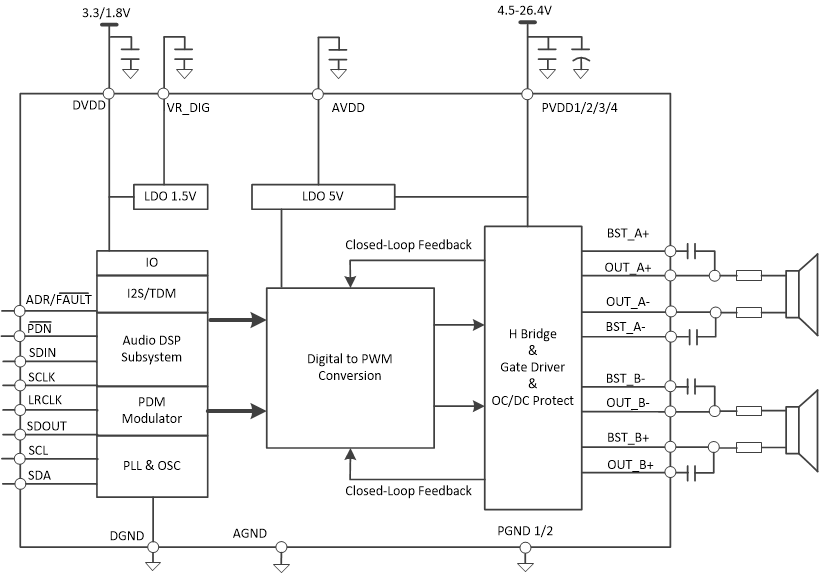
The TAS5805M is a high-efficiency, stereo, closed-loop Class-D amplifier offering a cost-effective digital-input solution with low power dissipation and sound enrichment. The device’s integrated audio processor and 96 kHz architecture support advanced audio process flow, including SRC, 15 BQs per channel, volume control, audio mixing, 3-band 4th order DRC, full-band AGL, THD manager and level meter.
Featuring TI’s proprietary Hybrid Modulation scheme, the TAS5805M consumes very-low quiescent current (16.5 mA at 13.5 V PVDD), extending battery life in portable audio applications. With advanced EMI suppression technology, designers can leverage inexpensive ferrite bead filters to reduce board space and system cost.
The TAS5805M is a high-efficiency, stereo, closed-loop Class-D amplifier offering a cost-effective digital-input solution with low power dissipation and sound enrichment. The device’s integrated audio processor and 96 kHz architecture support advanced audio process flow, including SRC, 15 BQs per channel, volume control, audio mixing, 3-band 4th order DRC, full-band AGL, THD manager and level meter.
Featuring TI’s proprietary Hybrid Modulation scheme, the TAS5805M consumes very-low quiescent current (16.5 mA at 13.5 V PVDD), extending battery life in portable audio applications. With advanced EMI suppression technology, designers can leverage inexpensive ferrite bead filters to reduce board space and system cost.