Catalog
Stellaris LM3S Microcontroller
Key Features
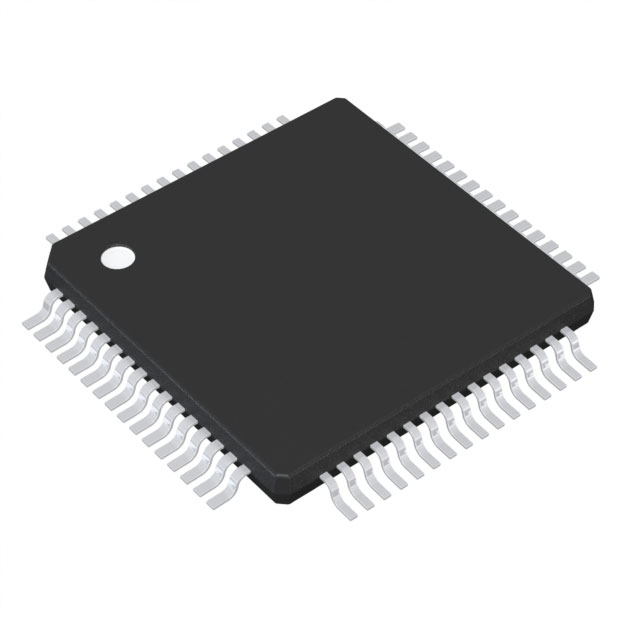
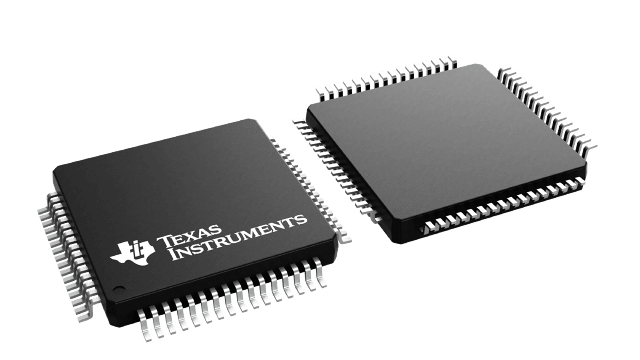
• 32-bit ARM® Cortex™-M350-MHz processor core with System Timer (SysTick), integrated Nested Vectored Interrupt Controller (NVIC),Memory Protection Unit (MPU),and Thumb-2 instruction setFull-featured debug solution with debug access via JTAG and Serial Wire interfaces, and IEEE 1149.1-1990 compliant Test Access Port (TAP) controller128KB single-cycle flash and16KB single-cycle SRAMInternal ROM loaded withStellarisWare® softwareLower-power battery-backed Hibernation module with Real-Time ClockARM PrimeCell® 32-channel configurable μDMA controller1-33GPIOs (depending on configuration) with programmable control for GPIO interrupts and pad configurationARM FiRM-compliant Watchdog Timer ; plusfourGeneral-Purpose Timer Modules (GPTM), each of which provides two 16-bit timers and can be configured to operate independently10-bit Analog-to-Digital Converter (ADC) withsixanalog input channels and a sample rate ofone millionsamples/secondFullyprogrammable 16C550-type UARTwith IrDA supportInter-Integrated Circuit (I2C) Interface, providing Standard (100 Kbps) and Fast (400 Kbps) transmission and support for sending and receiving data as either a master or a slaveController Area Network (CAN) Interface using CAN protocol version 2.0 part A/B and with bit rates up to 1 MbpsTwointegrated analog comparatorsconfigurable for output toinitiate an ADC sample sequence,drive an output pin or generate an interruptThreePWM generator blocks, each with one 16-bit counter, two PWM comparators, a PWM signal generator, a dead-band generator, and an interrupt/ADC-triggerselector;onePWM fault inputs to promote low-latency shutdownQuadrature Encoder Interface (QEI) featuring position integrator to track encoder position and velocity capture using built-in timerIndustrial-range 64-pin RoHS-compliant LQFP package32-bit ARM® Cortex™-M350-MHz processor core with System Timer (SysTick), integrated Nested Vectored Interrupt Controller (NVIC),Memory Protection Unit (MPU),and Thumb-2 instruction setFull-featured debug solution with debug access via JTAG and Serial Wire interfaces, and IEEE 1149.1-1990 compliant Test Access Port (TAP) controller128KB single-cycle flash and16KB single-cycle SRAMInternal ROM loaded withStellarisWare® softwareLower-power battery-backed Hibernation module with Real-Time ClockARM PrimeCell® 32-channel configurable μDMA controller1-33GPIOs (depending on configuration) with programmable control for GPIO interrupts and pad configurationARM FiRM-compliant Watchdog Timer ; plusfourGeneral-Purpose Timer Modules (GPTM), each of which provides two 16-bit timers and can be configured to operate independently10-bit Analog-to-Digital Converter (ADC) withsixanalog input channels and a sample rate ofone millionsamples/secondFullyprogrammable 16C550-type UARTwith IrDA supportInter-Integrated Circuit (I2C) Interface, providing Standard (100 Kbps) and Fast (400 Kbps) transmission and support for sending and receiving data as either a master or a slaveController Area Network (CAN) Interface using CAN protocol version 2.0 part A/B and with bit rates up to 1 MbpsTwointegrated analog comparatorsconfigurable for output toinitiate an ADC sample sequence,drive an output pin or generate an interruptThreePWM generator blocks, each with one 16-bit counter, two PWM comparators, a PWM signal generator, a dead-band generator, and an interrupt/ADC-triggerselector;onePWM fault inputs to promote low-latency shutdownQuadrature Encoder Interface (QEI) featuring position integrator to track encoder position and velocity capture using built-in timerIndustrial-range 64-pin RoHS-compliant LQFP package
Description
AI
The Stellaris® LM3S2616 microcontroller is based on the ARM® Cortex™-M3 controller core operating at up to 50 MHz, with 128 kB flash, 16 kB SRAM, a 32-ch DMA, and ROM preloaded with the StellarisWare Driver Library and BootLoader. The LM3S2616 also features real-time industrial connectivity, with a CAN controller, an I2C interface, and a UART. The LM3S2616 microcontroller also features advanced motion control features, including 6 motion-control PWM outputs with dead-band, a quadrature encoder input for precise position monitoring, and a fault protection input for low-latency shutdown. The microcontroller also features intelligent analog capability, including 2 analog comparators and 6 channels of highly accurate 10-bit analog-to-digital conversion - with the ability to sample at speeds of 1M samples per second. Finally, the LM3S2616 microcontroller provides a 24-bit systick timer, 4 32-bit or 8 16-bit general-purpose timers, a watchdog timer, a battery-backed hibernation module with RTC and 256 bytes of non-volatile state-saving memory, a low drop-out voltage regulator so that only one supply voltage is required, brown-out reset, power-on reset controller, and up to 33 GPIOs.
The Stellaris® LM3S2616 microcontroller is based on the ARM® Cortex™-M3 controller core operating at up to 50 MHz, with 128 kB flash, 16 kB SRAM, a 32-ch DMA, and ROM preloaded with the StellarisWare Driver Library and BootLoader. The LM3S2616 also features real-time industrial connectivity, with a CAN controller, an I2C interface, and a UART. The LM3S2616 microcontroller also features advanced motion control features, including 6 motion-control PWM outputs with dead-band, a quadrature encoder input for precise position monitoring, and a fault protection input for low-latency shutdown. The microcontroller also features intelligent analog capability, including 2 analog comparators and 6 channels of highly accurate 10-bit analog-to-digital conversion - with the ability to sample at speeds of 1M samples per second. Finally, the LM3S2616 microcontroller provides a 24-bit systick timer, 4 32-bit or 8 16-bit general-purpose timers, a watchdog timer, a battery-backed hibernation module with RTC and 256 bytes of non-volatile state-saving memory, a low drop-out voltage regulator so that only one supply voltage is required, brown-out reset, power-on reset controller, and up to 33 GPIOs.